

Basement storage ideas for small homes only work when they survive the basement itself. Damp air, concrete floors, and low ceilings can ruin cardboard boxes and everything inside them in a single season. You do not need a renovation, though: with the right bins, a little wall space, and a moisture-first system, even a small basement can hold seasonal gear, tools, and keepsakes without turning into a soggy maze.

First, Beat the Damp: The 7-Step Moisture-Proof Method
Every basement storage plan should start with moisture, not shelves. Follow these seven steps before you buy a single bin.
- Check for leaks first. Look at walls, floor joints, and windows after rain. Fix active leaks before storing anything valuable.
- Run a dehumidifier. A small unit set to 45–50% humidity stops musty smells and protects fabric, paper, and wood.
- Keep everything off the floor. Even a few inches matter. Shelves, pallets, or risers protect things from condensation and minor water.
- Ditch the cardboard. Cardboard absorbs moisture, sags, and invites pests. Swap it for lidded plastic bins.
- Zone before you fill. Sketch four zones — seasonal, tools, keepsakes, everyday — so nothing lands in a random pile.
- Label the front, not the lid. Labels on the side you see mean you never unstack five bins to find the holiday lights.
- Do a twice-a-year check. A quick spring and fall walk-through catches damp, pests, and bins you no longer need.
See also the basement organization guide from TSI Shipping for how zoning and off-the-floor storage work together.
13 Basement Storage Ideas for Small Homes
1. Run Steel or Wire Shelving Along the Walls
Freestanding metal shelving is the backbone of basement storage. It holds heavy bins, lets air circulate so things stay dry, and turns a bare wall into five levels of storage. Choose adjustable shelves and anchor tall units.
2. Switch to Clear, Lidded, Weathertight Bins
Clear bins let you see contents at a glance, and a snap-tight lid keeps dust and damp out. Reserve weathertight totes with foam-gasket lids for photos, papers, and keepsakes; standard lidded bins work for the rest.
3. Zone the Basement Like a Tiny Warehouse
Divide the space by how often you need things: everyday items near the stairs, seasonal gear at the back, tools in one corner, keepsakes on the highest dry shelf. Zoning is the habit that stops a basement sliding back into chaos. The same thinking powers our small garage organization ideas.

4. Hang an Overhead Ceiling Rack
The space between the joists is free real estate. A ceiling rack holds bulky, rarely used items — camping gear, artificial trees, out-of-season bedding — up high and off the floor. Keep the load light and never block shut-off valves or the panel.
5. Reclaim the Space Under the Stairs
The triangle under the basement stairs is usually wasted. Shallow shelves, pull-out drawers, or labeled bins turn it into a home for paint cans, cleaning supplies, or gift wrap. For more layouts, see our under-stairs storage ideas.
6. Put Up a Pegboard Wall for Tools
A pegboard on one empty wall gets tools, cords, and small supplies out of drawers and onto a surface you can see at a glance. Hooks and baskets rearrange in seconds. Pair it with our small apartment tool storage ideas.
7. Label Everything — and Keep a One-Page Inventory
Big labels on the front of every bin save you from opening six boxes to find one thing. Tape a one-page inventory to the inside of the basement door listing each bin number and its contents. Take something out, cross it off; add something, write it in.
8. Use Rolling Carts for Flexible Zones
A slim rolling cart holds cleaning supplies or a hobby kit and moves wherever the work is happening, then rolls back into its zone. Carts are renter-friendly — no drilling, no damage.
9. Hang Bikes, Chairs, and Sports Gear on the Wall
Heavy-duty hooks screwed into studs lift bulky items off the floor: bicycles, folding chairs, skis, sports bags. Wall storage frees floor space fast. Our attic storage ideas use the same hang-it-high principle.
10. Add Airflow, Not Just a Dehumidifier
A dehumidifier handles humidity, but still air lets musty smells settle. A small fan on a timer keeps air moving. Leave a hand-width gap between shelving and foundation walls so damp air escapes.
11. Store Flat Things Vertically, Like Files
Wrapping paper, posters, and spare boards warp when piled flat. Stand them upright in a tall bin or a narrow slot between shelves, filed like books. Nothing gets crushed at the bottom of a pile.
12. Give Every Seasonal Swap a Single Bin
One bin per season beats five half-filled boxes. When winter ends, the winter bin goes up and the summer bin comes down — a ten-minute swap. If a seasonal bin stays untouched for two years, its contents can probably go.
13. Enforce a One-In, One-Out Rule for the Basement
Basements fill up because nothing ever leaves. Every time something new goes downstairs, something old comes out — donated, sold, or recycled. The basement stays the same size; the rule keeps it from overflowing.
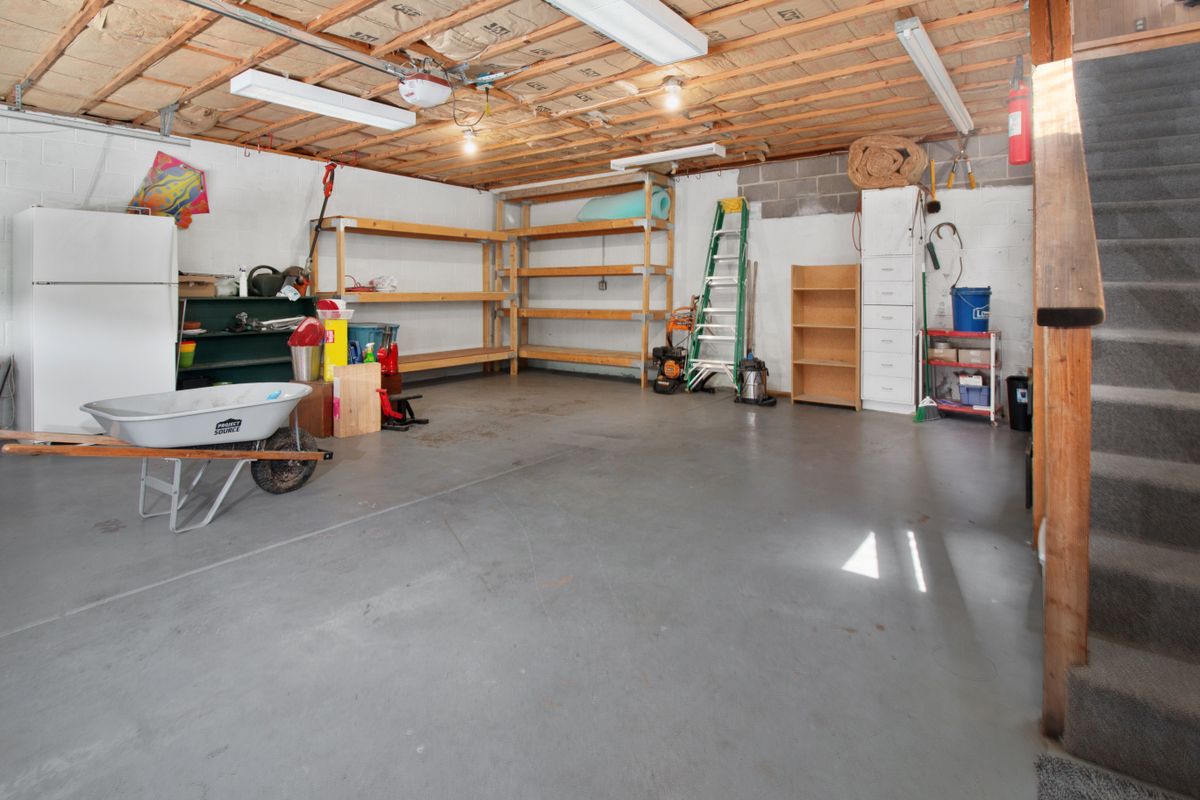
“A basement is not a dumping ground. Treat it like a small warehouse — dry, labeled, and zoned.”
What NOT to Store in a Basement
Some things simply do not belong downstairs. Skip the basement for: irreplaceable paper documents (keep those upstairs in a fireproof box), photographs and film negatives, untreated leather or fine wood, candles (they melt in summer heat and warp in damp), and food or pet food (damp and pests find it fast). If your basement has ever flooded, keep electronics and anything irreplaceable out entirely.
Rainbow Restoration’s basement storage ideas guide agrees: moisture control comes before any storage system.
Your Basement Storage Checklist
- Fix leaks; set the dehumidifier to 45–50% humidity
- Move everything off the floor onto shelves or risers
- Replace cardboard with clear, lidded plastic bins
- Mark four zones: seasonal, tools, keepsakes, everyday
- Label the front of every bin; keep a one-page inventory
- Hang bulky gear on wall hooks; put rarely used items overhead
- Leave a gap between shelves and foundation walls
- Walk through twice a year and remove what you no longer need
Frequently Asked Questions
How do I keep basement storage dry?
Fix leaks, run a dehumidifier at 45–50% humidity, keep everything off the floor, and use lidded plastic bins instead of cardboard. Leave a gap between shelves and foundation walls so air can move.
Are plastic bins or cardboard boxes better for basement storage?
Plastic bins win in basements. Cardboard absorbs moisture, sags, and attracts pests, while clear lidded bins protect contents from damp and dust and let you see what is inside. Save weathertight gasket-lid totes for photos, papers, and keepsakes.
What is the cheapest way to organize a small basement?
Start with one freestanding metal shelf, six clear lidded bins, and homemade labels from masking tape and a marker. Zone the space, keep everything off the floor, and add an overhead rack later. Most small basements can be transformed for well under $200.
What should you never store in a basement?
Keep irreplaceable papers, photographs, film negatives, fine leather or wood, candles, and any food or pet food out of the basement. If it has ever flooded, keep electronics and anything you cannot replace upstairs.
With the damp handled and zones in place, a small basement stops being the room you avoid and becomes the extra storage your home was missing. Start with one wall, one shelf, and six bins this weekend.