If you live in a small apartment, small apartment tool storage is a puzzle with no obvious answer. There is no garage, no shed, and no spare closet — yet the hammer, the screwdriver set, and that one drill still have to live somewhere. Most renters end up with tools scattered across a junk drawer, the top of the fridge, and a bag under the bed, which means every small fix turns into a 20-minute hunt.
The good news: you do not need more space, you need a better system. These 13 budget-friendly, renter-safe ideas will get every tool a home — most of them for under $20 and none of them requiring you to drill into a wall you do not own.
Start With a 15-Minute Tool Audit
Before you buy a single hook or bin, empty every place tools currently hide and lay them on the bed or kitchen table. Most small-apartment dwellers discover three things: duplicates (two hammers, three tape measures), broken tools they keep meaning to fix, and things that are not tools at all. Keep one of each essential, donate or toss the rest, and write down what is left. That list — not a shopping trip — is your real storage plan.
Use the Wall: Pegboards and Hooks
1. Hang a small pegboard inside a closet door
A 2-by-3-foot pegboard mounted on the inside of a closet or pantry door turns dead space into a tool wall. Add a few hooks and small baskets, and your most-used tools hang in plain sight. Use adhesive strips or over-door brackets so nothing touches the landlord's walls.
2. Try a Command-hook tool rail
A strip of heavy-duty adhesive hooks along a hallway or laundry-room wall holds hammers, levels, and tape measures by their holes or handles. It costs a few dollars, holds surprising weight, and peels off cleanly at move-out. For a step-by-step visual guide to pegboard layouts, see Organizenvy's complete guide to organizing tools on a pegboard.
3. Mount a magnetic strip for metal tools
A magnetic knife-strip style bar — the kind sold for kitchens — holds screwdrivers, wrenches, and pliers flat against the wall. Mount it inside a cabinet door or on the side of a bookshelf with adhesive strips, and your metal tools stop rattling around in a drawer.
The One-Toolbox System
4. Keep one grab-and-go toolbox, not five stashes
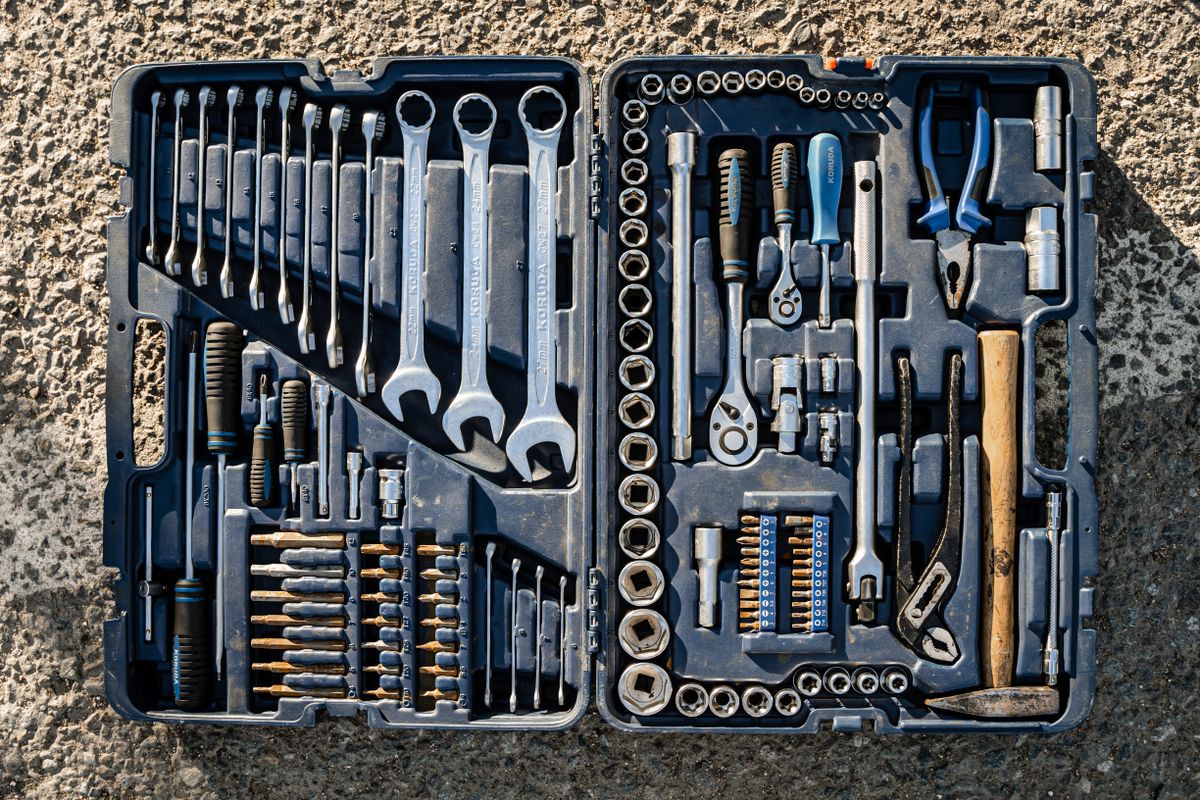
Pick a single medium toolbox and make it the only home for your everyday tools: hammer, two screwdrivers, pliers, adjustable wrench, tape measure, level, and utility knife. When everything lives in one box, you grab it and go — and you always know when something is missing. Store it on a closet shelf or under the bed.

5. Use a tool roll for the overflow
A canvas tool roll — the kind that wraps up like a burrito — holds wrenches, Allen keys, and drill bits flat. It slides into a drawer, a tote bag, or the gap beside the washing machine, and it unrolls on the table when you need it. It is also the cheapest way to keep sharp edges from scratching everything else.
6. Give the drill its own charging station
Drills and their chargers are the bulkiest part of any small tool collection. Dedicate one shelf or one sturdy basket to the drill, its battery, and its charger, and keep the bits in a small labeled pouch right beside it. If you need more ideas for arranging the rest of your kit, Apartment Therapy's 10 tool organization ideas cover shelves, jars, and workbench setups worth borrowing.
Hide Tools in Plain Sight
7. Stash tools behind the door
The back of any door is free real estate. An over-the-door shoe organizer — the clear-pocket kind — holds small tools, tape, glue, and spare batteries in plain sight. For a sturdier setup, see our over-the-door storage ideas for small apartments.
8. Turn a bookshelf cube into a tool cubby
One cube of a cube shelf, fitted with a fabric bin, hides an entire tool kit in the living room without looking like a workshop. Label the bin "Tools" so guests and family know exactly where the hammer lives — and where to put it back.
9. Use the top of a wardrobe or kitchen cabinet
Flat, rarely used items — a level, a handsaw, a roll of duct tape — can live in a slim bin on top of a wardrobe or kitchen cabinet. They are out of the way but still reachable with a step stool, and they free up every drawer below.
Small Parts, Solved
10. Sort screws and nails in labeled jars
Small parts are what turn a tidy toolbox into chaos. Use small jars or a clear tackle-style box with dividers, and label each compartment: wood screws, wall anchors, picture hooks, batteries. One labeled box beats five mystery baggies every time.
11. Keep a "fix-it pouch" by the front door
A small zip pouch with a screwdriver, a few screws, picture hooks, and a tape measure lives by the door for the five-minute jobs: tightening a handle, hanging a frame, swapping a battery. It stops you from dragging the whole toolbox out for a 30-second fix.
Power Tools and Bulky Gear
12. Store bulky tools vertically, never stacked
Saws, levels, and extension cords take half the space when stored upright in a tall bin or a tension-rod slot between furniture. Stacking them flat is how cords tangle and blades dull. Vertical storage is the same trick we use in our vertical wall storage ideas for small apartments.
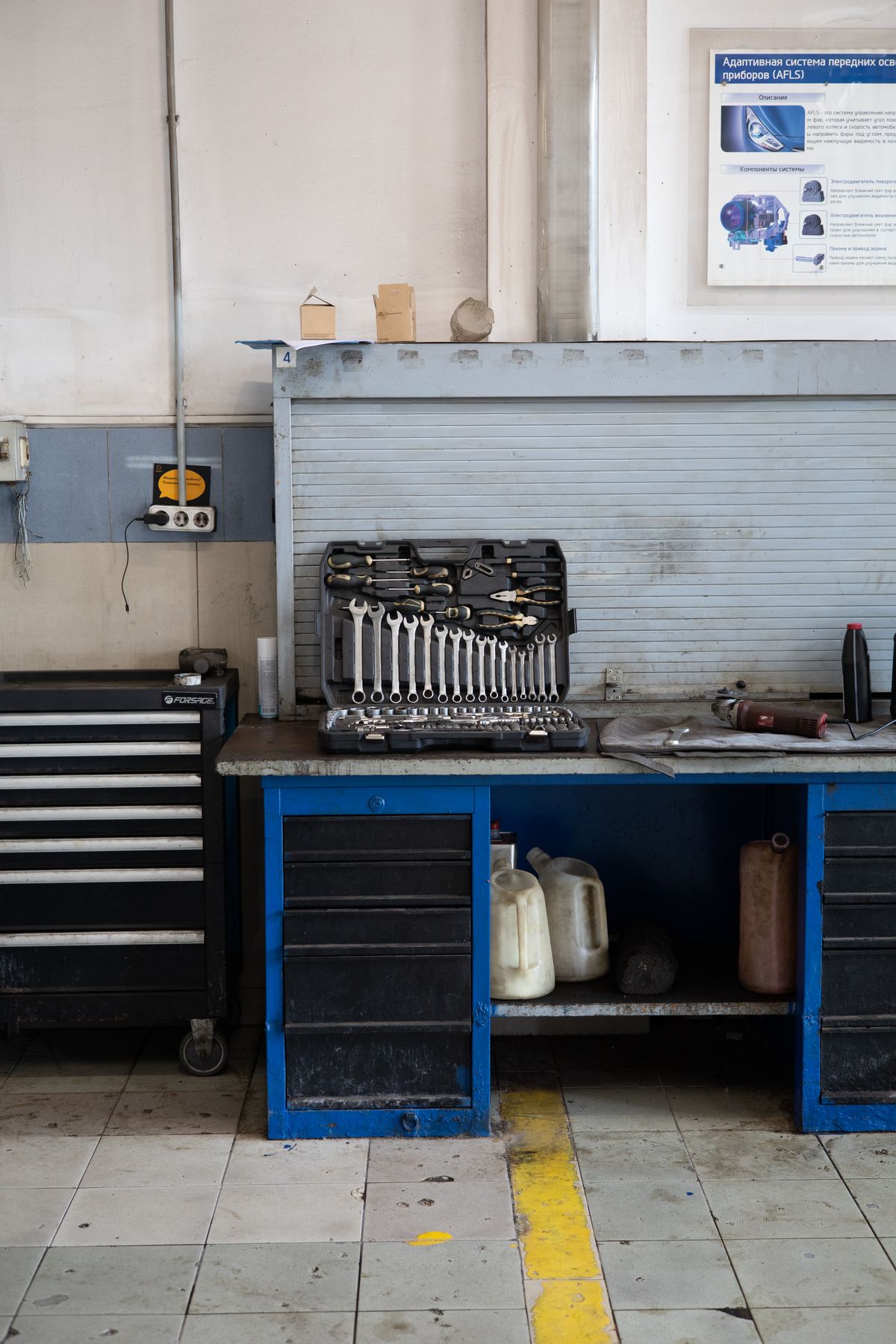
13. Share or borrow the big stuff
You do not need to own every tool. A circular saw you use twice a year does not deserve a closet shelf. Borrow from a neighbor, a friend, or a local tool library, and spend your limited space — and money — on the everyday tools you actually reach for weekly.
Renter-Safe Mounting That Won't Cost Your Deposit
Every wall-mounted idea above works without a drill: heavy-duty adhesive strips, over-door brackets, tension rods, and magnetic strips. Two rules keep your deposit safe. First, check the weight rating on any adhesive product and stay under it — a falling hammer is worse than a cluttered drawer. Second, photograph the walls before you mount anything and again when you remove it, so you have proof of the condition at move-out.
A Simple Habit That Keeps It Working
The system only works if tools go home after every job. Make it a rule: the toolbox is closed and back on its shelf before the project is declared done — not "later." A two-minute put-away beats a 20-minute hunt next time, and it is the single habit that separates people with organized tools from people with organized tool intentions. And if your tool overflow started in the junk drawer, our junk drawer organization ideas will help you reclaim that space too.
"In a small apartment, you don't need more tools — you need every tool to have one obvious home."
Frequently Asked Questions
How do I store tools in a small apartment with no garage?
Start with one toolbox for everyday tools, add a small pegboard or adhesive hooks on a closet door for the rest, and keep small parts in labeled jars or a divided box. The goal is one home per tool, not more square footage.
What is the best renter-friendly way to hang tools without drilling?
Heavy-duty adhesive strips and hooks, over-door brackets, and tension rods are the safest options. Always check the weight rating, keep loads light, and photograph the wall before and after so your deposit is protected.
How many tools does a renter actually need?
For most renters, seven cover nearly every job: a hammer, a Phillips and a flathead screwdriver, pliers, an adjustable wrench, a tape measure, and a utility knife. Add a cordless drill if you hang things often, and borrow or rent anything bigger.
Where should I keep power tools in an apartment?
Keep the drill and its charger together in one basket or on one dedicated shelf, with bits in a labeled pouch beside them. Store batteries at room temperature, away from damp spots like under the sink, and never stack heavy tools on top of the drill.
Small-space living does not mean giving up on fixing things yourself. With one toolbox, a little wall space, and the habit of putting things back, your tools stop being clutter and start being the quiet helpers they were meant to be.