Snack storage ideas for small kitchens start with one honest truth: snacks are the messiest thing in a tiny kitchen. Crisps, biscuits, granola bars and tea-time treats come in crinkly bags that never stack, never close properly, and always end up spilling across the counter. If your kitchen is short on cabinets and your snack habit is strong, you do not need a bigger kitchen. You need a small system that gives every snack one home — and keeps it there.

The 13 ideas below are all budget-first and renter-friendly: no drilling, no built-ins, nothing you cannot undo in five minutes. Most cost under $15, and several cost nothing at all. Pick three that fit your kitchen today, and add the rest later — a tidy snack zone is built one small change at a time.
Before You Buy Anything: The 5-Minute Snack Audit
Do not buy a single bin until you know what you actually store. Pull every snack out of your cabinets, counters and fridge. Throw away anything stale or past its date, and group the rest into four piles: daily snacks (what you reach for every day), kids' snacks, baking and cooking extras, and backup stock. Count how many of each you have. That count — not a Pinterest photo — decides how many bins you need. Most small kitchens need just three or four containers, not twelve.
13 Snack Storage Ideas for Small Kitchens
1. One clear bin per snack type
Give each snack category its own clear, open-top bin: one for crisps, one for biscuits, one for bars and pouches. Clear bins matter in a small kitchen because you can see what is running low without pulling everything out. Label each bin with masking tape and a marker — it takes two minutes and stops the whole family from putting things back in the wrong place.
2. Set up a low "grab shelf" at eye level
Put the snacks you eat most often on the shelf you can reach without stretching or bending — usually the middle shelf of your pantry or cabinet. Eye-level placement is the single biggest reason a system survives: if grabbing a snack is easy, putting it back is easy too. Keep backup stock and rarely eaten treats up high or down low, out of the daily traffic.
3. Hang an over-the-door rack on the pantry or cabinet door
An over-the-door rack is the best renter-friendly snack storage buy for a tiny kitchen. It hooks over the door — no screws, no damage — and turns wasted door space into a home for snack bars, seasoning packets, tea bags and small pouches. Measure your door clearance first so the rack does not stop the door closing. For more door-based ideas, see our over-the-door storage ideas for small apartments.
4. Use stackable bins on deep shelves
Deep shelves waste space because things get lost at the back. Stackable bins fix that: they let you use the full height of the shelf instead of just the bottom few inches. Put heavy, slow-moving stock at the bottom and light daily snacks on top. If your bins slide around, a strip of non-slip shelf liner underneath costs almost nothing and keeps everything in place.
5. Add a turntable for small packets and sauces
A lazy Susan turntable is a small-kitchen classic for a reason. Spin it once and the sauce packet or snack pouch at the back is suddenly at the front — no more knocking five things over to reach one. Turntables work best in corner cabinets and on deep pantry shelves where the back half is otherwise dead space.
6. Stand packets upright in magazine files
Snack bars, instant noodle packets and flat pouches store beautifully upright in a cheap magazine file or narrow document holder. Stand them like books on a shelf and you can flip through them to find what you want, just like browsing a shelf in a shop. This is also one of the cheapest ideas here: a sturdy magazine file costs a few dollars at a discount store.
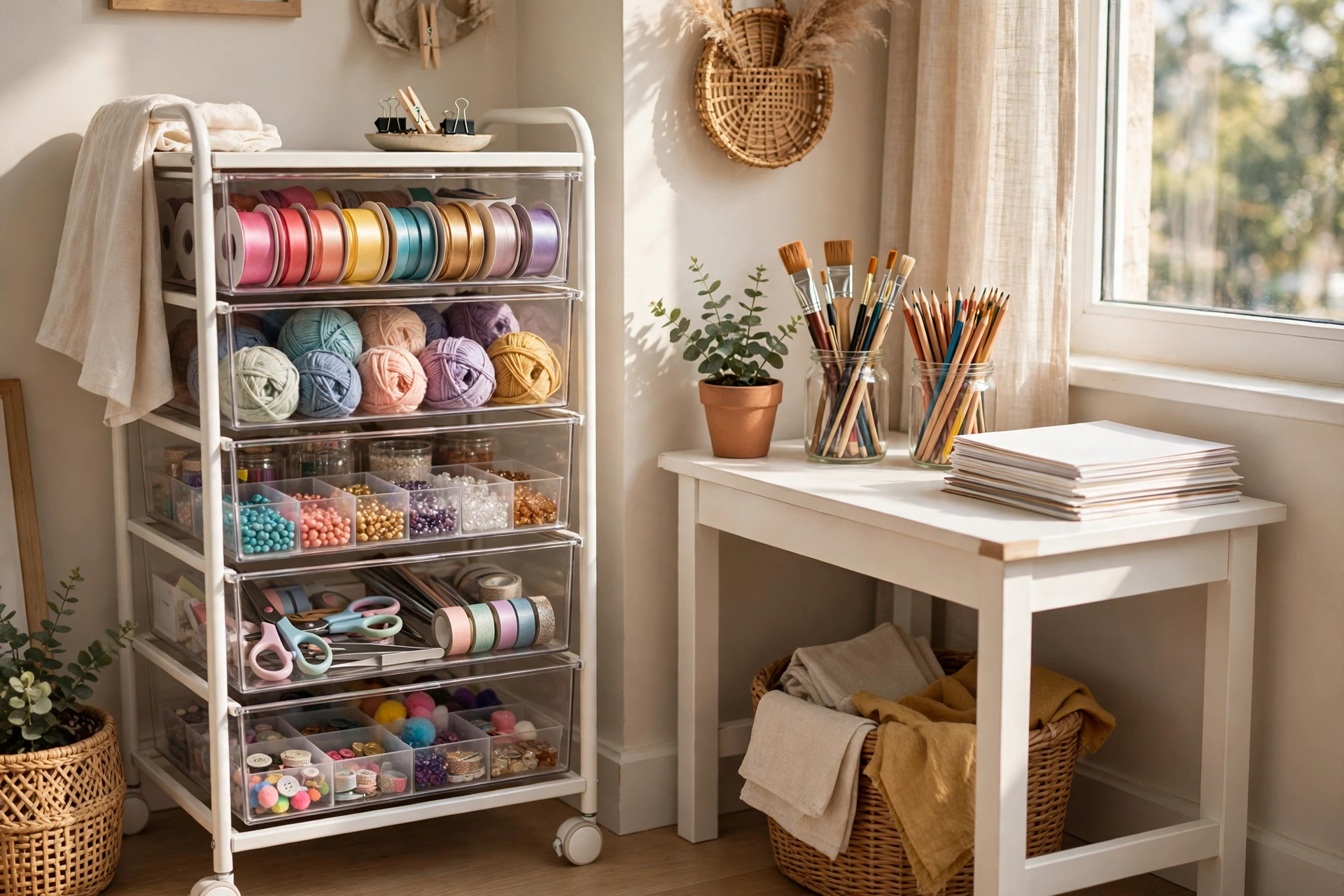
7. Roll a snack cart into a spare corner
If your cabinets are truly full, a slim rolling cart becomes your snack station. Park it in the gap beside the fridge, between the counter and the wall, or at the end of the kitchen. Stock the top tier with daily snacks, the middle with drinks or fruit, and the bottom with backup stock. When guests come, wheel it out of the way; when you cook, wheel it back. Apartment Therapy shows how a kitchen cart can double as pantry storage in a small space.
8. Store backup snacks in baskets on top of the cabinets
The space above your kitchen cabinets is prime real estate for backup stock — the extra biscuit boxes, the bulk bag of crisps, the treats you bought on offer. Put them in a basket with handles so you can pull the whole basket down safely instead of reaching for individual boxes. Keep this zone for backups only, never daily snacks, or you will be climbing up there every evening.
9. Turn one drawer into a snack drawer with dividers
A shallow drawer with a few dividers makes a brilliant snack station, especially if you have kids. One section for bars, one for biscuits, one for fruit pouches — and the rule is simple: the drawer is the only place snacks live. Small tension rods or even cut-down cereal boxes work as free dividers. For more drawer ideas, read our small kitchen counter organization ideas.
10. Clip packets shut and hang them on hooks
Half-open bags are the number one cause of stale snacks and spilled crumbs. Clip every opened bag with a binder clip or a chip clip, then hang the clips from small adhesive hooks inside a cabinet door. The packets stay sealed, visible and off the shelf — and you stop finding mystery crumbs at the back of the cupboard. Adhesive hooks peel off cleanly, so this is fully renter-safe.
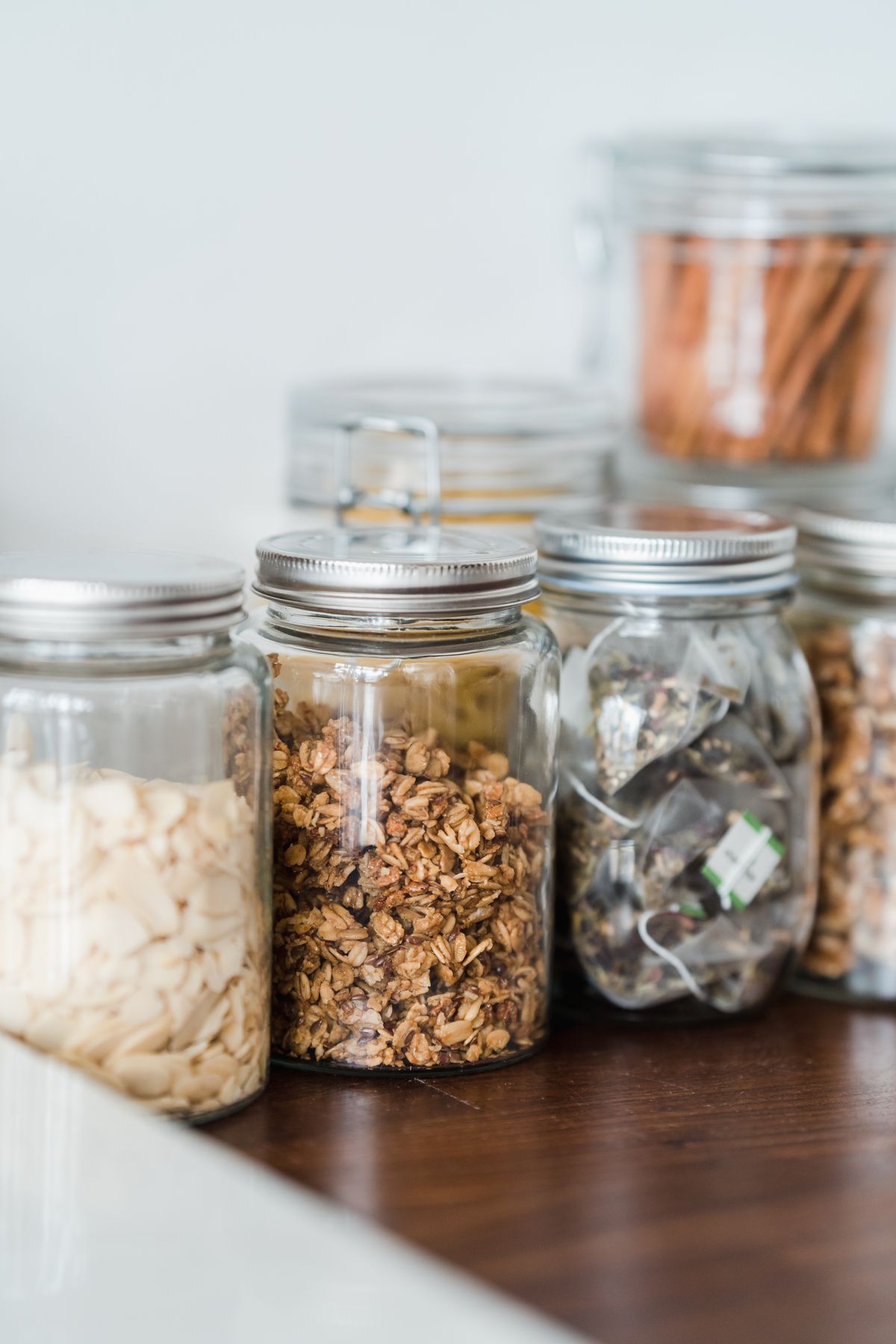
11. Decant loose snacks into reused jars
Loose snacks like nuts, trail mix, pretzels and dried fruit last longer and look tidier in a sealed jar. You do not need to buy matching canisters: clean jam jars, pickle jars and takeaway tubs work perfectly, as long as they are food-safe and dry. Label the jar and the date you opened the bag. Apartment Therapy's pantry organization guide makes the same point — repurposed jars are a pro organizer's favourite free container.
12. Give the fridge its own small snack bin
Some snacks belong in the fridge: cheese sticks, yoghurt pouches, cut fruit and dips. Without a home, they spread across every shelf. Dedicate one small bin — even a shoebox-sized one — as the fridge snack zone, and put it at the front of the middle shelf where everyone can see it. For a full fridge system, see our small fridge organization ideas for tiny kitchens.
13. Make a grab basket — and a one-in, one-out rule
Finish with a grab basket: one basket, kept where snacks are actually eaten — near the sofa, the dining table or the kids' study spot. Fill it each morning with the day's snacks, and refill it from the main stash. Pair it with a one-in, one-out rule: every new snack bag that comes home means one finished or donated bag leaves. The basket keeps daily snacking contained, and the rule keeps the total from growing again.
What to Do With Snacks That Still Don't Fit
If you have tried every idea above and snacks still overflow, the problem is quantity, not storage. Pick your five favourite snacks and stop buying the rest for a month. Move the extras into a labelled box in another room — a hall closet or the top of a wardrobe — and treat it as backup stock, not daily storage. And be honest about the "just in case" pile: snacks bought for guests who never came are the first thing to eat, share or donate. For the bigger picture, our pantry organization ideas for tiny kitchens walk through the same zone system for the whole pantry.
"A small kitchen does not need fewer snacks. It needs every snack to have one home — and a rule that puts it back there."
Your 10-Minute Weekly Snack Reset
A snack system only stays tidy if someone resets it. Once a week — Sunday evening works well — spend ten minutes: (1) pull out anything stale or past its date, (2) move the oldest snacks to the front so they get eaten first, (3) wipe the bins and the shelf, (4) check what is running low and add it to the shopping list, and (5) refill the grab basket for the week ahead. That is it. Ten minutes a week is what separates a system from a one-time tidy-up.

Frequently Asked Questions
How do I store snacks in a small kitchen with no pantry?
Build a "pantry" from what you already have: one cabinet shelf for daily snacks, an over-the-door rack for packets, and a rolling cart or basket for overflow. You do not need a dedicated pantry room — you need one shelf, one door and one basket, each with a clear job.
What is the cheapest way to organize snacks?
Start with what is free: reuse glass jars and takeaway tubs, cut down cereal boxes as dividers, and use binder clips to seal bags. If you buy anything, buy one clear bin and one over-the-door rack first — together they solve most small-kitchen snack chaos for under $20.
How do I keep snacks fresh in a small kitchen?
Seal every opened bag with a clip, decant loose snacks into airtight jars, and store snacks away from heat and steam — never above the stove or beside the kettle. Eat the oldest snacks first, and check dates during your weekly reset.
Where should kids' snacks go in a tiny kitchen?
Give kids one low shelf or one drawer section they can reach without climbing. Stock it only with pre-approved snacks, and let them choose from that zone. It keeps them safe, stops them raiding the high shelves, and teaches them to put things back where they belong.
Start with just three ideas — the snack audit, one clear bin per snack type, and the grab basket — and your tiny kitchen will feel calmer by tonight. Small spaces reward small systems, and snacks are the easiest win of all.