
Good small kitchen counter organization is the difference between a kitchen you dread and a kitchen you enjoy cooking in. When every inch of counter is covered with appliances, mail, and spice jars, even making a sandwich feels like a project. The good news? You don't need a remodel or expensive organizers. These 13 budget-friendly, renter-safe ideas work in the tiniest of kitchens — and most cost little or nothing.
Your counter is workspace, not storage. Everything on it should earn its spot by being used almost daily — everything else needs a home on a wall, inside a cabinet, or gone.
The Quick Wins: Clear Your Counters in Under an Hour
1. Do a counter audit first
Before buying anything, take everything off your counters. Now put back only the items you use at least four or five times a week — usually a kettle or coffee maker, a cutting board, and a dish rack. Sort the rest into relocate (find a cabinet home), remove (move to another room), or let go (donate). Most cluttered counters are half appliances used twice a month. Clearing them is the fastest kitchen counter decluttering move there is.
2. Corral the daily essentials on a tray
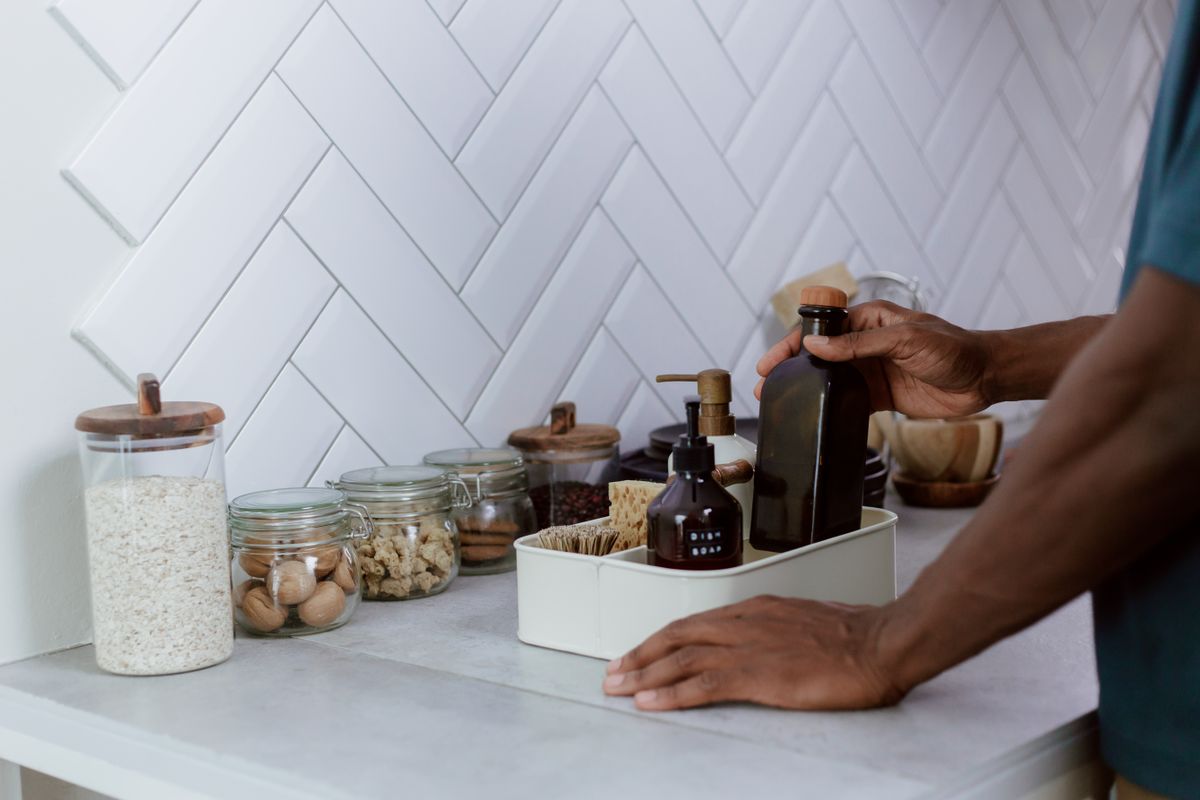
The few things that must stay on the counter — coffee supplies, olive oil, salt and pepper — look intentional instead of chaotic on a tray. A thrifted wooden tray, a shallow basket, or even a large plate works. Bonus: when you need the full counter for meal prep, you move one tray instead of a dozen loose items.
3. Create a coffee or tea station corner
Dedicate one back corner to a compact drink station: machine or kettle, mugs above or below, sugar and filters in one small container. Keeping it to a single corner protects the rest of your prep space. If counters overflow with pantry items too, see our pantry organization guide for tiny kitchens — getting staples off the counter is half the battle.
Vertical Storage: Small Kitchen Counter Organization That Goes Up
When counter space is scarce, the only direction to expand is up. Walls, backsplashes, and the undersides of cabinets are all fair game — and nearly every option here is drill-free, so renters can use them too.
4. Swap your knife block for a magnetic knife strip
A traditional knife block eats a full square foot of counter. A magnetic strip on the wall or backsplash (use adhesive-backed ones if you can't drill) holds knives flat against the wall, keeps them sharp, and reclaims that corner. It's the highest-impact small-kitchen swap, and Apartment Therapy's counter organizer roundup agrees: freeing prep space beats adding storage every time.
5. Add a wall-mounted rail with hooks
A simple stainless rail with S-hooks turns a stretch of backsplash into storage for spatulas, ladles, and measuring cups — everything that used to live in a countertop crock. Mount it with adhesive strips or screws, and hang only the handful of tools you reach for daily.
6. Install a tiered corner shelf riser
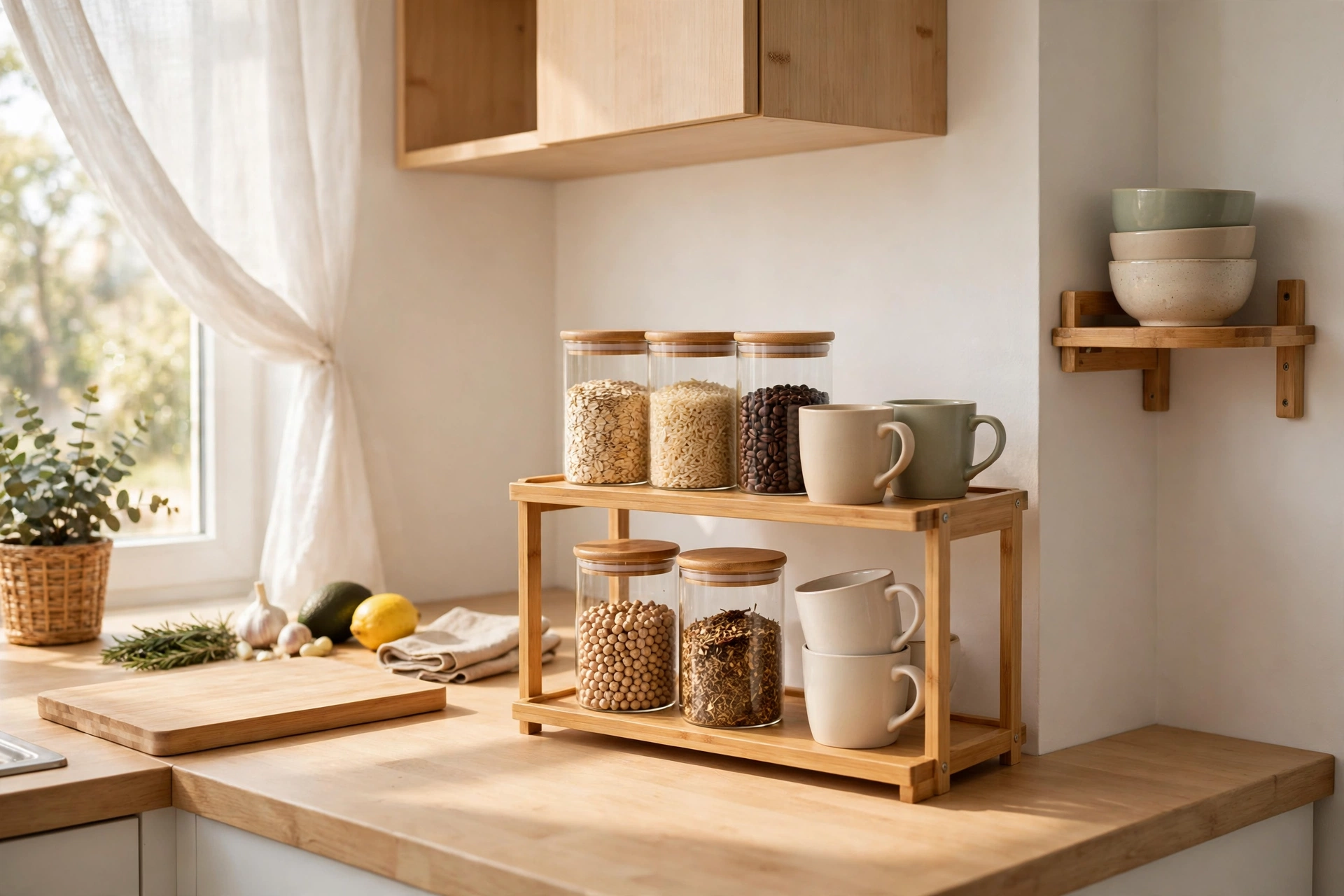
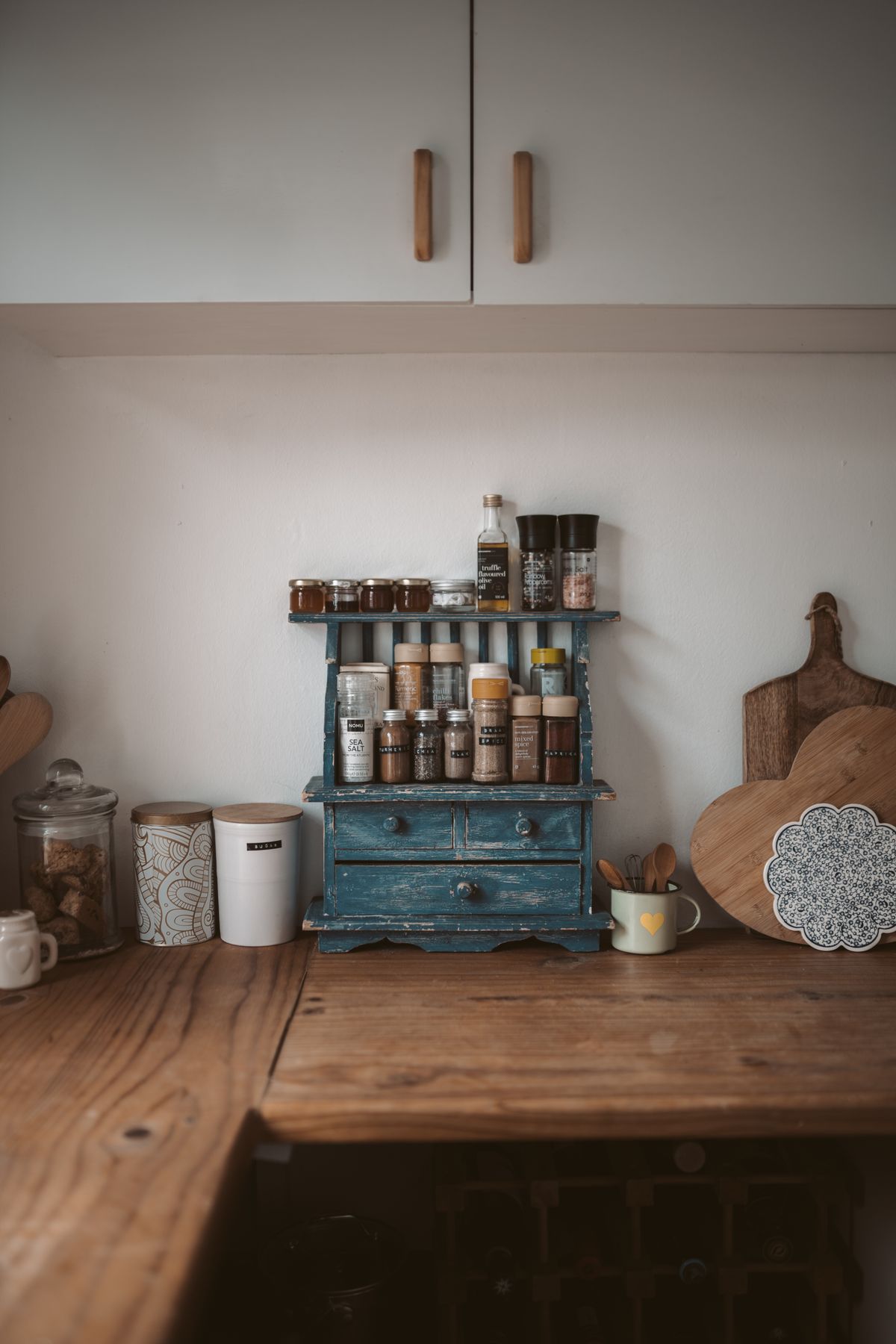
Corner counters become dead space in tiny kitchens. A two- or three-tier shelf riser turns one footprint into three levels — perfect for spices and small jars. A discount-store riser costs a few dollars; a DIY version works just as well.
7. Hang paper towels and dish towels under cabinets
The paper towel holder sitting on your counter takes up more room than you think. Move it underneath an upper cabinet with an adhesive-mount holder, and hang a dish towel from the same spot on a small bar. This frees a surprisingly large chunk of counter next to the sink — right where prep space matters most.
8. Use the inside of cabinet doors
Adhesive hooks on the inside of the under-sink cabinet doors hold spray bottles, measuring cups, and pot lids — items that otherwise colonize the counter. For more renter-safe vertical tricks, see our over-the-door storage ideas and our under-sink organization ideas.
Smarter Storage for What Must Stay
9. Decant staples into matching jars
Flour, rice, sugar, pasta, and coffee take up less visual space — and genuinely less room — when they move from bulky packaging into uniform jars on a single shelf or tray. Start with the five items you buy most; matching jars on a riser look tidy where mismatched boxes look like clutter. Apartment Therapy's guide to organizing a kitchen without a pantry makes the same point: consistent containers are what make open storage read as calm.

10. Give rarely used appliances a parking spot off the counter
Stand mixers, food processors, and waffle makers are wonderful — and they're counter hogs. Store them on top of the fridge, in a nearby closet, or on a rolling cart parked beside the kitchen, and bring them out only on cooking day. A cheap cart doubles as bonus counter space when you wheel it up to your prep area.
11. Mount an over-the-sink shelf or drying rack
A countertop dish rack can eat a third of a small counter. A roll-up rack that sits over the sink drains into the basin and rolls away when you need the sink for prep. Add a small shelf above the sink for dish soap and a sponge caddy, and you defend the highest-traffic real estate in the kitchen.
12. Float a shelf for mugs and daily dishes
If you can use two small screws, a short floating shelf above the counter holds four to six mugs plus small bowls, freeing a whole cabinet shelf. Where screws are off the table, a tension-mounted or strong-adhesive shelf in the same spot does the job.
The Habit That Keeps It Clear
13. Run a two-minute nightly counter reset
No organizer survives a busy household without maintenance. Every evening, wipe the counter and return every stray item to its home. It takes about two minutes once everything has a designated spot — and it's the habit that makes all twelve ideas above stick.
Budget tip: Before spending a cent, check your kitchen for organizers you already own. A muffin tin corals packets, a shoebox becomes a drawer-style under-sink bin, and a tension rod inside an upper cabinet divides cutting boards vertically. Dollar stores and thrift shops cover almost everything else for under $5.
A clear counter isn't about owning less — it's about giving everything a home that isn't your workspace.
Start Small, Keep What Works
You don't need all thirteen ideas at once. Start with the counter audit and one tray, then add vertical storage piece by piece. In a tiny kitchen, every item you lift off the counter is prep space you've given back to yourself.
Frequently Asked Questions
How do I keep kitchen counters clear in a really tiny kitchen?
Remove everything you don't use daily, corral the essentials on a single tray, and move storage vertically onto walls and cabinet doors. The biggest win is relocating rarely used appliances off the counter — not buying more organizers.
What are the best renter-friendly ways to add counter storage?
Adhesive-backed magnetic knife strips, Command-strip rails with hooks, tension rods inside cabinets, freestanding shelf risers, and rolling carts all add storage without drilling. Most landlords approve damage-free mounting.
Should I decant pantry items into jars?
Only the staples you use often — flour, rice, sugar, coffee. Uniform jars stack better and look tidier on a small counter or shelf. There's no need to decant everything.
How many appliances should stay on a small kitchen counter?
Only the ones you use four or more times a week — usually a kettle or coffee maker plus one more. Store everything else on top of the fridge, in a closet, or on a cart, and bring items out only when you cook.