
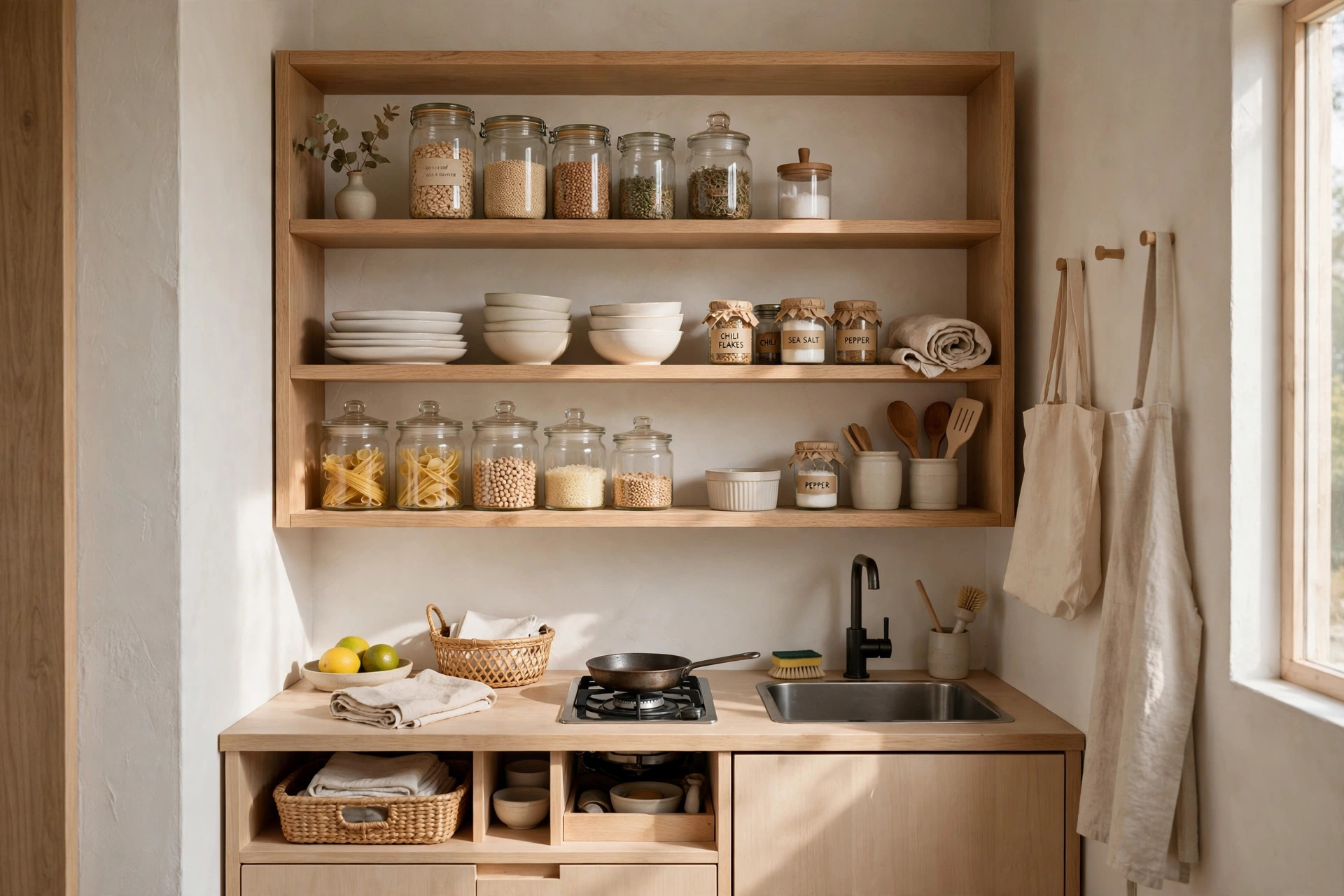
You do not need a walk-in pantry to have an organized kitchen. These pantry organization ideas are made for tiny kitchens — the single-cabinet, half-a-shelf, no-pantry-at-all kind. With a few cheap tools and one focused afternoon, you can turn whatever space you have into a system where everything has a home, nothing expires unnoticed, and cooking stops feeling like a treasure hunt. Every idea here is budget-friendly and renter-approved: no drilling into landlord cabinets, no expensive remodels.
Empty the entire pantry before you buy a single bin. Toss expired items, donate duplicates, and wipe the shelves. Most people free up 20–30% more space in this step alone — and you will only buy organizers that fit what you actually own.

The golden rule: organize your pantry in zones
Before any product or hack, learn the one principle behind every tidy pantry: zones. Group items the way you use them — breakfast things together, baking supplies together, snacks together, cooking staples together. When every category has its own zone, anyone in the house can find things and put them back without thinking. Professional organizers and even Marie Kondo's team teach the same thing: group by category first, containers second. (Homes & Gardens has a great summary of Marie Kondo's pantry method if you want the full philosophy.) Zones cost nothing — they are just decisions — yet they do more than any bin ever will.
15 pantry organization ideas for tiny kitchens
1. Decant dry goods into clear jars
Flour, rice, pasta, lentils, and cereal take up less visual and physical space in square, stackable jars than in half-empty branded bags. You can see exactly what is running low, food stays fresher, and the uniform look instantly calms a chaotic shelf. Start with just your five most-used staples — you do not need a matching set of thirty.
2. Use the back of the door
The inside of a pantry or cabinet door is free real estate. Over-the-door wire racks or adhesive spice racks hold seasoning packets, wraps, and small bottles without a single screw. In a small kitchen, this one trick can add the equivalent of an entire extra shelf.
3. Add shelf risers for double-decker storage
A wire or bamboo shelf riser creates a second level inside a tall cabinet, so short cans and jars stop wasting vertical space. You can suddenly see and reach everything instead of stacking cans three deep. Two risers cost less than a takeaway meal.

4. Spin it with a lazy Susan
Deep corner cabinets are where condiments go to expire. A turntable (lazy Susan) brings the back row to the front with one spin. Use one for oils and vinegars, another for sauces. The small investment pays for itself the first time you do not buy a duplicate bottle of something you already owned.
5. Corral small packets in bins
Tea bags, spice sachets, sauce packets, and snack bars multiply into chaos fast. Give each micro-category a small open bin or basket — when packets have a corral, they stop migrating across the shelf. Dollar-store bins are perfect here: cheap, washable, and easy to replace.
6. Label everything (even if it seems obvious)
Labels are what keep a system alive after the initial enthusiasm fades. A simple label maker or even masking tape and a marker works — label bins, jars, and zones. Everyone in the house, including kids, will put things back in the right place. This is the highest-return five dollars in all of home organization.
7. Store by frequency, not by size
Put daily items at eye level, weekly items one shelf up or down, and rarely-used things (holiday baking supplies, bulk backups) on the highest shelf. This "prime real estate" rule means you never stretch or bend for the coffee you grab every morning.
8. Use narrow pull-out gaps
That slim gap between the fridge and the counter? A narrow rolling cart turns dead space into a pantry tower for cans, bottles, and spices. These carts are renter-friendly, need no installation, and roll out for full access. Measure the gap first — they come in several widths.
9. Hang it under the shelf
Under-shelf hanging baskets clip onto existing shelves with no tools and create a bonus layer for mugs, small jars, or wrapped snacks. They use the dead air between shelves that risers cannot reach. Two or three of these can absorb an entire shelf's worth of clutter.
10. Make a "use first" basket
Food waste lives in the back of the pantry. Keep one small basket at the front for items nearing expiry or already opened — half a bag of pasta, the last of the crackers. When you need a snack or a quick meal base, shop this basket first. It is a simple habit that genuinely reduces waste and saves money.

11. Go vertical with wall space
If your kitchen has even a small stretch of free wall, mount a shallow rail or a couple of small shelves for spices and daily cooking essentials. Keeping them out of the cabinet frees prime shelf space for bulkier items. Use removable adhesive hooks and strips so it is fully renter-safe.
12. Standardize your containers
Mismatched containers waste space with awkward gaps. You do not need an expensive matching set — just pick one affordable shape (square modular containers stack best) and buy a few at a time. Even five matching containers mixed with your existing jars will look and function noticeably better.
13. Create a breakfast station zone
Group coffee, tea, oats, honey, and mugs in one zone — or even one tray you can lift out. Mornings get faster because everything for breakfast lives in one grab, and the rest of the pantry stays untouched. If you have kids, a low "snack zone" bin they can reach themselves works the same magic.
14. Borrow space from nearby areas
No pantry cabinet at all? Claim a shelf in a nearby closet, a rolling cart in the dining corner, or a few baskets on top of the fridge (for light, rarely-used items). The Kitchn's experts suggest exactly this kind of makeshift pantry thinking for galley kitchens — your pantry does not have to be one cabinet; it can be a system spread across smart spots.
15. Do a 10-minute reset every week
Even the best system drifts. Once a week — while waiting for the kettle, say — straighten zones, toss anything expired, and move the "use first" basket items forward. Ten minutes prevents the slow slide back into chaos. Pair it with a monthly check from a decluttering checklist and your tiny pantry will stay effortlessly tidy.
The $20 tiny-pantry starter kit
You do not need much to begin: two shelf risers, three small bins, a pack of labels, and one lazy Susan. Bought at discount or dollar stores, the whole kit often comes in under twenty dollars — and it transforms a single cabinet completely. Start there, live with it for two weeks, then add only what you still miss. If you want a structured reset first, the 30-day declutter challenge pairs perfectly with a pantry overhaul.
A tiny pantry rewards intention, not square footage. Pick three ideas from this list, spend one afternoon on them, and cooking in your small kitchen will feel calmer starting tonight.