
If your fridge is a narrow box and every grocery trip feels like a game of Tetris, these small fridge organization ideas are written for you. Most fridge guides assume a big family side-by-side — but renters in studios and small apartments usually get a slim top-freezer, or even a mini fridge squeezed into a corner. The good news: a tiny fridge is actually easier to keep organized, because there is nowhere for things to hide. You just need a system.
These 13 ideas are all budget-first and renter-safe. Nothing requires drilling, permanent changes, or expensive organizer sets. Most cost nothing at all.
Why Small Fridge Organization Matters in a Tiny Kitchen
When your kitchen is short on counters and cabinets, the fridge becomes one of your most-used storage zones. A disorganized small fridge means forgotten leftovers and sauces that multiply in the door until you cannot find the ketchup.
An organized fridge saves you money on groceries because you can actually see what you have — fewer duplicates, less waste. It also saves the daily frustration of moving six things to reach the milk.
13 Small Fridge Organization Ideas for Tiny Kitchens
1. Empty it completely and start fresh
Take everything out, check dates, and toss anything expired. Wiping the shelves while they are empty takes five minutes and instantly makes the fridge feel bigger. This is the only full empty-out you will do — from here on, it is maintenance.
2. Line shelves with paper towels or washable liners
A cheap layer on each shelf catches drips and crumbs. Paper towels get replaced during your weekly reset; washable liners are a one-time purchase that pays for itself quickly.
3. Give every food category a zone
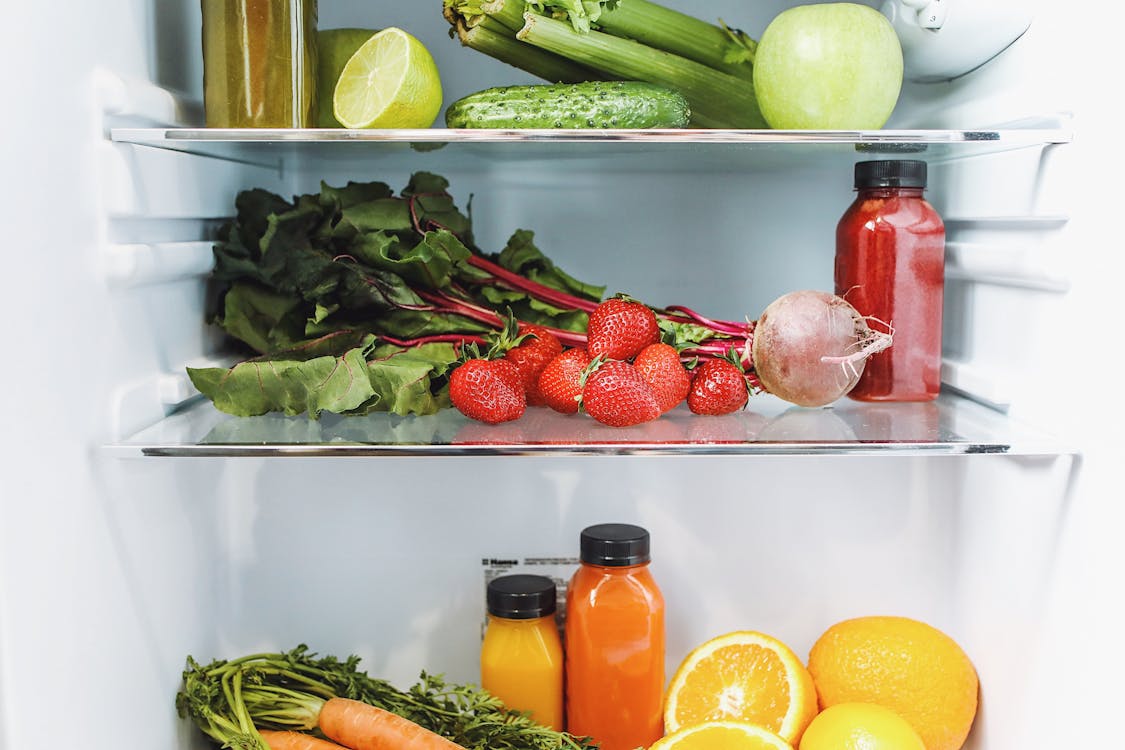
The single biggest change: assign each shelf a job. Top shelf for leftovers and ready-to-eat food, middle for dairy and daily drinks, bottom for raw meat and tall items, drawers for produce, door for condiments. When every category has a home, putting groceries away takes seconds.
4. Keep leftovers and ready-to-eat food at eye level
The top shelf is the easiest to see and reach, so it is the best place for what you should eat first: leftovers and snacks. Keeping perishables at eye level guards against forgotten food — a tip echoed in Apartment Therapy's fridge organizing guide.
5. Put dairy in the middle where the temperature is steady
The middle shelf has the most consistent temperature, ideal for milk, yogurt, cheese, and eggs. Skip the built-in egg tray in the door — the warmest, most temperature-variable spot.
6. Raw meat always goes on the bottom shelf
The bottom is the coldest part of most fridges, and storing raw meat low means drips cannot contaminate food below. Keep it in a tray or rimmed plate, as advised in Beko's refrigerator organization guide.
7. Use the crisper drawers the way they were designed
Most small fridges have at least one drawer with a humidity slider: vegetables generally prefer higher humidity, fruits lower. Even without sliders, separating fruits from vegetables helps, because many fruits release ethylene gas that ripens nearby vegetables too fast.

8. Reserve the door for condiments, not milk
The door swings into warm kitchen air, making it the warmest spot in the fridge. It suits ketchup, mustard, pickles, and sauces — all forgiving thanks to salt, sugar, or vinegar. Move milk and eggs onto a shelf.
9. Decant bulky packaging into clear containers
Cardboard boxes and oversized bags waste shocking amounts of space. Once you open that box of granola bars or the big bag of spinach, move the contents into a clear, stackable container so you can see everything and it all stacks neatly.
10. Add one stackable bin or riser — not ten
In a tiny fridge, one or two clear stackable bins create a second "shelf" inside a shelf, doubling usable space for small items like yogurt cups. Start with one bin and only add more if you actually need them; over-accessorizing a small fridge backfires.
11. Label everything with painter's tape
A strip of painter's tape and a marker is the cheapest labeling system there is, and it peels off cleanly — perfect for renters. Label leftovers with the date and label each zone so housemates know where things belong. Our small kitchen counter organization ideas post covers the same trick for counters.
12. Follow the first-in, first-out rule
When you unpack groceries, move older items to the front and put new ones behind them. This tiny habit is the number one way to stop finding expired yogurt at the back of the fridge. About ten extra seconds per grocery trip.
13. Do a five-minute weekly reset
On grocery day, spend five minutes pulling out anything expired, wiping one shelf, and pushing older items forward before the new groceries go in. If you like structured routines, our room-by-room decluttering checklist pairs well with this habit.
A Simple Zone Map for Any Small Fridge
If you remember nothing else, remember this layout — it works in almost every small fridge, from slim top-freezers to mini fridges:
- Top shelf: leftovers, ready-to-eat meals, and snacks at eye level
- Middle shelf: dairy, eggs, and daily drinks
- Bottom shelf: raw meat in a tray, plus tall bottles
- Crisper drawer(s): fruits separated from vegetables
- Door bins: condiments, sauces, and juices only
Renters working with a truly tiny kitchen can combine this with the storage strategies in our renter-friendly storage ideas guide to make the whole kitchen feel bigger.
“A small fridge is not a storage problem — it is a visibility problem. Once you can see everything you own, staying organized takes minutes, not hours.”
Keeping Your Small Fridge Organized Long-Term
The secret to a permanently tidy fridge is not a one-time overhaul — it is the small habits that keep the system alive. Shop with a list so you do not overbuy for the space you have, unpack groceries straight into their zones, and keep the five-minute weekly reset on the calendar. When a zone keeps overflowing, change the system instead of blaming yourself.
FAQs
How do you organize a small fridge with limited space?
Assign every shelf a zone (top for ready-to-eat, middle for dairy, bottom for raw meat, door for condiments), decant bulky packaging into stackable containers, and put older items in front so they get used first. Visibility matters more than extra organizers.
What should go on each shelf in a small fridge?
Top: leftovers and ready-to-eat food at eye level. Middle: milk, yogurt, cheese, and eggs, where the temperature is steadiest. Bottom: raw meat in a tray (coldest spot; drips cannot fall on other food). Door: condiments and sauces only.
How can I organize my fridge without buying organizers?
Rearrange adjustable shelves to fit tall items, label zones with painter's tape, reuse clean jars and takeout containers as bins, and decant boxed foods into containers you already own.
How often should I clean and reorganize a small fridge?
Do a quick five-minute reset weekly — toss expired items, wipe one shelf, and rotate older food forward — ideally on grocery day. A deeper clean-out every few months keeps odors and buildup away.
A tiny fridge does not have to feel like a compromise. With a zone for every category, clear containers, and a five-minute weekly rhythm, you will finally stop losing leftovers to the mysterious back shelf.