When your small apartment runs out of room, a self storage unit can feel like a miracle — until you open the door six months later and face a wall of mystery boxes. The good news is that self storage unit organization is a skill, not a talent, and it starts before you load a single box. With a simple zone plan, uniform boxes, and a map you can read, you can fit more in and find anything fast. These 11 tips are budget-first and renter-friendly.
1. Declutter Before You Pack a Single Box
Storage costs money every month, so every item should earn its rent. Sort everything into four piles: keep, store, donate or sell, and discard. If you have not used something in a year and it has no seasonal or sentimental purpose, it does not belong in a unit you pay for. Our room-by-room decluttering checklist and downsizing checklist cover this step.
2. Choose the Right Size (and Type) of Unit
Too small forces dangerous, unstable stacks; too big wastes money. As a rough guide, a 5×5 holds a small room's worth of boxes, a 5×10 fits a studio's furniture plus boxes, and a 10×10 handles a one-bedroom apartment. Measure your largest furniture first, and ask about ceiling height. For wood furniture, electronics, or photos, pay extra for climate control.
3. Draw a Floor Plan Before Moving Day
Sketch the unit on paper: door position, the aisle, and three zones. Zone A at the back holds bulky furniture and things you will touch once a year or less. Zone B in the middle holds seasonal items you need a few times a year. Zone C near the door holds anything you might need within a month. Tape it inside the unit door when you finish loading.
4. Use Uniform Boxes and Label Three Sides
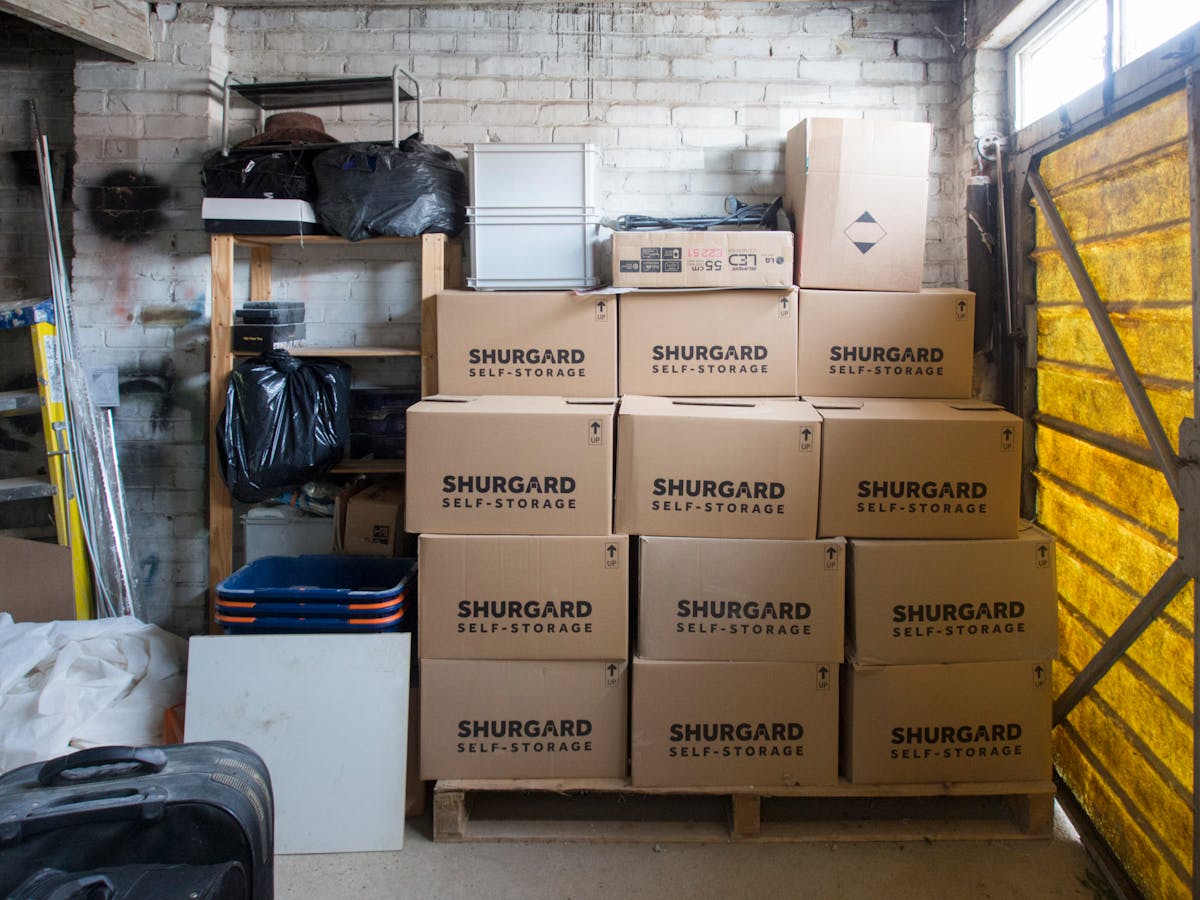
Mixed box sizes build leaning towers. Pick one or two box sizes and stick with them: uniform boxes stack straight, waste no gaps, and let you go higher safely. Label every box on the top and two sides with its contents and zone letter ("B — winter clothes"). A thick marker beats printed labels that peel off in humidity.
5. Load in Zones, Heaviest First
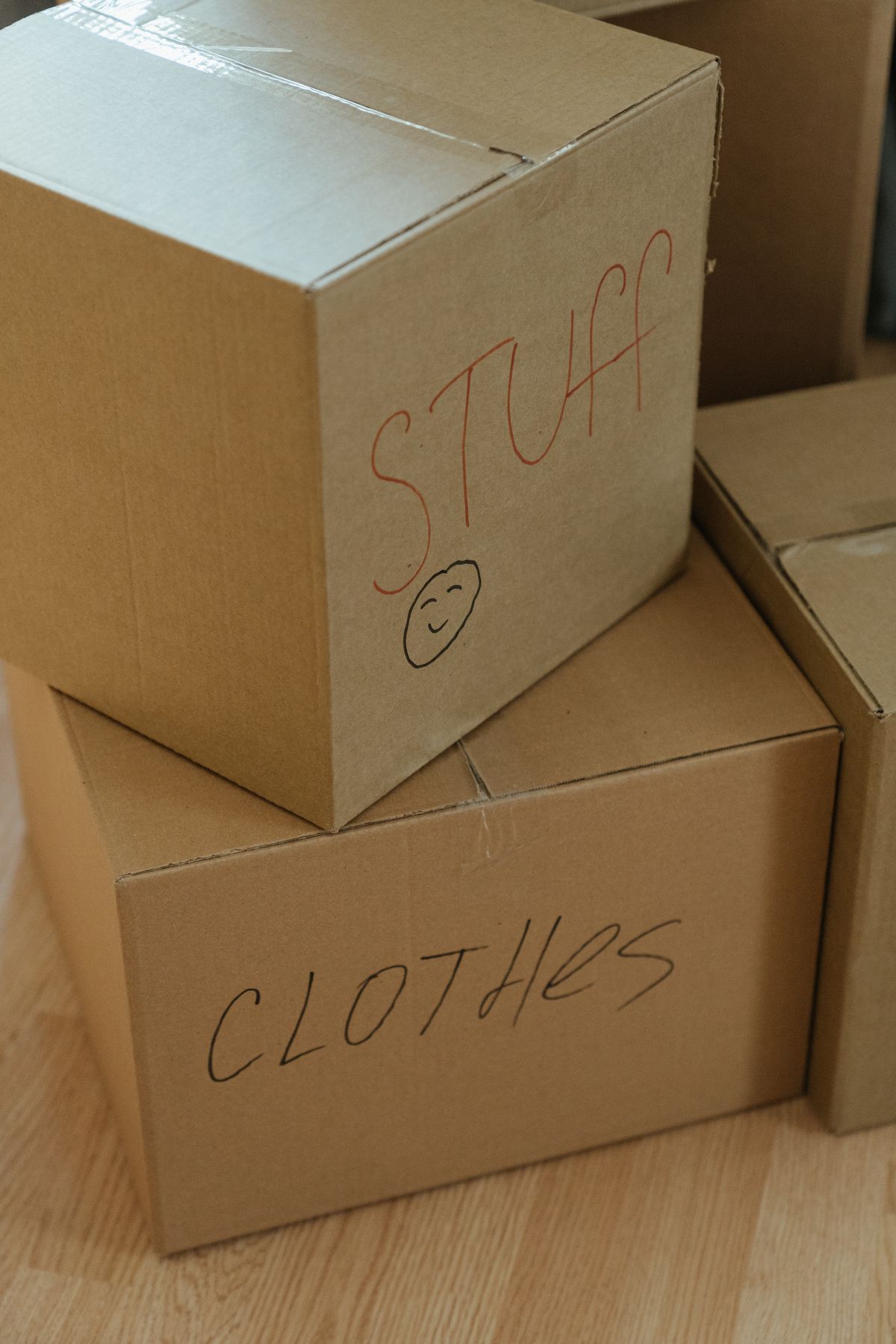
Load in the reverse order of how often you will need things: back-zone furniture and heavy items go in first, along the back and side walls, then middle-zone boxes, then front-zone items last so they are the first thing you see when you open the door. Put the heaviest boxes at the bottom of every stack and the lightest on top. Disassemble beds, tables, and shelving first — flat pieces stack neatly against walls.
6. Always Leave an Aisle
It is tempting to fill every square foot, but a unit with no path is a unit you cannot use. Leave a center aisle at least two feet wide from the door to the back wall — about 15–20% of the floor space. You can reach any box without unloading half the unit, and the airflow helps prevent musty smells.
7. Go Vertical — But Stack Smart
Most units have 8–10 feet of height — use it. Freestanding metal shelving (check with the facility first — most allow it) turns one footprint into three or four levels of reachable storage and keeps boxes off the floor. If you stack boxes directly, keep each stack one box size, stagger the joints like bricks so columns cannot lean, and keep fragile items on shelves, never at the bottom of a deep stack.
8. Use the Hidden Space Inside Your Furniture
Empty furniture is wasted volume. Fill dresser drawers with linens, wardrobes with hanging garments, and suitcases with bedding and out-of-season clothes. Keep each piece light enough to move, and never overfill drawers.
9. Protect Against Moisture, Dust, and Pests
A storage unit is not a sealed vault. Lay pallets or 2×4 boards on the floor so bottom boxes never sit directly on concrete, which can wick moisture. Cover furniture with breathable covers, not plastic sheeting, which traps condensation. Add a few moisture absorbers, keep food and anything scented out, and check on the unit every few months. Extra Space Storage's pro tips for packing and organizing a storage unit cover cleaning and shelving well.

10. Make an Inventory and a Map
Write down every box number, its contents, and its zone on one master list — a phone note or a simple spreadsheet both work. Photograph each zone as you finish loading so you can check what is where without driving to the facility. Keep a copy at home and one taped inside the unit door next to your floor plan. When you need something, the list takes you straight to the right zone.
11. Know What Never Goes in Storage
Some things do not belong in any unit: perishable food, plants, flammable liquids, paint, propane tanks, and anything hazardous — most facilities ban them, and they can damage your belongings or void your coverage. Keep passports, jewelry, irreplaceable photos, and important documents at home or in a safe deposit box. Photograph valuables and check your insurance coverage. Wadaya Self Storage's guide to packing a storage unit has a useful pre-loading checklist for supplies and prohibited items.
A storage unit is not a place where things go to be forgotten — it is a second closet, and a second closet only works if you can find things in it.
Budget tip: Collect same-size boxes free from liquor and book stores, and borrow a dolly instead of renting one — the savings can pay for the climate-controlled upgrade.
Self Storage Unit Organization: Your Loading-Day Checklist
- Declutter first — donate, sell, or discard before you pack.
- Measure large furniture; confirm unit size and ceiling height.
- Sketch the three-zone floor plan; tape it inside the door.
- Pack uniform boxes; label top and two sides with contents and zone.
- Load heaviest first, back zone first, front zone last.
- Leave a two-foot center aisle; keep the door area clear.
- Raise bottom boxes on pallets; cover furniture with breathable sheets.
- Photograph each zone; keep an inventory copy at home.
If your apartment still feels short on space, our guide to organizing a small apartment with no storage and our storage ideas for awkward spaces cover the corners, nooks, and gaps the unit cannot fix.
Frequently Asked Questions
What size storage unit do I need for a one-bedroom apartment?
A 10×10 unit (100 square feet) usually fits a one-bedroom apartment's furniture and boxes; a 5×10 works for boxes and small furniture only. Measure first and declutter — many people drop a size after purging.
How should I organize boxes inside a storage unit?
Use uniform box sizes, label the top and two sides with contents and a zone letter, stack heaviest at the bottom, and arrange in three zones: rarely needed at the back, seasonal in the middle, frequently needed near the door, with a center aisle left clear.
Should I use shelves in a storage unit?
Yes, if the facility allows them. Freestanding metal shelving uses the unit's height, keeps boxes off the floor, and makes every box reachable without unstacking. Confirm first — some do not allow anchored shelving.
How do I keep things in a storage unit from getting damp or damaged?
Raise boxes on pallets, use breathable covers instead of plastic sheeting, add moisture absorbers, keep food and scented items out, and visit every few months to check for damp. Climate control is worth it for wood, electronics, and photos.
One careful afternoon organizing your unit pays you back every time you open the door. Declutter first, plan your zones, label everything, and leave yourself an aisle — do those four things and the unit works like the extra room your apartment never had.