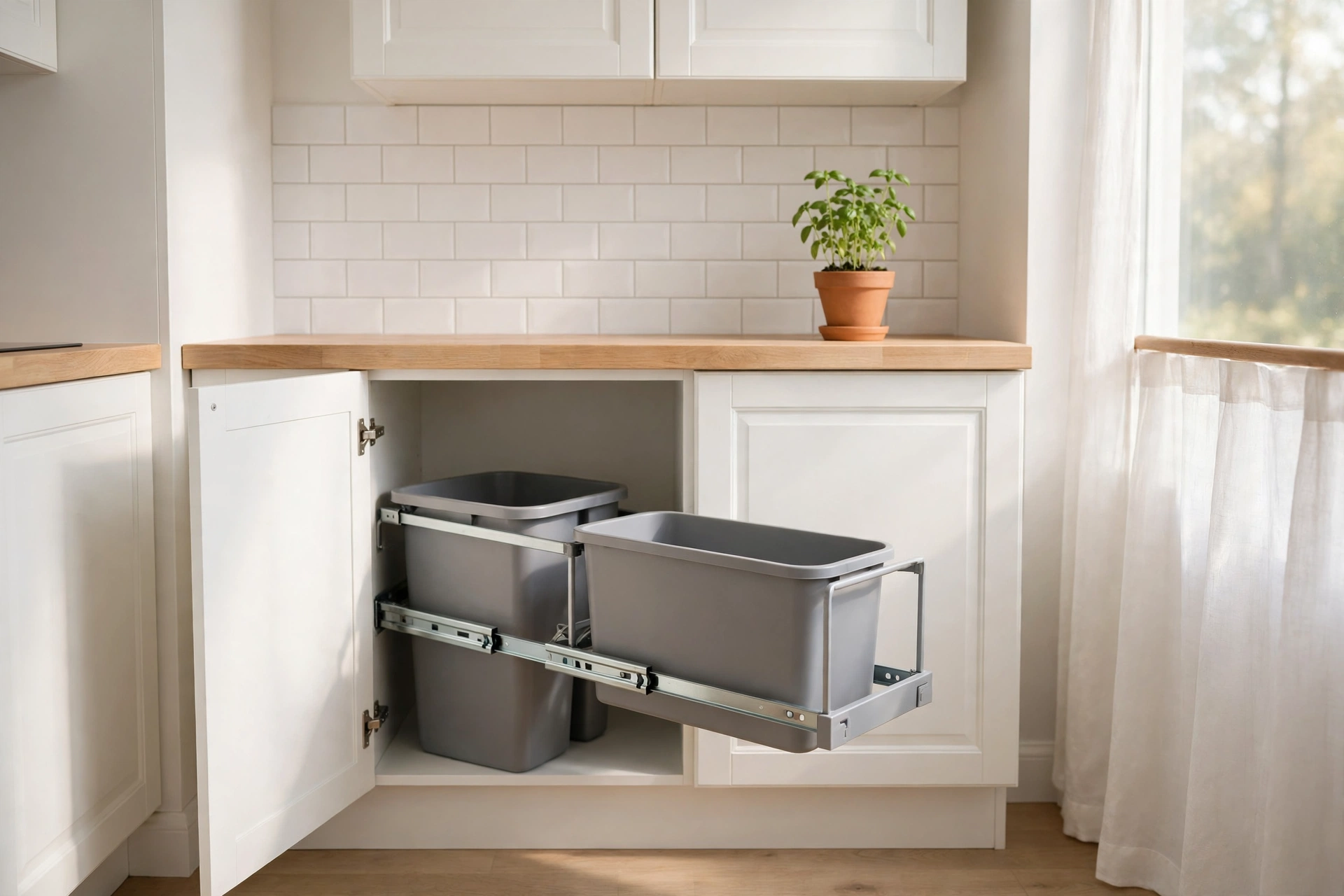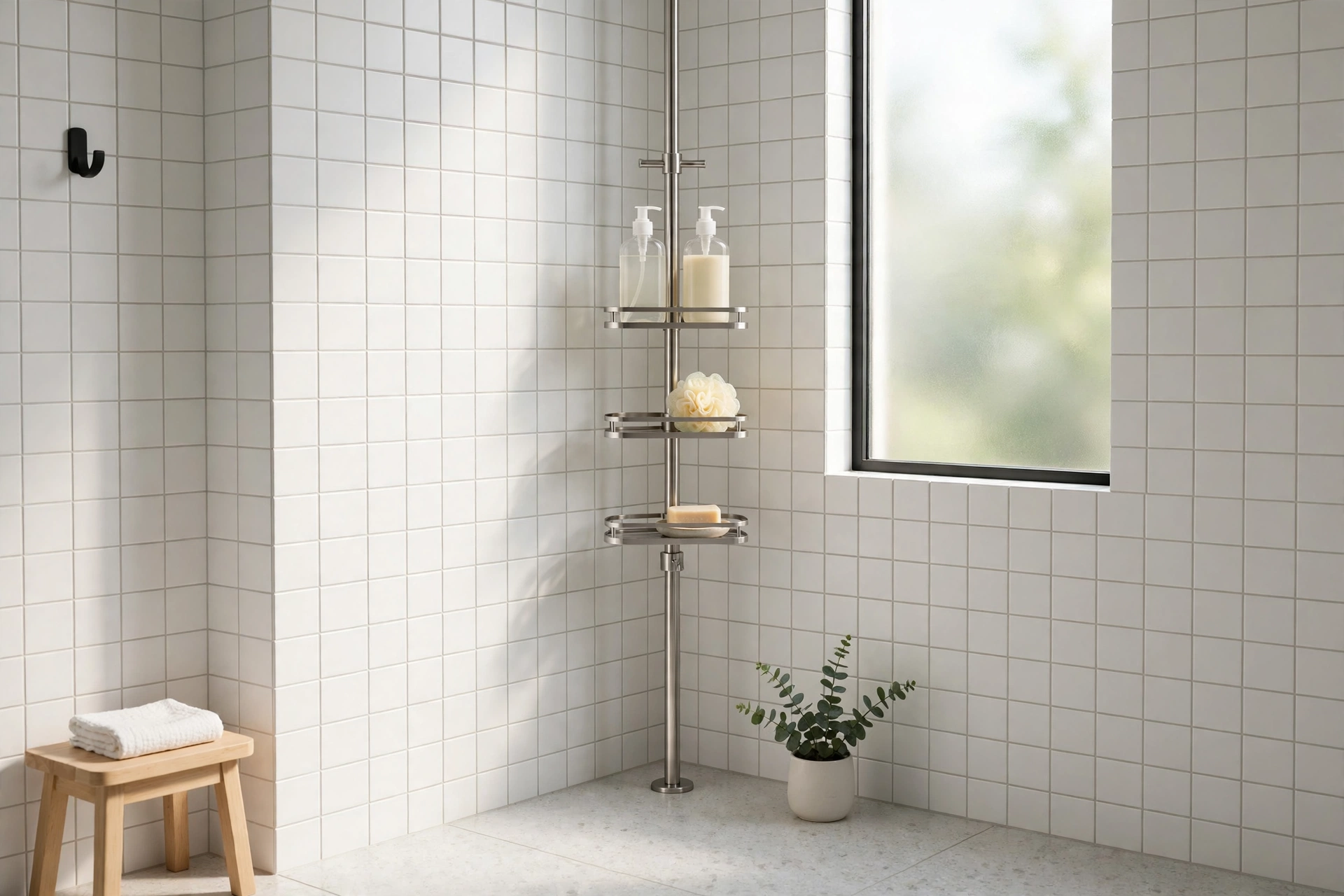
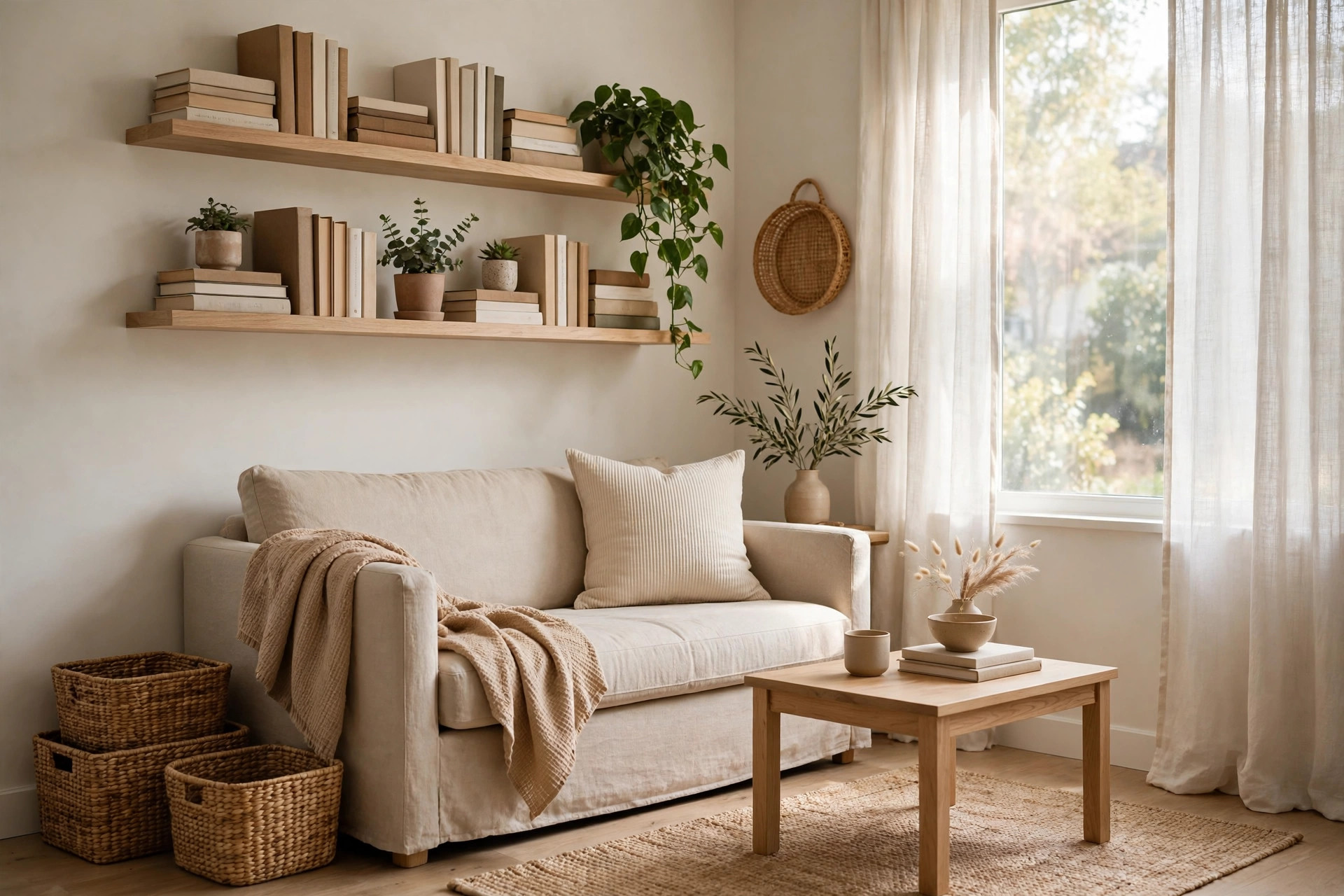
Every small home has them: the corner too tight for a chair, the six-inch gap between the fridge and the wall, the odd triangle under the stairs, the strip of wall above a door that holds nothing at all. Storage for awkward spaces is the art of turning those dead zones into working storage — without a remodel, without drilling holes you cannot fix, and usually for less than a takeaway dinner. No extra square footage needed — just better use of what you have.

Fifteen renter-friendly ideas, the method, a checklist.
The 4-Step Method: Measure First, Buy Second
Most awkward-space projects fail because someone buys a shelf before measuring. Do these four steps first.
Step 1 — Measure the gap, not the room. Measure width at the narrowest point, depth and height — front and back, because corners are rarely square — and write the numbers down.
Step 2 — Name the job. Ask what clutter lives nearest: shoes by the door, spices by the stove, books by the bed. A space only stays organised when it solves one specific problem.
Step 3 — Pick the renter-safe fix. Favour freestanding, leaning, tension-mounted or adhesive-mounted pieces. A drill is a last resort, not a first idea.
Step 4 — Test with cardboard. Cut a box to the size of the shelf or cart and slide it into the gap. If it fits and nearby doors still open, buy it.
15 Storage Ideas for Awkward Spaces
Corners That Finally Earn Their Keep
1. Triangular corner shelves. Small triangular floating shelves turn a dead corner into a home for books or plants. Keep them shallow — about 20 cm deep — without crowding the walkway.
2. A leaning ladder shelf. Ladder shelves need no drilling and lean neatly into a corner. Bottom rungs hold baskets, top ones hold display — in any room where nothing else fits.
3. A corner reading nook with storage underneath. A small bench or ottoman, a cushion and a clip-on light turn a corner into a reading spot with hidden storage for blankets. For more corner inspiration, see our corner storage ideas for small apartments.

The Gaps Between Things
4. A slim rolling cart in the fridge gap. The 15 cm strip between fridge and wall is the classic awkward gap. A slim rolling cart on castors slides in and out holding oils, spices or cleaning supplies.
5. A narrow pull-out beside the washer. The gap beside a washing machine fits a tall, narrow pull-out rack for detergent and cloths — keeping supplies off the machine top, where they always fall over.
6. A console behind the sofa. If your sofa floats away from the wall, the strip behind it is wasted. A narrow console holds lamps, books and charging cables, and stops things sliding behind the cushions.
7. A tension-rod shelf inside a deep gap. Two tension rods wedged across a narrow gap make an instant shelf for flat things — baking trays, chopping boards, wrapping paper. No drilling, and it comes down in seconds at move-out.
Above and Below Eye Level
8. A shelf above the door. The strip above a doorway holds a narrow shelf for spare towels or rarely used bags — everyday things at hand height, twice-a-year items up high. More: our vertical wall storage ideas.
9. Baskets on top of cabinets. The dusty space above kitchen cabinets or wardrobes suits labelled baskets of seasonal gear or spare bedding. Matching baskets keep it tidy, not a dumping ground.
10. Pull-out drawers under the stairs. The triangle under the stairs is the most famous awkward space — and the most useful once it has drawers. Deep pull-outs suit shoes best; full treatment in our under-stairs storage ideas.
Alcoves, Nooks and Odd Angles
11. A desk in the alcove. An alcove beside a chimney breast or at the end of a hallway is often exactly desk-sized. A small floating desk and one shelf above make a work corner that disappears when the laptop closes.
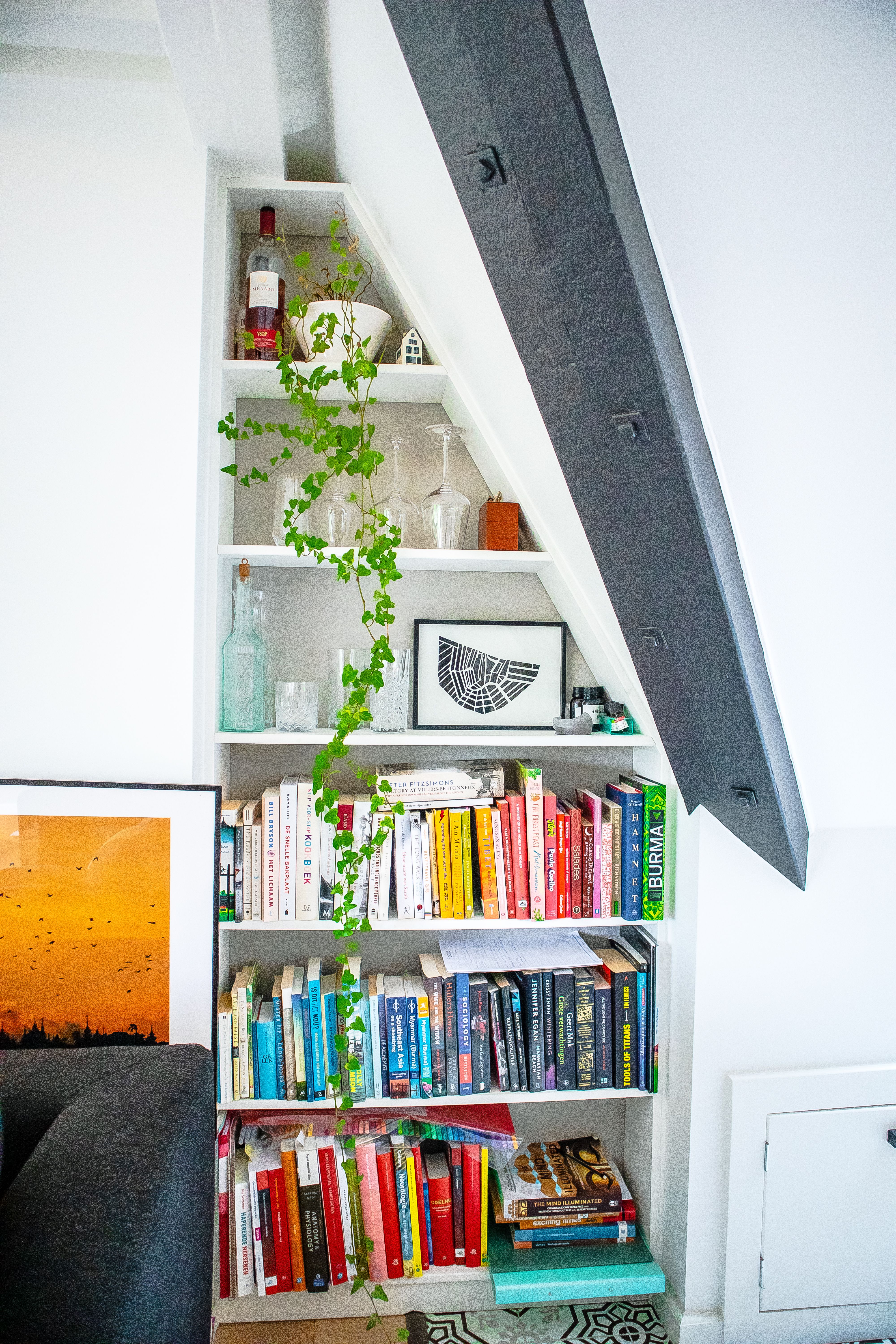
12. Low shelves under a sloped ceiling. Attic bedrooms waste the space where the ceiling slopes down. Low, wide shelves or stackable crates fit there, holding books or off-season clothes without stealing headroom.
13. A window seat with storage inside. A window nook is already a seat waiting to happen. A bench with a lift-up lid hides toys or blankets — and the cushion on top makes the awkward corner the best seat in the house.
14. Racks on the back of the door. The back of any door is free vertical space. Slim over-door racks hold shoes, cleaning tools or scarves with no screws — just keep the weight light so the door still swings freely.
15. A headboard shelf in the gap beside the bed. When the bed touches the wall, the sliver beside it is too small for a nightstand — but a narrow floating shelf at mattress height holds a phone, a book and water.
The best storage isn't more furniture — it's the space you already own, finally put to work.
Quick tip: Measure twice, buy once. Corners are rarely square — measure the narrowest point, subtract 1 cm for clearance. A shelf 1 cm too wide is useless; 1 cm too narrow still works.
What NOT to Store in Awkward Spaces
Not every dead zone should be filled. Skip heavy items on high shelves — a falling basket of books is a real hazard. Keep damp-sensitive things like paper away from the gap behind a fridge or a bathroom wall, where condensation gathers. And leave walkways clear: if a gap makes you turn sideways to pass, the storage costs more than it saves. Apartment Therapy's 28 small bedroom storage ideas show the same trade-offs in real homes.
Renter-Safe Rules for Awkward Spaces
Renters get the most from awkward spaces, because these fixes rarely need a landlord's permission. Stick to freestanding, leaning, tension-mounted or adhesive-mounted pieces: anything stuck on should come off cleanly, and anything leaning should not mark the wall. Photograph each spot first for move-out proof. If a fix genuinely needs screws, ask first — a short message with a photo is usually enough and protects your deposit. Family Handyman's creative storage solutions for unique spaces has more built-in inspiration for homeowners.
Awkward-Space Checklist
- List every dead corner, gap and nook in each room.
- Measure width, depth and height at the narrowest point.
- Name one job per space.
- Test the fit with a cardboard mock-up before buying.
- Label every basket.
- Leave one awkward space empty on purpose.
Frequently Asked Questions
What is the best storage for awkward spaces in a rental?
Freestanding, no-drill options: leaning ladder shelves, slim rolling carts, tension-rod shelves, over-door racks and storage ottomans. No holes, so your deposit stays safe.
How do I measure an awkward gap for storage?
Measure width at the narrowest point, plus depth and height, front and back — walls are rarely straight. Subtract 1 cm for clearance before buying.
What should I not store in awkward spaces?
Heavy items on high shelves, damp-sensitive things near fridges or bathroom walls, and anything that blocks a walkway. If a space makes you squeeze past, skip it.
How much does it cost to use awkward spaces for storage?
Most ideas here cost under $30: a slim rolling cart, tension rods, a few baskets or a small leaning shelf. Measuring and the cardboard test are free and prevent the only expensive mistake — buying the wrong size.
Start this weekend with the gap that annoys you most. Measure it, name its job, test a mock-up. Once the first one works, the rest of the house starts looking like opportunity instead of clutter.