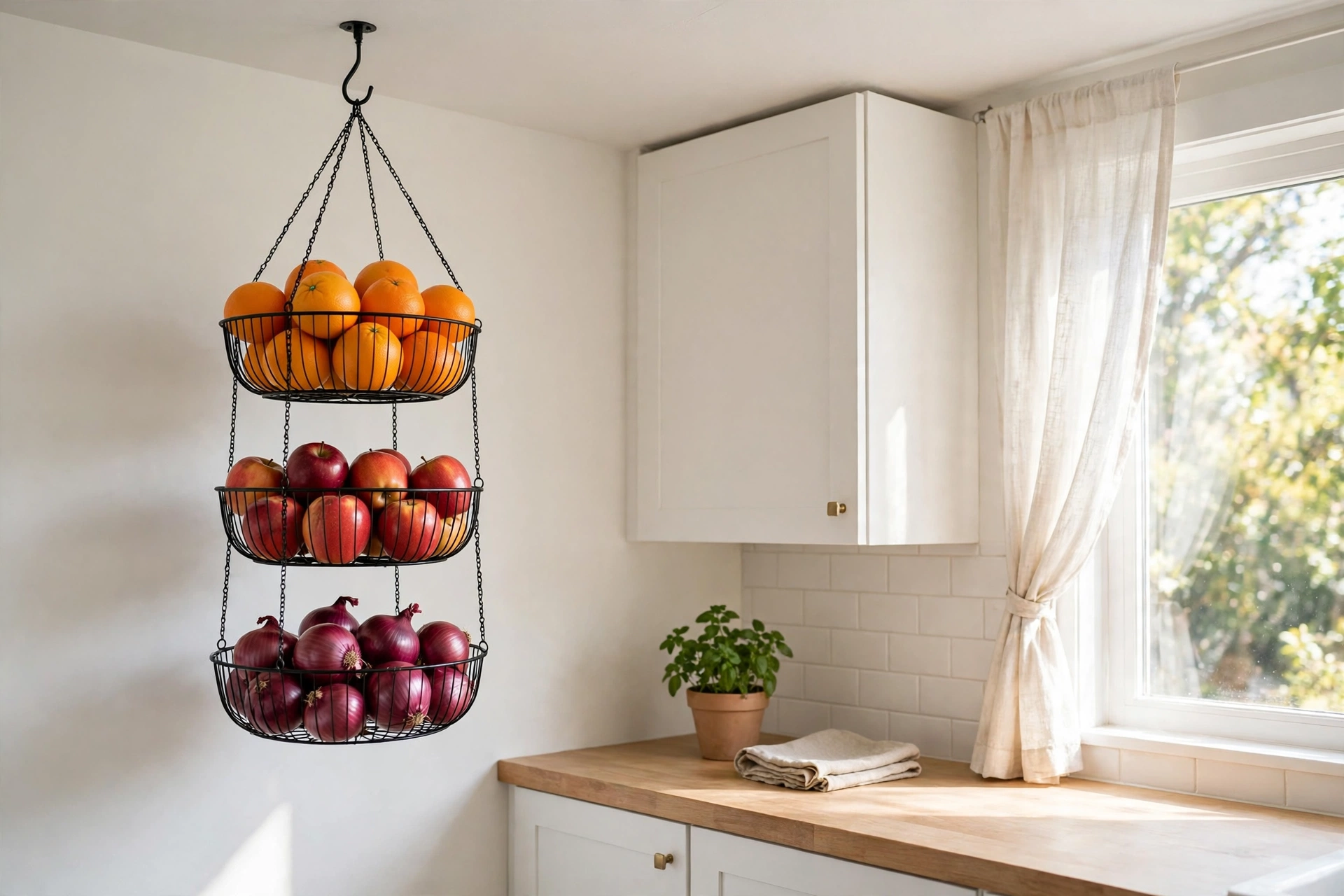

A small camper gives you freedom, but almost no margin for mess. One unsecured cabinet and a two-hour drive turns your tidy home into sliding pans and chargers. These RV organization ideas for small campers work parked and moving — no remodel needed.
A camper is not a small apartment: it shakes, it tilts, and every extra kilo counts against your payload. So declutter first, zone second, contain third, then secure for the road.
The 7-Step RV Organization Method for Small Campers
Do this once, in order, before your next trip. It takes an afternoon.
1. Empty one zone completely. Pick one zone — kitchen, closet, or bathroom — never the whole camper. Pull everything out so you can see what you own.
2. Cut duplicates ruthlessly. Two spatulas, three sunscreens, four chargers for two phones. In a camper, a duplicate is clutter with a good excuse. Keep one of each.
3. Give every zone a single job. One cabinet for cooking tools, one for dry food, one for cleaning supplies.
4. Measure before you buy anything. Camper cabinets are all different sizes, and a bin half an inch too wide is useless. Measure width, depth, and clearance first.
5. Contain the small stuff. Clear bins and small pouches keep spices, cables, and toiletries from migrating on travel days.
6. Secure for the drive. Non-slip liner under everything, tension rods across open shelves, lids that latch. If it can slide, it will slide.
7. Do a 10-minute reset after every trip. Empty the departure basket (idea 15), toss the trash, and restore every zone.
"In a camper, everything needs a home that survives the drive — not just a place that looks tidy when you're parked."
Kitchen: 3 Ideas That Actually Work
1. Build one cooking kit in a shallow tray
Group everyday tools — spatula, tongs, peeler, can opener — in one shallow tray near the stove. Lift it out to cook, return it in one move.
2. Store cutting boards vertically with a tension rod
A tension rod across a cabinet turns dead vertical space into a filing system for cutting boards, trays, and lids. It costs almost nothing, needs no screws, and stops boards sliding.
3. Zone the pantry and fridge with small clear bins
Split dry food into three zones — meal ingredients, snacks, backup supplies — one small labeled bin per zone. In the fridge, one small bin per group stops sliding. Leave one shelf partly empty for leftovers.

Sleeping Area and Clothes: 3 Ideas
4. File-fold clothes into shallow bins
Fold shirts and trousers and stand them upright in a shallow bin, like files in a drawer. One bin per person.
5. Give each traveler a packing cube set
One cube for tops, one for bottoms, one for underwear and socks. When the trip ends, the cubes come out and the closet is empty in two minutes. Same zone logic, bigger space: organizing a small apartment with no storage.
6. Use under-bed storage only for off-duty items
Reserve the space under the bed for spare linens and backup supplies. Use soft-sided bins that slide easily, and never block service access panels. More systems: our under-bed storage ideas.
Bathroom and Toiletries: 2 Ideas
7. One toiletry caddy per person
Give every traveler a small washable caddy instead of letting toothbrushes and creams cover the only bathroom ledge. It lives in a cabinet while driving.
8. Hang a shower caddy and suction hooks
Suction-cup hooks hold toothbrushes and razors without screws — handy in a rental. A hanging shower caddy keeps shampoo off the floor. Store liquids in a leak-resistant bag so a bumpy road never means a sticky cabinet.
Entryway, Living Area, and Gear: 4 Ideas
9. Create a drop zone by the door
Mount a small key rack and hooks inside the entry door, with a narrow tray below for sunglasses and chargers. In a camper the counter is your only work surface — the moment keys live there, cooking gets harder.
10. Use an over-door organizer for everything except shoes
Hang a clear-pocket over-door organizer on the bathroom or bedroom door and fill it with rolled t-shirts, toys, or snacks. It turns a door into an extra cabinet. Same trick, room by room: over-the-door storage ideas for small apartments.
11. Keep one electronics pouch per device family
One pouch for phone cables, one for camera gear, one for the lantern and batteries. Charge on a ventilated surface, never in a closed cabinet.
12. Store outdoor gear in labeled exterior kits
Separate outside gear into three labeled kits: leveling accessories, drinking-water equipment, and wastewater gear. Keep them in the passthrough locker so muddy items never come inside. Same system at home: small garage organization ideas on a budget.
How to Keep Everything in Place While You Drive
13. Secure shelves with tension rods and non-slip liner
Line every shelf with non-slip liner, then add a tension rod across open shelves and the fridge. Test it: drive around the block and open every cabinet. Whatever moved gets a rod, a liner, or a new home.
14. Store heavy items low and near the center
Heavy items go in low cabinets close to the camper's center — never up high, where they shift the balance and crash down when you brake. Remember the payload: extra storage is not extra capacity, so check your loading labels. KOA's ways to make your RV even better shares the same transit tricks — velcro for the coffee maker, shoe organizers on doors, Command hooks within reach.
15. Keep a departure basket by the door
Before you drive, gather every loose item — books, games, chargers, the dog's lead — into one basket by the door, then put each item into its secured home. If the basket is empty, nothing is loose. The RV Dummies' RV packing and organization guide explains the same pack-by-category system.

The 10-Minute Departure Checklist (Printable)
Run through this list every time you leave a campsite.
- Counters clear — coffee maker stays, velcroed down
- Fridge bins latched, tension rod in place
- All cabinet doors latched and locked
- Loose items into the departure basket, then home
- Shoes in the tray, nothing on the floor
- Toiletries in caddies, liquids in leak-proof bags
- Electronics pouch zipped, cables coiled
- Exterior kits locked, water and waste separated
- Windows and roof vent closed, awning in
- Walk around once — lockers, steps, hookups
Frequently Asked Questions
How do I organize a small RV with almost no storage?
Start with the 7-step method above: cut duplicates, give every zone one job, then contain small items in labeled bins. Go vertical — doors, walls, shelf undersides — before buying anything new.
How do I stop things from sliding around while driving?
Use non-slip liner, tension rods across open shelves and the fridge, and containers with latching lids. Store heavy items low, and test-drive around the block to find what still moves.
What should I not store in a small camper?
Skip duplicates, single-use gadgets, and anything unused in two trips. Avoid heavy items up high and liquids without leak-proof bags.
How often should I re-organize my camper?
Reset for 10 minutes after every trip — empty the departure basket, toss the trash, return everything to its zone. A full declutter once a season is enough.
A small camper will never have as much storage as a house — that is the point. Fewer things, each with a home that survives the drive, means less tidying and more camping. Start with the kitchen this weekend.