
Why Pots and Pans Are the Hardest Thing to Store in a Small Kitchen
Pots and pans storage ideas for small kitchens all solve the same problem: cookware is big, heavy, awkwardly shaped, and used every day — yet in a small kitchen it usually gets the worst cabinet in the room. If opening your cookware cabinet sounds like a cymbal crash, the storage is at fault, not you.
You do not need a remodel or expensive organizers. Most small kitchens need just three changes: fewer pieces, lids stored separately, and pans filed vertically instead of stacked flat.
Start With a 10-Minute Cookware Edit
Before you buy a single organizer, take everything out and sort it into three piles:
- Daily: the 2–3 pieces you used in the last week — usually one skillet, one saucepan, one sheet pan.
- Weekly: the stockpot, the Dutch oven, the big roasting pan.
- Never: the warped pan, the lid with no pot, the duplicate skillet. Untouched in six months? It goes.
Donate the usable pieces and recycle the warped ones. Most people find their cabinet problem was never the cabinet — it was the extra set of pans.
7 Pots and Pans Storage Ideas for Small Kitchens
All seven are renter-friendly and budget-first: no drilling unless you choose it, and most cost under $30.
1. File Pans Vertically Like Books
Stacking pans flat is the root of the problem. Need the bottom pan? You lift the whole pile — lids slide, nonstick scratches, and the stack rebuilds itself into a mess. Store pans on their edges instead, like files in a filing cabinet. A vertical pan rack or wire file organizer inside a cabinet gives each pan its own slot, so you slide out exactly the one you need. It works in deep drawers too.
2. Give Lids Their Own Home
Lids are the real space thieves. One lid takes up almost as much room as its pot, and balanced on a stack it slides off every time you reach for something. Pull lids out of the stack and store them on their edges.
Stand them upright in a deep drawer with a divider, slot them into a wire file organizer, or hang a small rack inside a cabinet door. A tension rod across a narrow cabinet makes lid slots for under $10.
3. Hang a Rail or Pegboard on the Wall
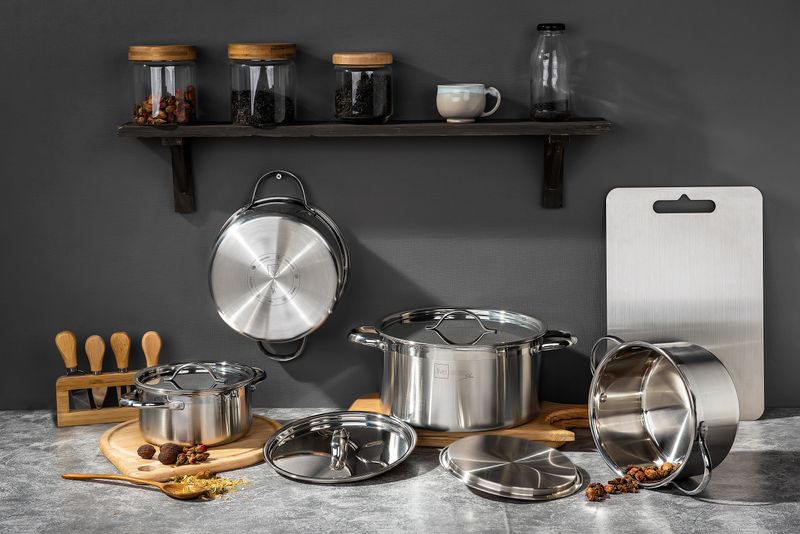
Wall space is storage space waiting to happen. A short metal rail with S-hooks, or a pegboard on heavy-duty adhesive hooks, turns an empty stretch of wall into a home for your daily pans — within arm's reach of the stove.
Renters: skip the drill. Adhesive rails and command hooks hold lightweight aluminum and stainless pans easily (check the weight rating; keep heavy cast iron in a low cabinet). Hang only the pans you use most. For more no-drill ideas, see our renter-friendly storage ideas.
4. Use the Inside of Cabinet Doors
The inside of a cabinet door is free real estate. A slim adhesive lid rack or a row of small hooks holds lids, measuring cups, or a single flat pan — space that was doing nothing before.
Measure first: rack plus lid must clear the shelf when the door closes. It works best on lower cabinets near the stove, and paired with vertical filing inside, it doubles one cabinet's capacity.
5. Nest Smartly — With Protectors Between Pieces
Nesting still has a place, especially for same-size saucepans. The rule: never let two nonstick surfaces touch. Slip a felt pan protector, a folded dish towel, or a paper towel between every nested piece.
Protectors cost a few dollars a set: they stop scratches and the suction that makes nested pans hard to separate. Nest by size, largest on the bottom, one stack per shelf.
6. Roll In a Slim Cart
If your cabinets are truly full, add storage that needs no cabinet at all. A slim rolling cart tucks into the gap between the fridge and the counter, holds your daily pans and lids, and rolls away when you need floor space.
It is also the best answer for baking sheets: stand them on edge in the cart's top tier and they stop sliding around. Our kitchen organization ideas for small kitchens has more ways to use gaps like this.
7. Move the Rarely-Used Pieces Out of the Kitchen
Not every pot needs to live in the kitchen. The turkey roaster, the giant stockpot, the specialty pan you use twice a year — these can live on a high shelf, in a hall closet, or in a labeled bin on top of a wardrobe. Your everyday pans get the prime cabinet near the stove; everything else earns its spot by how often you cook with it.
"A small kitchen does not need fewer meals cooked in it — it needs every pan to have one obvious home, and lids to stop pretending they are pots."
What About Heavy Cast Iron and Big Stockpots?
Heavy cookware follows one rule: as low as possible. Cast iron skillets and Dutch ovens belong on the bottom shelf of a lower cabinet or in a deep drawer — never above your head, and never on adhesive hooks. Big stockpots are the exception to "keep everything in the kitchen": if yours only comes out for soup season, store it with your rarely-used pieces and free that shelf for daily pans. If counters are still crowded, our small kitchen counter organization ideas will help clear the rest.

Your Weekend Checklist: Sort the Cookware in One Afternoon
The job takes about an hour:
- ☐ Empty every cookware cabinet and drawer onto the counter
- ☐ Sort into Daily / Weekly / Never — donate or recycle the Never pile today
- ☐ Wipe the empty shelves
- ☐ File daily pans vertically in the cabinet closest to the stove
- ☐ Give lids their own spot — divider, door rack, or tension rod slot
- ☐ Hang your 2–3 most-used pans on a rail or pegboard
- ☐ Nest what is left, with a protector between every piece
- ☐ Move rarely-used pieces to a labeled bin outside the kitchen
Cook one meal, notice what you reach for, and adjust the layout to match. Apartment Therapy's 7-step plan for organizing a small apartment kitchen pairs well with this guide, and Hunker's renter-friendly trellis hack is a clever no-drill way to hang pans on a blank wall.
Frequently Asked Questions
What is the best way to store pots and pans in a small kitchen?
File pans vertically in a rack or deep drawer, store lids separately on their edges, and keep only daily pans in the cabinet nearest the stove — so you can grab any pan without lifting the pile.
How do I store pots and pans without scratching them?
Put a felt pan protector, folded dish towel, or paper towel between every nested piece, and never stack nonstick on nonstick. Vertical filing avoids surface contact altogether, which protects coatings best.
Where should pot lids go in a small kitchen?
Store lids on their edges — in a deep drawer with a divider, a wire file organizer, or a rack inside a cabinet door. Keeping lids out of the stack frees up to half a shelf.
How can renters store pots and pans without drilling?
Use adhesive wall rails and heavy-duty command hooks for lightweight pans, a freestanding vertical rack inside cabinets, and tension rods for lid slots. Keep heavy cast iron in a low cabinet, never on adhesive hooks.