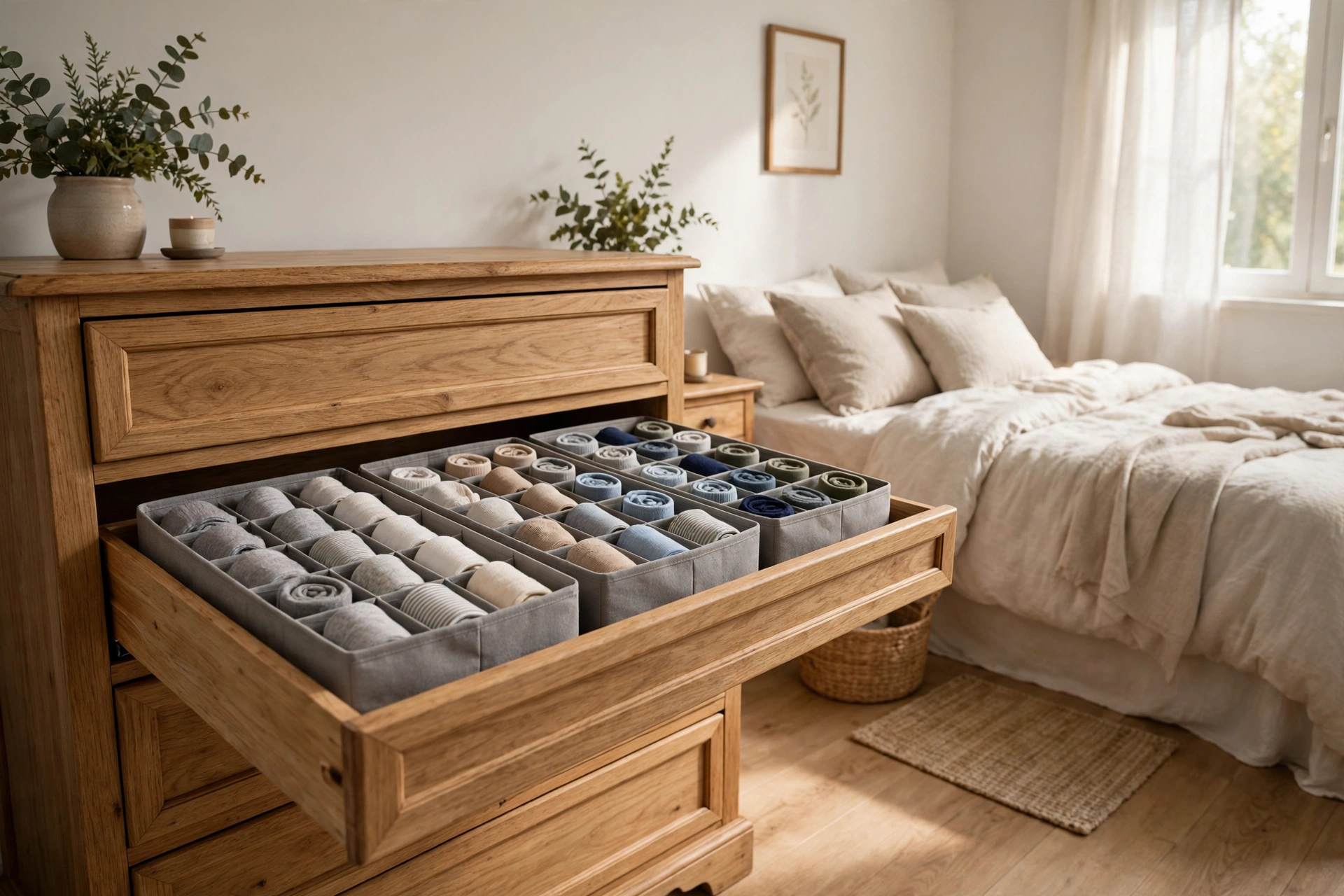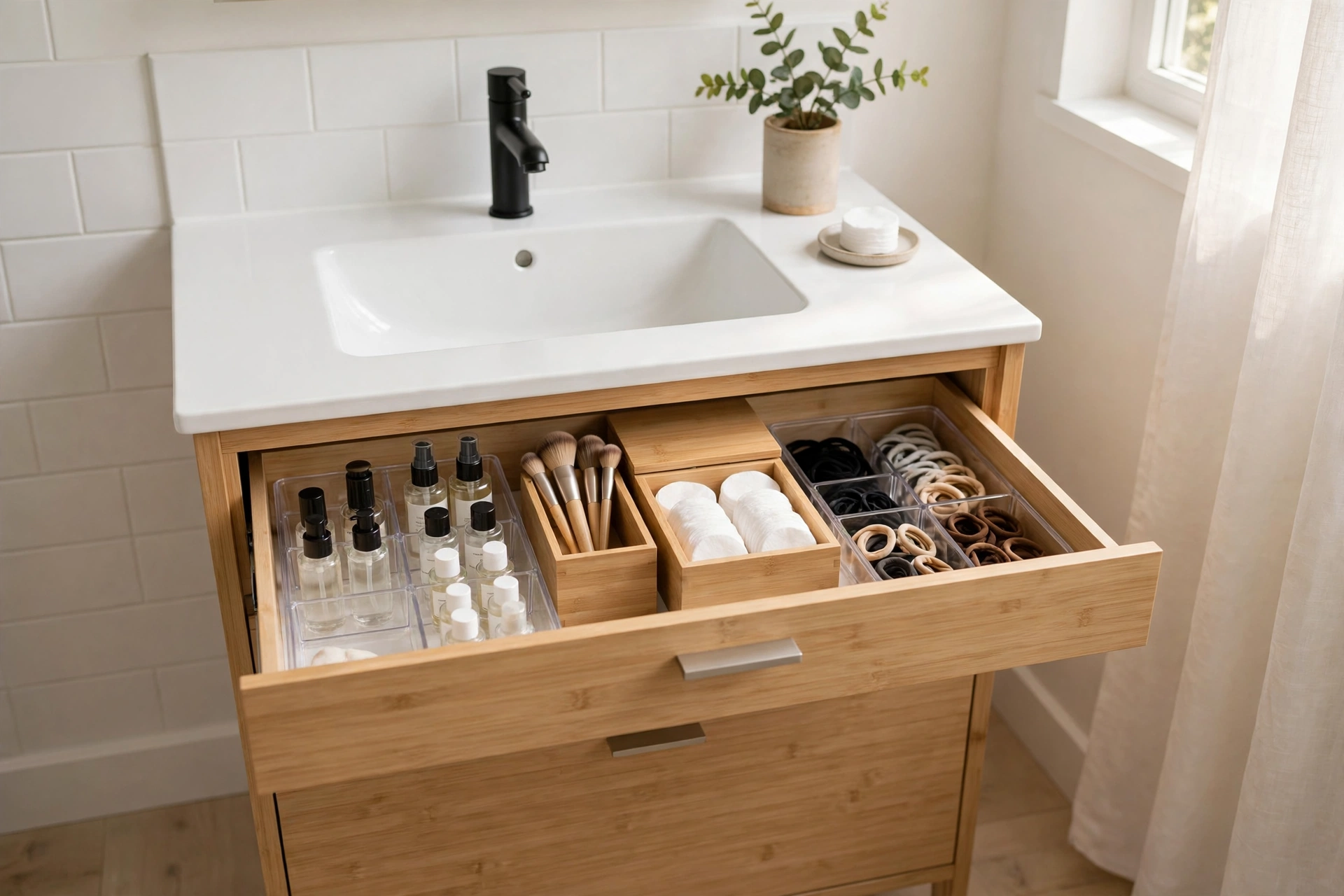

Almost everyone starts decluttering with energy and quits somewhere in the middle. The first drawer feels great. The second room feels like a chore. By the third bag of stuff, you are sitting on the floor wondering why you started at all. If that sounds familiar, you do not have a discipline problem — you have a motivation problem, and motivation is a system, not a personality trait. These decluttering motivation tips are built for real life in a small apartment: no spare room, no big budget, no full weekend to spare. Inside: 15 ways to keep going, a 7-step restart plan, and a printable checklist.

Why Your Decluttering Motivation Disappears (and Why That Is Normal)
Decluttering is tiring in a way most chores are not. Every item asks you a question: keep it or let it go? After a hundred small decisions, your brain is genuinely exhausted — that is decision fatigue, and it is why the third hour feels ten times harder than the first. Add guilt over money spent, attachment to gifts, and a room that looks worse before it looks better, and quitting starts to feel sensible. It is not a failure. Your plan simply asked for too much at once. The fix is not more willpower. It is smaller sessions, clearer rules, and visible progress.
15 Decluttering Motivation Tips That Actually Work
Use these in any order. Pick three, try them today, and add more when the first ones stick.
- Start with a 10-minute timer. Set a timer for ten minutes. Ten minutes is too short to argue with, and most people keep going once they start.
- Shrink the job until it feels silly. "Declutter the kitchen" overwhelms. "Clear the top shelf of one cupboard" does not. Make the task so small it feels almost embarrassing, then do it.
- Pick the easiest win first. Start with a junk drawer, a shelf, or the bathroom cabinet — somewhere you can finish in one session. A finished space proves the method works.
- Write down your "why" and stick it on the fridge. "I want to find things without digging" beats a vague "be tidy." When motivation dips, read your own words back.
- Take a before photo. Photograph the messy drawer before you touch it. The after photo is your reward, and comparing the two is the fastest motivation boost there is. See these pro organizer tips on Apartment Therapy for more.
- Use the four-box method. Put out four bags labelled keep, donate, sell, and recycle. Every item goes into one — no "maybe" pile. Fewer categories mean faster decisions.
- Ask three questions, not thirty. Have I used it in the past year? Would I buy it again today? Would I pack it if I moved? Two "no" answers and it goes. These questions also power our 15 decluttering questions to ask before you keep anything.
- Make it enjoyable. Put on music, a podcast, or an audiobook you only listen to while decluttering. A good playlist turns a chore into something you almost look forward to.
- Declutter with a buddy. A friend or partner makes the work faster and the decisions easier — someone else can spot the things you keep out of guilt. Pick someone supportive, not pushy.
- Schedule it like an appointment. "Sometime this week" never happens. Put two 20-minute sessions in your calendar at a fixed time and treat them like any other commitment.
- Reward every finished area. Finish a shelf, get a coffee out. Finish a room, order your favourite takeaway. Small, immediate rewards teach your brain that decluttering ends well.
- Get bags out of the house the same day. A donation bag by the door for a week will creep back onto shelves. Drop it off, book a collection, or put it in the car the same day.
- Save sentimental items for last. Letters, artwork, and inherited things are the hardest decisions. Do them after you have built momentum on easier stuff. If you are stuck, our guide on how to declutter sentimental items without the guilt helps.
- Track your progress on paper. Keep a list of finished spaces on the fridge and cross each one off. A growing list of done areas proves the work is adding up.
- Use the one-in-one-out rule to stay finished. Once a space is clear, keep it that way: for every new item in, one old item goes out. Our guide to the one-in-one-out rule shows how to make it automatic.

The 7-Step Restart Plan: How to Start Again After Quitting
Already quit once — or three times? That is normal. It means the plan needs restarting, not abandoning. If you are starting from scratch, our gentle 10-minute decluttering method is the kindest place to begin. Otherwise:
- Forgive the pause. You stopped because the plan was too big, not because you are lazy.
- Pick the smallest unfinished area. One drawer, one shelf, one corner. Not a room — a surface.
- Set a 15-minute timer. Shorter than you think you need. Stopping early with energy left is the trick.
- Clear that one surface completely. Everything off, wipe it down, put back only what belongs there.
- Take the after photo. Compare it with the before shot. That difference is your fuel for next time.
- Remove one bag today. Donate it, bin it, or put it in the car. One bag out the door is a finished job.
- Book the next session before you stop. Put it in the calendar now, while the win is fresh. Next time, start at step two.
Your Printable Motivation Checklist
Tick each item before every session:
- Timer set for 10 to 15 minutes
- Four bags ready: keep, donate, sell, recycle
- Before photo taken
- Easiest area chosen first
- Reward planned for when I finish
- Donation bag leaves the house today
- Next session booked in the calendar

"You do not need a whole free weekend to declutter. You need ten honest minutes and one finished drawer."
Decluttering Motivation: Frequently Asked Questions
How do I stay motivated to declutter when I live alone?
Tell a friend your plan and send them before-and-after photos, or book a fixed weekly call to report what you finished. Short scheduled sessions and a written progress list also replace the nudge a housemate would give you.
How long should a decluttering session last?
15 to 25 minutes is the sweet spot — long enough to finish something visible, short enough to avoid decision fatigue. Beginners should start at 10 minutes. Stop while you still have energy, and you will look forward to the next session.
What if I keep quitting halfway through every room?
It usually means the sessions are too long or the area is too big. Shrink both: one shelf, a 10-minute timer, finish it completely. If quitting is a pattern, our 30-day declutter challenge breaks the whole home into one small daily task.
Is it normal to feel worse before your home feels better?
Yes — pulling everything out of a cupboard always looks messier than the cupboard did closed. That middle mess means the work is happening, not failing. Finish one small area before starting the next.
The Bottom Line
Decluttering motivation is not something you either have or you do not — you build it with tiny finished jobs, clear rules, and rewards you can feel. Start with ten minutes today and finish one drawer. For a structured plan, try our 30-day declutter challenge, or read Apartment Therapy's five rules of decluttering. Your calmer, clearer home is only a few small sessions away.