
Moving is the one moment when every single thing you own has to justify itself. If you are wondering how to declutter before moving without drowning in decision fatigue, use one simple rule: nothing gets packed until it earns a spot in your new home. This checklist gives you a calm four-week plan, room by room, so you move less and pay less.

How to Declutter Before Moving: Start With the New Home
Most people declutter by asking, "Do I still want this?" Before a move, that is the wrong question. The right one is, "Does this fit — and earn its place — in the home I am moving to?" That makes decisions faster and less emotional.
First, gather your tools: sturdy boxes or bags per room (keep, sell, donate, trash), masking tape and a marker, your phone for resale photos, and a measuring tape. If you can get the new place's floor plan — even a rough sketch with dimensions — keep it on the fridge: it decides every big piece of furniture.
The 4-Week Declutter-Before-Moving Timeline
Four weeks is the sweet spot: long enough to sell big items and book a donation pickup, short enough to keep momentum.
Week 4 out: storage areas first
Start where decisions are easiest: the attic, basement, garage, balcony, and top closet shelves. These hold boxes from your last move that were never opened. Get trash and recycling out the same day.
Week 3 out: clothes, books, and seasonal things
Go through off-season clothes, books, and holiday decorations. Use the one-year rule: if you have not worn, read, or used it in twelve months, it goes — with a pass for genuine seasonal gear and a small keepsake box. List big furniture for sale now, because furniture takes longest to sell.
Week 2 out: kitchen, bathroom, and office
These rooms are full of duplicates and expired things. Match every lid to a container and recycle the orphans. Toss expired medicines and dried-up cosmetics, and never pour chemicals down the drain — use your city's hazardous-waste drop-off. Shred old paperwork you no longer need.
Week 1 out: the final sweep
Walk every room with a trash bag and take the obvious stuff: broken items, worn-out shoes, mystery cables, junk-drawer filler. Confirm your donation pickup, and use up pantry and freezer food or give sealed, unexpired items to a neighbor instead of moving them.
The New-Home Fit Test: 4 Questions for Every Item
When you hesitate over something, run it through four questions. Two "no" answers means it does not get packed:
- Does it have a spot in the new home? Not a vague "somewhere" — a real shelf, wall, or corner you can name.
- Did I use it in the last 12 months? Seasonal items and a few true keepsakes get a pass. Almost everything else untouched for a year is not part of your real life.
- Would I buy it again today at full price? This kills sunk-cost thinking. What you spent is gone either way.
- Would it cost more to move than to replace? Heavy, cheap, or bulky items often cost more in boxes and truck space than a replacement later.
"Every box you pack costs you twice: once when you pack it, and again when you unpack it on the other end. Move only what earns the trip."
Room-by-Room Declutter Before Moving Checklist
Work one room at a time.
Kitchen
Purge duplicate utensils, chipped mugs, stained containers, and gadgets unused for a year. Keep one set of everyday dishes out and pack the rest, and toss expired spices and pantry items.
Bedroom and closet
Anything you have not reached for in a full year goes in the donate bag, unless it is genuine seasonal gear. Single socks, stretched-out tees, and shoes that hurt are trash, not donations.
Bathroom
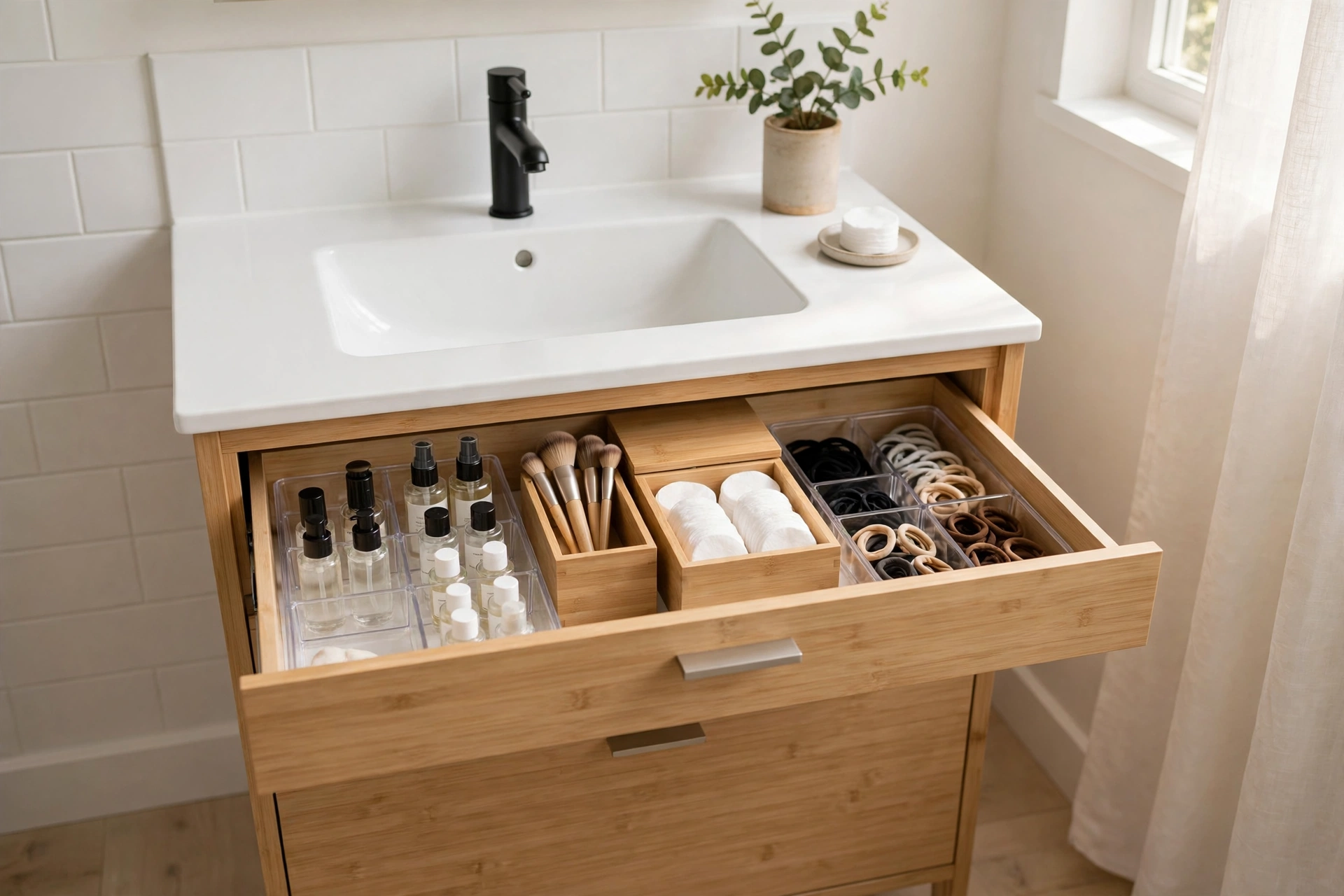
Expired medicines, old makeup, dried-out lotions, and free hotel toiletries you will never use: all trash or recycling. Old towels can cushion fragile items in boxes instead of going in the trash.
Living room
Books you will not re-read, DVDs you stream now, decor that never suited the room, and the cable graveyard in the media cabinet. If furniture does not fit the new floor plan, sell it now.
Home office and papers
Shred old bills and statements you no longer need (keep tax documents and anything legally required). Recycle dead pens and chargers for devices you no longer own. Scan the few papers worth keeping and let the originals go.

What to Do With Each Pile
Sorting is only half the job — every pile needs an exit date.
- Sell: newer furniture, working electronics, and recognizable brand-name pieces. List them in week three, with photos and measurements. For the best return, see our guide on where to sell decluttered clothes and household items.
- Donate: clean, working items someone else can use right away. Book a pickup early — many charities schedule weeks ahead. For the full rundown of options, see what to do with decluttered stuff.
- Recycle: paper, cardboard, glass, metals, and electronics through your local program. Batteries, paint, and chemicals need a hazardous-waste drop-off, not the trash bin.
- Trash: broken, stained, moldy, or incomplete items. Bag them and get them out the same day.
Renter's Notes: Purge Without Risking Your Deposit
Renters have one extra reason to declutter before moving: the move-out inspection. Clear every closet, cabinet, and storage nook completely — landlords charge for abandoned items left behind. Patch small nail holes and photograph each empty room as proof of condition. If you are downsizing to a smaller home, anything without a named spot should go before moving day, not after.
Sentimental Items: The 10-Minute Rule
Sentimental things are where most pre-move decluttering stalls. Give them a small, fixed budget: one box, or ten minutes per category — whichever runs out first. Keep the best example, not every example: one ticket stub from the trip, not the whole envelope. Photograph bulky keepsakes and keep the photo instead of the object. For a gentler walk-through, our guide on how to start decluttering when you're overwhelmed pairs well with this checklist.
Professional organizers agree with the fit-first approach: Apartment Therapy's decluttering tips before a move recommend asking whether each item will be used in the new house. A detailed room-by-room decluttering guide covers the same ground with a four-question decision test.
Frequently Asked Questions
How far in advance should I start decluttering before moving?
Start four weeks before moving day if you can — that gives you time to sell furniture and book a donation pickup. With less time, compress the same order (storage areas first, sentimental rooms last) instead of skipping steps.
What should I declutter first before a move?
Start with storage areas (attic, garage, closets) and low-emotion rooms like the bathroom. Decisions are quick there, and early wins build momentum.
How do I decide what to keep when moving to a smaller home?
Use the new-home fit test: the item needs a named spot in the new place, recent use in the last year, and a value higher than its moving cost. Measure large furniture against the new floor plan first.
Is it better to declutter before or after moving?
Before, always. Decluttering first means you pack, carry, and unpack only what you actually want, and you often save on boxes, truck space, and mover hours.
Moving is a fresh start, and this checklist is how you claim it. Work the four-week timeline, judge every item against the new home, and let the "maybe" box make the hard calls.