

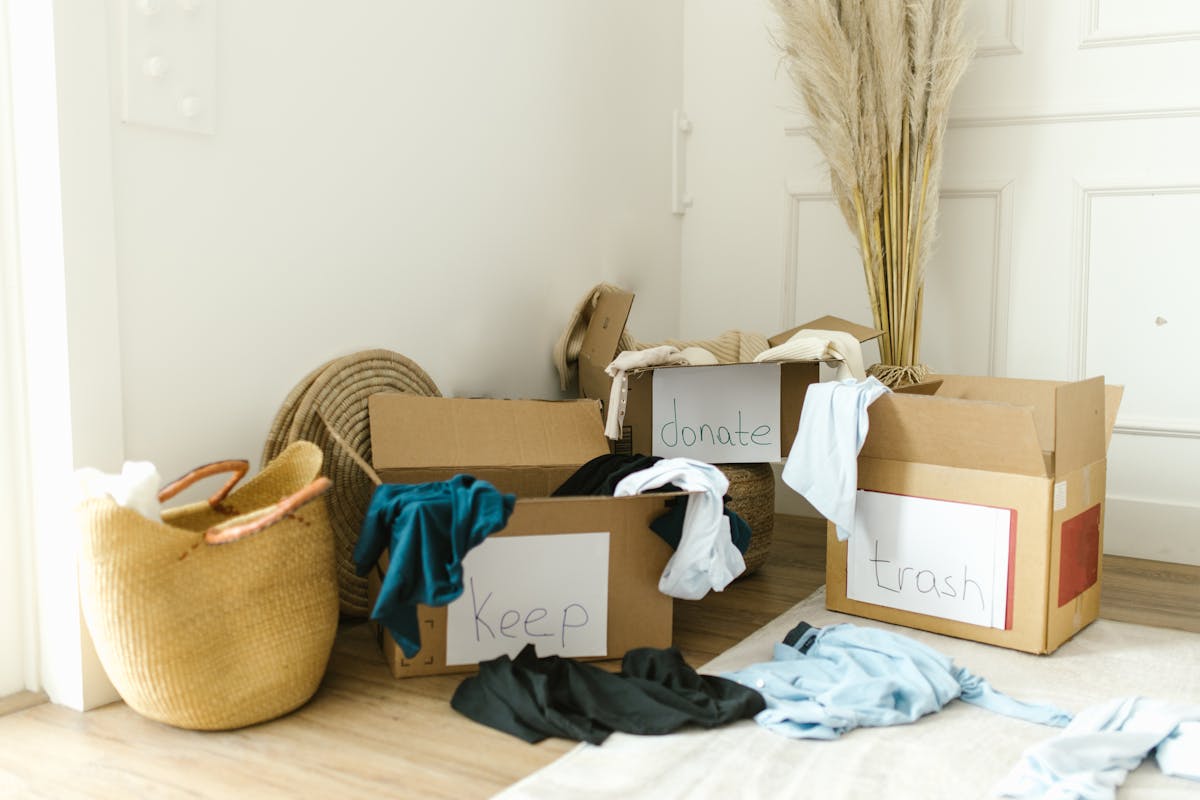
You did the hard part: the closet is lighter, the drawers close, and there is space on the kitchen counter. But now the bags sit by the front door, the "to sell" box blocks the hallway, and a new question has replaced the old one: what to do with stuff after decluttering? If those bags stay where they are, the clutter has not left your home — it has just moved. Here is a five-pile system, a one-week exit plan, and answers for the tricky items — so everything you removed leaves the house.
Why Decluttered Stuff Needs a Deadline
Most decluttering projects fail in the hallway, not the closet. The "donate" bag sits by the door for three weeks, the "sell" box becomes furniture, and the sorted piles creep back onto shelves. The fix is a deadline, not more willpower: everything you removed leaves the house within one week of the day you sorted it. Write the date on each bag — a deadline turns a vague intention into a trip to the donation center, and stops you re-sorting the same items a month later and keeping half of them. Still deciding what counts as clutter? Our 15 decluttering questions to ask before you keep anything will help.
Step 1: Sort Everything Into Five Piles
Before a single bag leaves the house, every item needs a destination. Use five piles — no sixth "maybe" pile; "maybe" is where clutter hides.
- Keep: things you use and love, with a specific home. "Somewhere" is not a home.
- Donate: clean, working items in good condition someone else could use.
- Sell: higher-value items worth real money — if it would list for under $20, it belongs in Donate.
- Recycle: paper, cardboard, dead electronics, empty containers, worn-out textiles.
- Trash: broken, stained, expired, or useless items. Broken is not "fix it someday."
Sort room by room and tie each bag shut the moment it is full — an open bag invites one more look, and one more look puts things back on the shelf.
Step 2: Donate the Good Stuff — This Week, Not Eventually

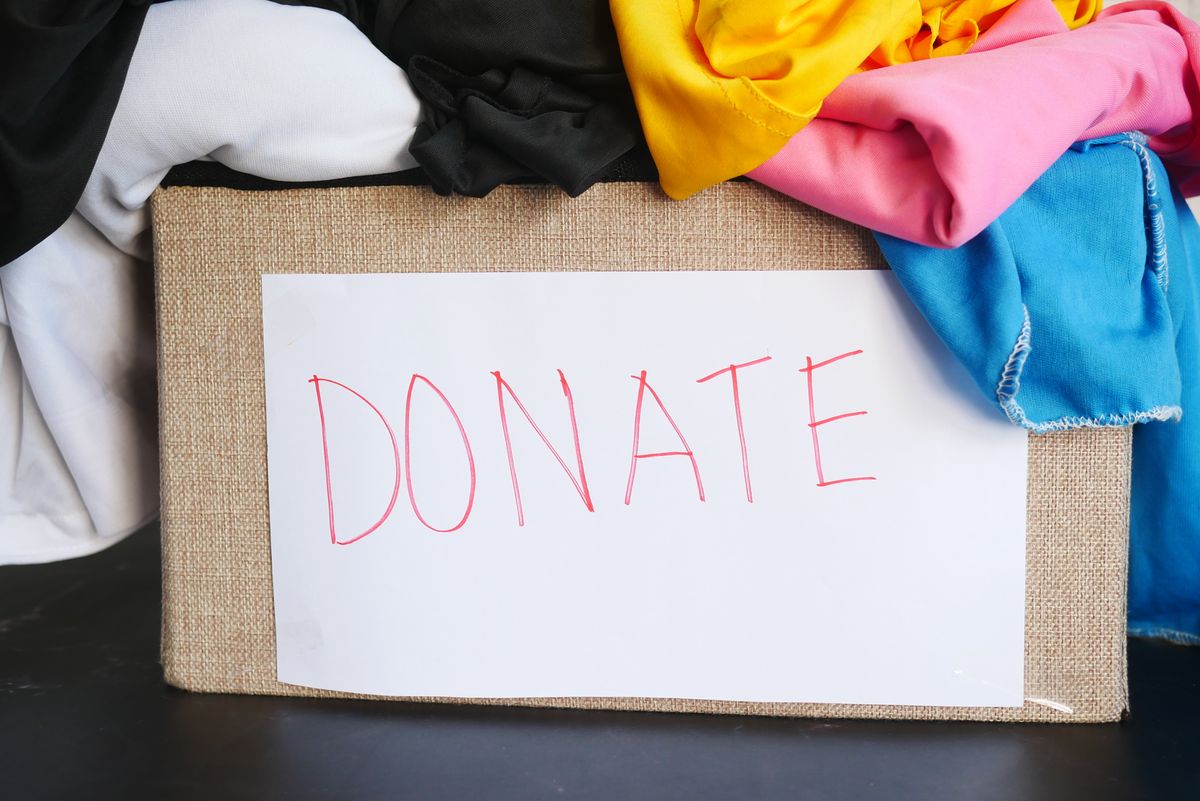
Donation is the fastest exit for most decluttered stuff. Schedule the drop-off or pickup the same day you finish sorting — many charities collect furniture free, and thrift stores like Goodwill and the Salvation Army take clean, gently used clothing and household goods. Check what your center accepts: stained, broken, or recalled items get turned away and come straight back home.
Small-apartment tip: no garage needed to stage donations. Keep one box by the front door, one bag in the car trunk, bulky items by the entrance for one scheduled pickup. The AARP guide to getting rid of almost anything lists 100+ item types with the best place for each — handy for odd ones like an old piano or a box of cables.
For clothes, the test is simple: if you would hand it to a friend, donate it. Torn, stained, or worn-thin pieces go in Recycle (Step 4), not the donation bag.
Step 3: Sell What's Actually Worth Selling — Then Stop
Selling is where most people lose a month. The rule: list within 48 hours, and if it has not sold in one week, donate it — "for sale" must never become permanent storage. Pick one marketplace: Facebook Marketplace for furniture, eBay for electronics and collectibles, Poshmark or ThredUp for brand-name clothes. Photograph in daylight, note the condition honestly, price from actual sold prices.
Only sell items worth the effort: a $50 lamp is worth a listing, a $5 mug is not. Bundle small things into lots ("kitchen lot — 6 items, $25") instead of listing them one by one. Meet buyers safely — porch pickup for small items, a public place for valuables. Never let a sell box outlive its deadline — $30 is not worth a month of hallway clutter.
Step 4: Recycle and Dispose of the Tricky Stuff
Some decluttered stuff cannot be donated, sold, or trashed. Handle each type properly:
- Electronics and batteries: old phones, chargers, dead laptops, and batteries need e-waste handling. Best Buy and Staples run take-back programs, and many cities hold hazardous waste days — check your municipality's schedule.
- Paint, chemicals, and cleaning products: never pour them down the drain. Keep sealed and take to a household hazardous waste day or a retailer that accepts them.
- Worn-out clothes and textiles: torn shirts, single socks, stained towels go to textile recycling, not the donation bin — many retailers run take-back bins.
- Paper and cardboard: curbside recycling handles most of it — but shred anything with account numbers first (see Step 5).
Family Handyman's guide on where to get rid of your old stuff covers more categories, including sporting goods and specialty items thrift stores will not take.
Step 5: Handle the Special Cases
A few categories need their own plan. Sentimental items are the hardest — if keepsakes are why your bags are still by the door, read our guide on how to declutter sentimental items without the guilt first. Photograph the meaningful pieces, keep one memory box, let the rest go. Paperwork goes through the shredder: bank statements, medical bills, anything with account numbers — a basic shredder clears a backlog in an afternoon. Unopened food and toiletries can go to a food bank or community fridge; check expiry dates, never donate opened food. Kids' outgrown gear suits a Buy Nothing group or parent swap.
What to Do With Stuff After Decluttering: Your One-Week Exit Plan
Print this and stick it on the fridge.
- Day 1: Sort into the five piles. Tie bags shut. Write the exit date on each.
- Day 2: Photograph and list "sell" items. Book donation pickup.
- Day 3: First donation drop-off. Shred paperwork. Bag e-waste.
- Day 4: Recycling and textiles drop-off. Hazardous items to the collection point.
- Day 5: Check listings. Cut prices on anything with no interest.
- Day 6: Second donation run. Remaining "sell" items to one shelf, not the hallway.
- Day 7: Deadline day: unsold items get donated, trash goes out. Walk through every room and enjoy the space.
Clutter isn't gone until it's out the door — a bag by the entrance is just clutter with a new address.
Quick tip: Keep one small donation box by the front door. The moment something stops earning its space, it goes in — and when the box is full, it goes to the donation center that week. Small, steady exits beat one giant purge a year.
Frequently Asked Questions
How long should I keep items I'm trying to sell?
One week. List within 48 hours of sorting; if an item has not sold after seven days, donate it. A longer window turns "for sale" into permanent storage — the opposite of decluttering.
What should I do with clothes too worn to donate?
Textile recycling, not the donation bin. Many clothing retailers run take-back bins, and some charities accept worn textiles as rags. Bag and label them separately from good donations.
Can I get a tax deduction for donated items?
In many places, yes, if you itemize deductions. Keep a list of what you donated, photograph valuable items, and get a receipt at drop-off. Rules vary by country and region, so check your local tax guidance.
What if my apartment has no space to stage donation bags?
Use the car trunk as staging, keep one bag by the door, and book a same-day pickup for bulky items. Many charities collect furniture free — the fastest exit is a pickup booked the day you finish.
Decluttering is only half the job — the other half is the exit. Sort it, schedule it, get it out the door this week: your home will feel bigger by the weekend, and someone else gets the things you no longer need. Ready for another room? Our gentle 10-minute decluttering method is the easiest place to begin.