
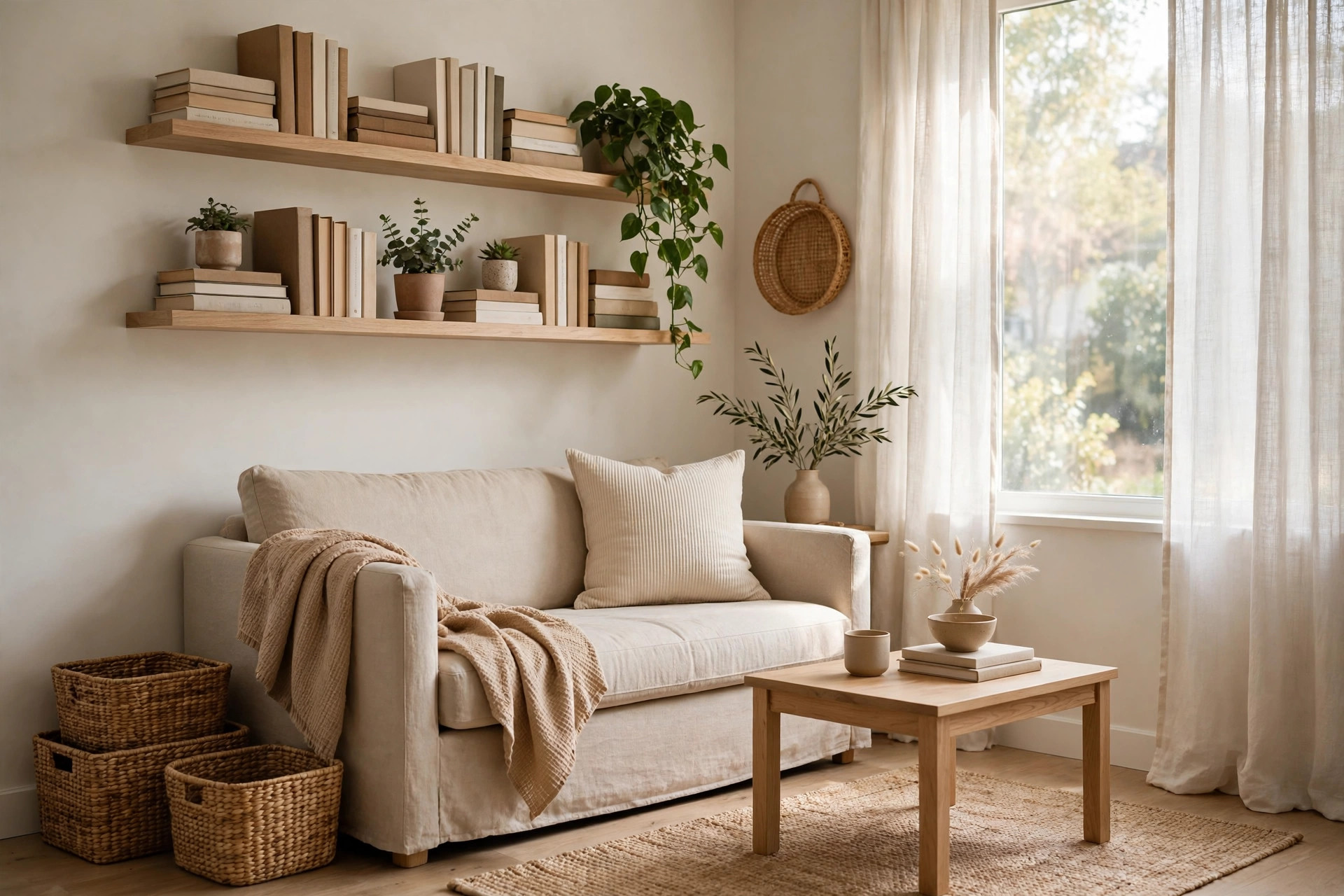

Two kids, one bedroom, and a floor that disappears under toys by 6 p.m. — if that sounds familiar, these shared kids' bedroom organization ideas are for you. When every toy, book, and sock has a clear owner and a clear home, the "that's mine!" fights shrink fast.
You do not need a bigger room, a remodel, or expensive furniture. Most shared rooms fail for the same three reasons: no clear zones, no ownership system, and storage kids cannot reach alone. Fix those three.
The 7-Step Method: Set Up a Shared Kids' Bedroom in One Weekend
Work through these seven steps in order before buying a single bin.
- Purge together. Empty one zone at a time; each child decides about their own things.
- Count what is left. Pile each category together so the real volume is visible.
- Draw the zones. Sketch sleep, clothes, play, and homework zones.
- Assign ownership. Every item gets one owner or one shared label: "mine," "yours," or "ours."
- Put storage at kid height. A bin a child cannot reach alone will not get used.
- Label with pictures. Kids match a photo of blocks to the blocks bin faster than words.
- Test it for a week. Live with it for seven days, then move what is not working.
12 Shared Kids' Bedroom Organization Ideas That Actually Work
1. Give Each Child a Color
Pick one color per child for bins, hooks, and bedding. A blue bin is instantly "yours" and a green bin is instantly "mine," even for a four-year-old who cannot read. More ideas in our kids' bedroom organization ideas for small apartments.
2. Split the Room Visually, Not With a Wall
You do not need a divider to give each child their own side. Paint the wall behind each bed a different soft color, lay a small rug at the foot of each bed, or hang a different picture above each pillow.
3. Use a Low Bookshelf as a Room Divider
A low bookshelf between two beds marks the boundary between the sleep zones and holds books both kids can reach. Keep it under waist height so the room still feels open, each child's books facing them and shared games in the middle.
4. Double-Hang the Closet
Most kids' closets waste the bottom half of the rod space because children's clothes are short. Add a second rod halfway down and you double the hanging space, one child left, one right. Our closet organization ideas for small closets show how to plan a split.

5. Give Each Child Their Own Closet Zone
Inside that shared closet, divide everything in two: one shelf stack per child, one set of hooks each, and one basket per child for shoes. Seeing only their own things makes getting dressed stop being a negotiation.
6. Put a Rolling Bin Under Each Bed
The space under the bed is the biggest free storage zone in a shared room. Give each child one low bin on wheels for the things they use most — it rolls out and back alone, so even a small child can tidy up. See our under-bed storage ideas for fitting bin sizes.
7. Label Everything With Pictures, Not Just Words
A label that says "LEGO" means nothing to a child who cannot read yet. Tape a photo of the contents on the front of every bin — blocks on the blocks bin, dolls on the dolls bin. Kids match pictures faster than words, and cleanup becomes a matching game.
8. Run a Toy Rotation, Not a Toy Mountain
Two kids means twice the toys, and no small bedroom can hold all of them at once. Keep one small set in the bedroom, store the rest in labeled bins, and swap one bin every Sunday — the "new" toys feel exciting again. Our toy storage ideas for small living rooms use the same system.
9. Create a Homework Corner Each Child Can Pack Away
Two kids rarely need two permanent desks. Give each child a lap desk or a small fold-down shelf with their own pencil box, and one rule: supplies live in the box, and the box lives on one shelf when homework is done.
10. Hang a "Tomorrow" Hook by the Door
School mornings are where shared rooms fall apart — two kids hunting for two outfits and two backpacks. Put one hook per child by the door; every evening each child hangs tomorrow's outfit and bag on their own hook.
11. Make the Beds Do Double Duty
In a shared room, every piece of furniture has to earn its floor space twice. A bed with drawers replaces a dresser, a headboard with a shelf replaces a nightstand, and a trundle bed gives a guest a sleep spot without a second frame in the room.
12. End Every Day With a 10-Minute Reset
No system survives without a daily habit behind it. Set a timer for ten minutes before bedtime: each child returns their own color-coded items to their own zones and shared toys go back to shared bins.
A shared bedroom works when every child can point to their own corner and say, "This part is mine." Give them that corner first — the bins and shelves are just details.
The Shared-Room Rules That Stop Fights
Write these four rules on a card inside the closet door:
- Ask before borrowing. Anything in your sibling's color is theirs. Ask first, and accept no.
- Shared means shared. Board games and art supplies belong to both of you, and both of you tidy them up.
- One in, one out. A new toy comes in only when an old one is donated.
- Your zone, your job. Each child resets their own side.
Better Homes & Gardens covers the same ground in How to Organize a Shared Bedroom to Make Everyone Happy, and a real parent's 10×11-foot shared room walk-through is at Neutrals and Nooks' shared bedroom storage solutions.
Printable Checklist: Your Shared Kids' Bedroom Setup
- ☐ Purge one zone at a time with both kids
- ☐ One color per child on bins and bedding
- ☐ Mark each sleep zone with a rug or wall color
- ☐ Double-hang the closet, split left/right by child
- ☐ One rolling bin under each bed, labeled with a photo; start the toy rotation
- ☐ One "tomorrow" hook per child by the door; rules card inside the closet
- ☐ 10-minute reset nightly for one week, then adjust
FAQs About Shared Kids' Bedroom Organization
How do you organize a shared kids' bedroom with no extra space?
Start with zones, not furniture: one color per child, a split closet, and rolling bins under each bed.
What age should kids stop sharing a bedroom?
There is no single right age — it depends on the children, the home, and local rules. Many families share happily through the early school years.
How do I stop my kids fighting over toys in a shared room?
Make ownership visible: one color per child, picture labels on every bin, and a clear shared pile for games. Add "ask before borrowing" and a toy rotation.
What is the best bed setup for two kids sharing a small room?
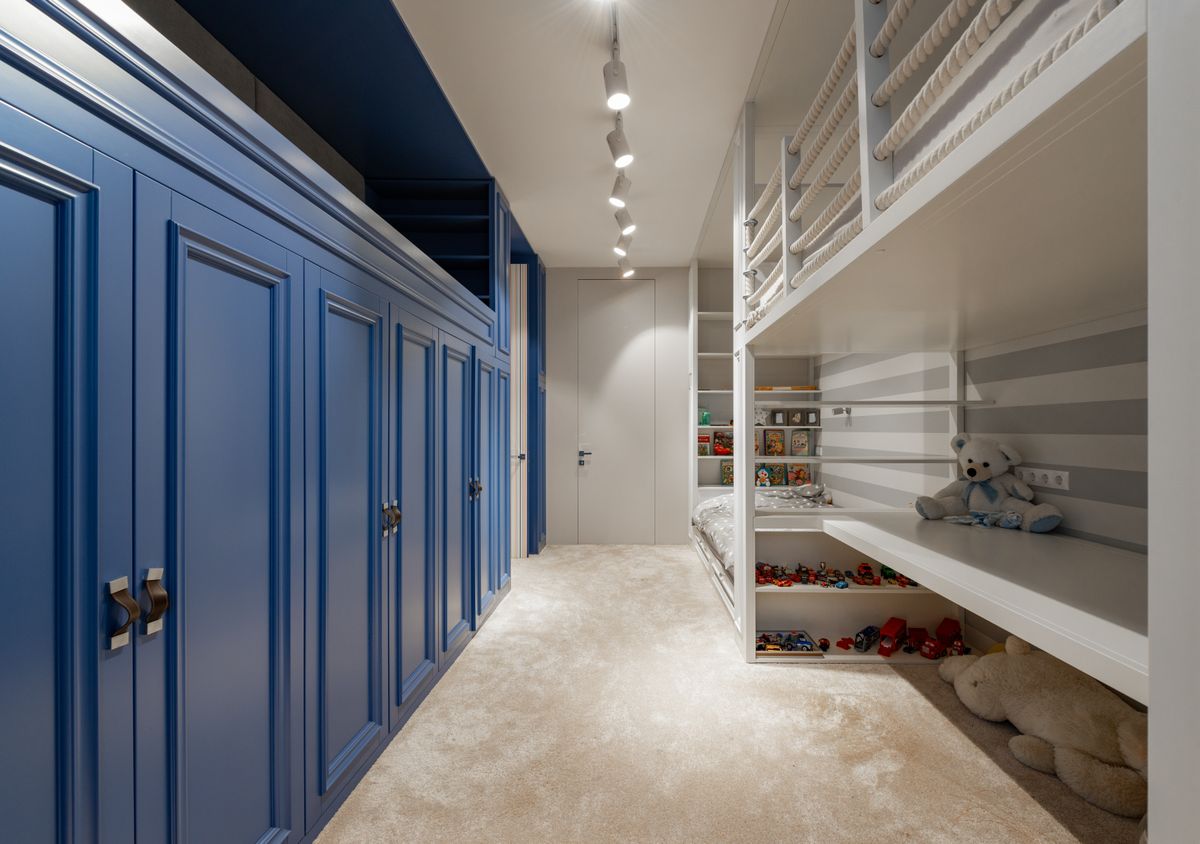
Bunk beds or a loft bed free the most floor space, and beds with drawers underneath replace a dresser. For younger kids, two low twin beds on opposite walls with a bookshelf between them works well.
Two kids sharing one small bedroom does not have to mean daily battles. Give each child a color, a zone, and a say in the setup, then let the 10-minute reset do the daily work. Start this weekend with the purge and the closet split.