
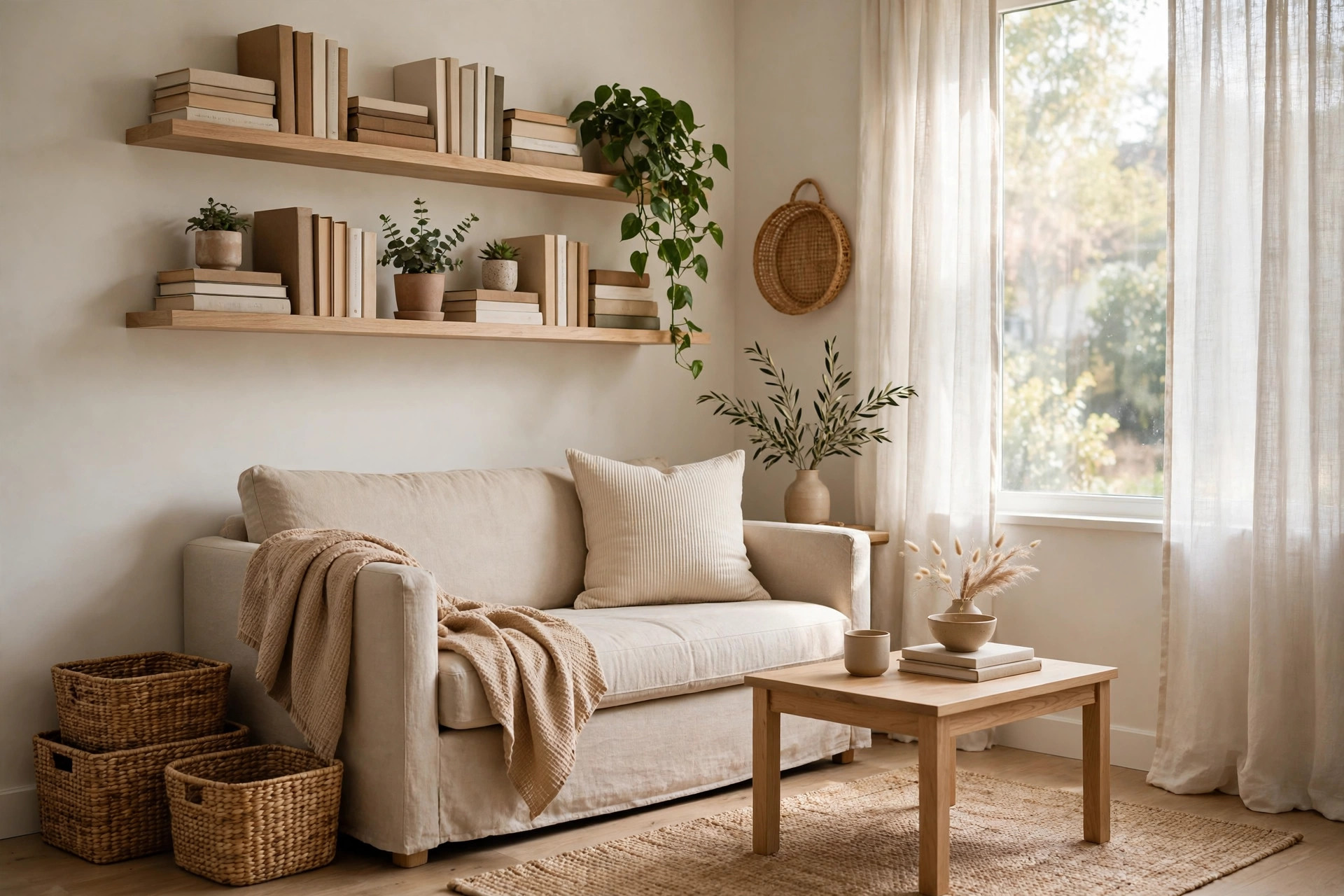

If your living room doubles as a playroom, you know the daily cycle: by five in the evening it looks like a toy shop exploded, and by bedtime you are speed-cleaning just to see the floor. The right toy storage ideas for small living rooms do not require a separate playroom, new furniture, or much money — just systems simple enough that kids can use them too. Here are twelve budget-first, renter-safe ways to keep toys contained and the living room looking like an adult lives there.
What Makes Toy Storage Ideas Work in Small Living Rooms
A small living room has one rule that changes everything: every storage piece must earn its floor space. The best setups hide toys in furniture that serves another purpose, use vertical space instead of floor space, and make cleanup faster than the mess. Now the ideas.
1. Start With One Big "Dump Basket"
Forget perfect sorting at first. One large basket by the sofa turns the nightly pickup into a five-minute game: everything on the floor goes into the basket, the basket goes in its corner, done. A woven basket or neutral fabric bin looks intentional instead of chaotic. Speed beats perfection in a shared room.
2. Match Storage to Your Decor
The reason so many living rooms look cluttered is not the toys — it is the storage. Bright plastic bins scream "playroom," while woven baskets and solid-color fabric cubes blend in. Choose storage in your room's color palette so it reads as decor. For more ways to blend storage into a shared room, see our small living room storage ideas.
3. Get a Storage Ottoman
A storage ottoman is the hardest-working piece for a toy-filled living room: extra seating, a footrest, and a hidden toy chest in one. Toss the loose toys inside before guests arrive and the room transforms in seconds. Apartment Therapy even calls the ottoman a living-room secret weapon for stashing toys where guests will never know (see their 12 LEGO storage ideas).
4. Slide Flat Bins Under the Sofa
The gap under your sofa is prime real estate. Low-profile flat bins slide right in and swallow puzzles, coloring books, and board games — invisible from across the room. Measure the clearance first (most sofas give you 4–6 inches), then grab bins that fit. Completely renter-safe: no drilling, no marks. More renter-friendly thinking lives in our renter-friendly storage ideas.

5. Turn One Cube Shelf Into a Toy Wall
A single cube shelf (even secondhand) against one wall holds twelve or more bins of toys without eating floor space. Anchor it to the wall — most come with a bracket, and in a rental a strap-style anchor leaves almost no mark. Keep the bottom cubes for toys, the top for your books and plants, and the unit reads as furniture. Baskets inside hide the chaos; open bins let kids grab and go.
6. Corral Tiny Pieces in Zip Pouches
Small toys are the true clutter-makers: building bricks, puzzle pieces, doll accessories. Mesh zip pouches keep each set together and stack neatly inside a bigger bin. Cut the front of a boxed toy set and clip it to the pouch so kids know what is inside. Cheap pouches from discount stores work perfectly — for more low-cost supplies, see our dollar store organization hacks.
7. Rotate Toys Weekly
The fastest way to reduce visible toy clutter is to have fewer toys out. Split the toys into two or three groups, keep one in the living room, and store the rest in a closet or under the bed. Swap every week or two. Kids play more with "new" toys, cleanup takes half the time, and the living room never holds more than it can absorb.
8. Tuck a Slim Cart Behind the Sofa
The strip of floor behind the sofa is usually wasted. A slim three-tier rolling cart slides in there and holds art supplies, building bricks, or small games — pull it out for playtime, roll it back after. Hidden storage tucked behind furniture is exactly the kind of trick design pros recommend for concealing toys in shared rooms (see Better Homes & Gardens' clever hidden storage ideas).

9. Label Every Bin With Picture Labels
Kids cannot put things back if they do not know where things go. Pair every bin label with a picture — a photo of the toys inside, a simple drawing, or a printed icon. Pre-readers learn categories this way, and older kids have no excuse for the floor-pile. Stick labels with removable tape or clip-on holders so you can change them when toy groups rotate.
10. Store Board Games Vertically, Like Books
Stacked board games are an accident waiting to happen — pulling one out collapses the tower. Store game boxes vertically on a shelf, spine-out like books, and any box slides out without disturbing the rest. A simple bookend or small shelf divider keeps them upright. This one trick ends the most common living-room toy avalanche.
11. Run a 5-Minute Nightly Reset
Even perfect storage drifts. Every evening, set a timer for five minutes and race the toys back to their homes — make it a game with music and it stops feeling like a chore. Small consistent resets beat one exhausting weekend purge. The living room returns to "adult mode" before morning.
12. Purge Monthly, Donate Guilt-Free
No storage system survives toy volume that never stops growing. Once a month, pull out everything and remove the broken, the outgrown, and the untouched-for-months. Donate the good stuff to shelters, schools, or a buy-nothing group — other kids get toys, and your living room breathes. Pair this with a structured plan like our 30-day declutter challenge to keep the whole home shrinking in the right direction.
"Fewer toys out, everything with a labeled home, and five minutes of reset every night — that is the entire formula for a living room that survives kids."
Frequently Asked Questions
How do I store toys in a small living room without it looking messy?
Use closed or woven storage that matches your decor, keep one large "dump basket" for fast daily pickups, and hide flat bins under the sofa. Rotate toys so only one group is out — fewer visible toys means less visible mess.
What is the best toy storage for a rental apartment?
Freestanding cube shelves with wall-strap anchors, over-the-sofa or under-sofa bins, rolling carts, and storage ottomans all work without drilling. Avoid wall-mounted rails and shelves that need anchors, or use removable adhesive hooks rated for the weight.
How many toys should I keep out in the living room?
Keep enough for one or two activities at a time — roughly what fits in one basket plus one active play item. Rotate the rest weekly from a closet or under-bed stash.
How can I get my kids to put their toys away?
Make it easy and make it a game: one big basket for fast pickups, picture labels on every bin so they know where things go, and a five-minute music race every evening. Kids follow systems that are faster than making the mess.
A calm living room with kids is not about banishing the toys — it is about giving every toy a fast, labeled home and keeping only a few out at a time. Start with the dump basket and the nightly reset this week, and the room will feel twice as big by Sunday.