The living room is the hardest room in a small home to keep tidy. It has to look good for guests, feel relaxing for you, and somehow store the blankets, remotes, chargers, toys, books, and random stuff that migrates there every single day. Most small living rooms don't have a storage problem — they have a hidden storage problem. Everything is out in the open because there's nowhere for it to disappear to.
The fix isn't a bigger living room. It's furniture and tricks that swallow clutter while looking like decor. Here are 12 ideas that hide mess in plain sight, all renter-friendly and most under $60.
Seating that secretly stores
Idea 1: The storage ottoman (the #1 small living room hero)
If you buy one thing for a small living room, make it a storage ottoman. A 30-inch cube ottoman holds roughly 3 cubic feet inside — enough for two throw blankets, the TV remotes, chargers, and a couple of board games — while working as a coffee table, footrest, and extra seat for guests. Look for one with a lift-off or hinged lid ($35–$60 at discount stores) rather than the tiny cube versions, which barely hold a magazine.
Idea 2: Hollow storage poufs
Poufs look like pure decor, but the zippered kind opens up to stash kids' toys, pet supplies, or seasonal throws. Two poufs flanking a coffee table can hide an entire toy explosion in under a minute when guests text "we're 10 minutes away." They run $25–$40 each and, unlike a toy box, they don't scream "storage."
Idea 3: A sofa with storage built in
Shopping for a sofa anyway? Storage chaises and sofas with under-seat compartments exist at every price point now. Even a basic chaise with a lift-up seat hides spare bedding for the pull-out couch. If a new sofa isn't in the budget, skip to Idea 12 — the under-sofa trick costs almost nothing.
Measure your sofa's clearance before buying under-sofa bins (Idea 12). Most sofas sit 3–6 inches off the floor — bring a tape measure, not a guess. Bins that are half an inch too tall are useless.
Furniture that does double duty
Idea 4: A lift-top coffee table
A standard coffee table is a clutter magnet with a flat top. A lift-top coffee table ($80–$150, or thrift one for $20–$40) hides the laptop, notebooks, and charging cables inside while the top lifts up into a work or dinner surface. In a studio apartment, this one piece can replace a desk.
Idea 5: A behind-the-sofa console table
The 6–10 inches of dead space behind your sofa is prime real estate. A narrow console table there (about $40–$70) holds a lamp and decor on top, with room underneath for lidded baskets of DVDs, craft supplies, or kids' art materials. No drilling, no damage — perfect for renters. For more damage-free ideas, see our guide to renter-friendly storage that won't cost your deposit.
Idea 6: Nesting side tables
Two or three nesting tables ($30–$50 for a set) give you extra surface when guests come over and tuck into the footprint of one table the rest of the time. Choose a set where at least one table has a lower shelf or drawer — that's hidden storage most nesting sets waste.
Walls are free real estate
Idea 7: Floating shelves with closed boxes
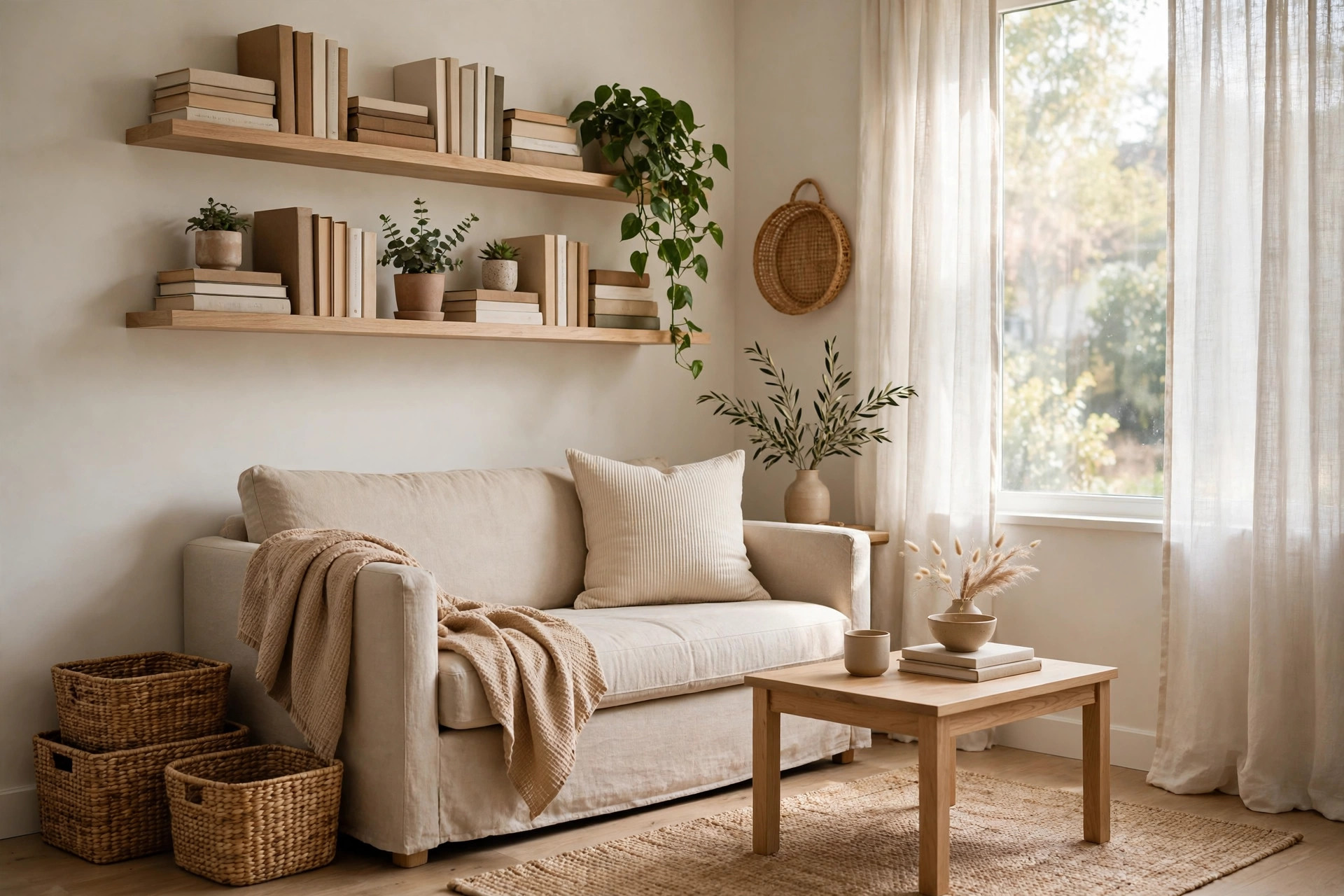
Open shelving only works in small rooms if at least half of it is closed. Mount two floating shelves and style them with a mix: pretty things on display, ugly necessities inside matching lidded boxes or baskets. The boxes are the storage; the shelf is just the excuse. A pair of shelves plus four boxes costs around $40 total.
Idea 8: A leaning ladder shelf (renter-approved)
Can't drill? A leaning ladder shelf ($50–$90) rests against the wall with zero holes and gives you five tiers of display-plus-storage. Put baskets on the lower shelves for the messy stuff and keep the top shelves pretty. It takes up barely a foot of floor depth.
Idea 9: The back of the living room closet door
If your living room has a coat or utility closet, the inside of its door is wasted space. An over-the-door organizer ($10–$15) holds wrapping supplies, batteries, light bulbs, pet gear, or cleaning products — all the "where do I put this?" items that end up on living room surfaces.
Hide it in plain sight
Idea 10: Lidded baskets as decor
This is the oldest trick in small-space living because it works. Three large lidded baskets ($12–$20 each) under a console table or beside the sofa can swallow the entire category of "stuff with no home": chargers, mail, toys, pet toys. The secret is one basket per category — "electronics," "kids," "random" — so you can actually find things later. Woven seagrass or fabric bins look like decor, not storage.
Idea 11: Tray corrals on the coffee table
Coffee tables collect clutter because everything lands there with nowhere to belong. A single large tray ($15–$25) turns the tabletop into a zone: remotes and coasters live on the tray, everything else gets put away. When guests arrive, you lift one tray instead of tidying fifteen objects. It's the 30-second version of a clean living room.
Idea 12: Rolling bins under the sofa
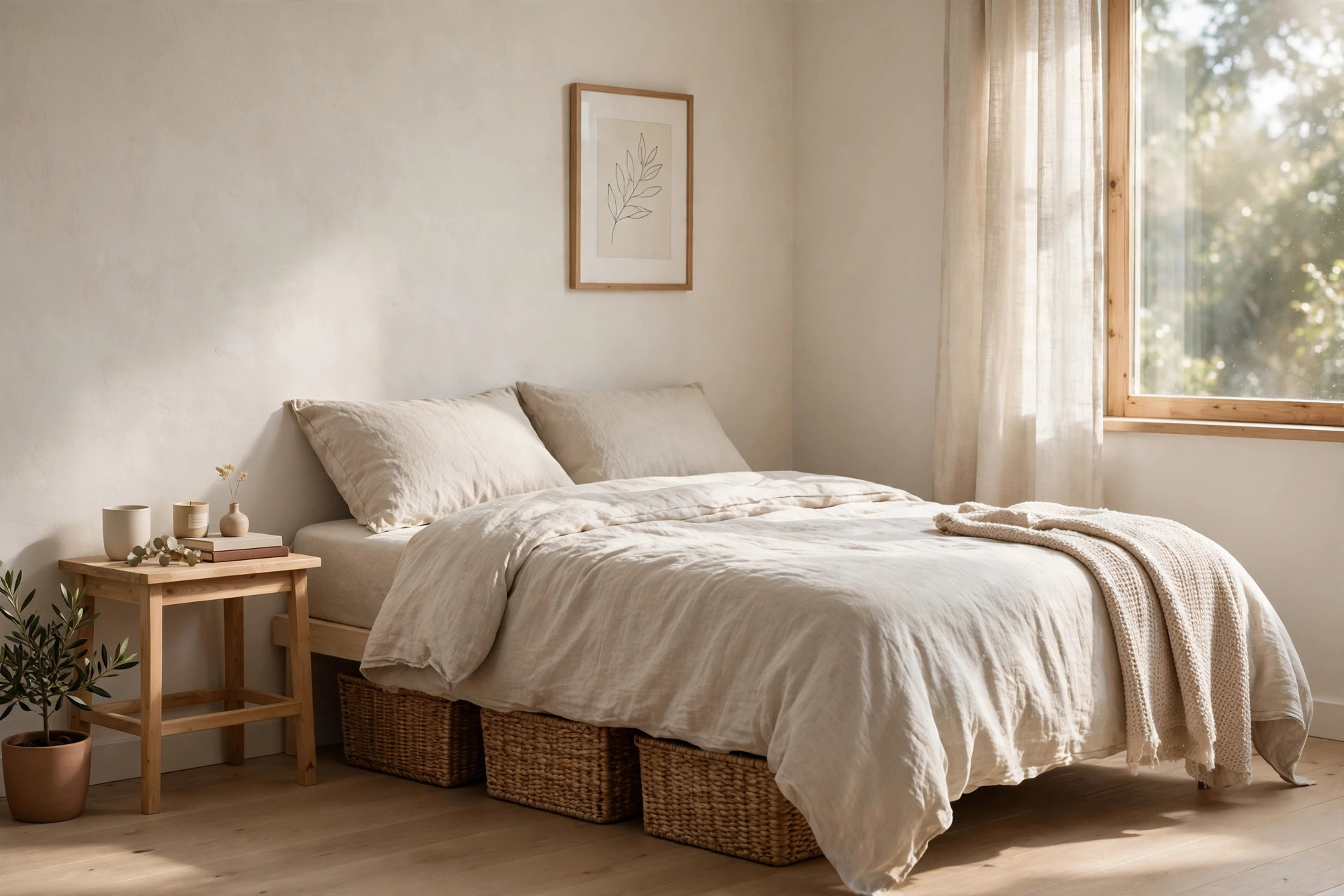
The space under your sofa is roughly 8–12 square feet of hidden storage. Flat rolling bins ($8–$12 each) slide underneath and disappear — perfect for spare blankets, board games, wrapping paper, or the kids' Lego collection. If your sofa sits too low, bed risers ($10 for a set) buy you 3 extra inches. Same principle as the under-bed storage ideas we use in small bedrooms — dead space is free space.
Do a "category sweep" before buying anything: gather every remote, every charger, every blanket in the living room into piles. You'll discover you need fewer containers than you think — most clutter is just five categories with no assigned home.
You don't need all 12 ideas. Pick three: one piece of storage seating, one wall solution, and the basket trick. That's enough to make a small living room look calm while holding everything a bigger room would. And once the living room is under control, apply the same "earn its footprint twice" rule to the rest of the house — start with our small bedroom organization ideas, where the same principles work even harder.