If you have ever stepped on a LEGO brick barefoot at 6 a.m., you know this truth: the problem is not the bricks, it is the lack of a system. The right LEGO storage ideas for small spaces do not need a dedicated playroom, new furniture, or a big budget — they need storage your child can actually use without help, in whatever corner of a small apartment you can spare.
Here are 13 budget-first, renter-safe ideas that work in real small spaces — plus a simple sorting method and a 10-minute cleanup routine that keeps the bricks off the floor for good.

Start Here: The 7-Step "Sort by How Your Kid Plays" Method
Before buying a single bin, spend 20 minutes watching how your child actually builds. The storage system that survives is the one that matches their play style — not yours. Here is the setup method:
- Watch for one play session. Does your child search by color, grab favorite sets whole, or dig for wheels and minifigures first? That is your sorting logic.
- Dump and divide into 4 piles only. Loose bricks, special pieces (minifigures, wheels, doors), sets they want to keep built, and instructions. Four is the magic number — more categories means cleanup takes longer than playtime.
- Sort loose bricks ONE level deep. Either by color (for color-searchers) or by shape (bricks, plates, wheels, special). Never both at first.
- Give sets a "display shelf," not a bin. Finished builds die in bins. One small shelf for current creations protects them and cuts the "don't take it apart" battles.
- Label with pictures for kids under 7. A photo of the bricks inside beats any word label.
- Leave one bin empty. Every system needs a "parking spot" for half-finished builds and new sets — or overflow becomes a floor pile.
- Test for one week, then adjust. If your child still dumps everything into one pile, simplify the categories. The system serves the kid, not the other way around.
LEGO Storage Ideas for Small Spaces: 13 Budget, Renter-Safe Ways
1. The Big "Dump Basket" First
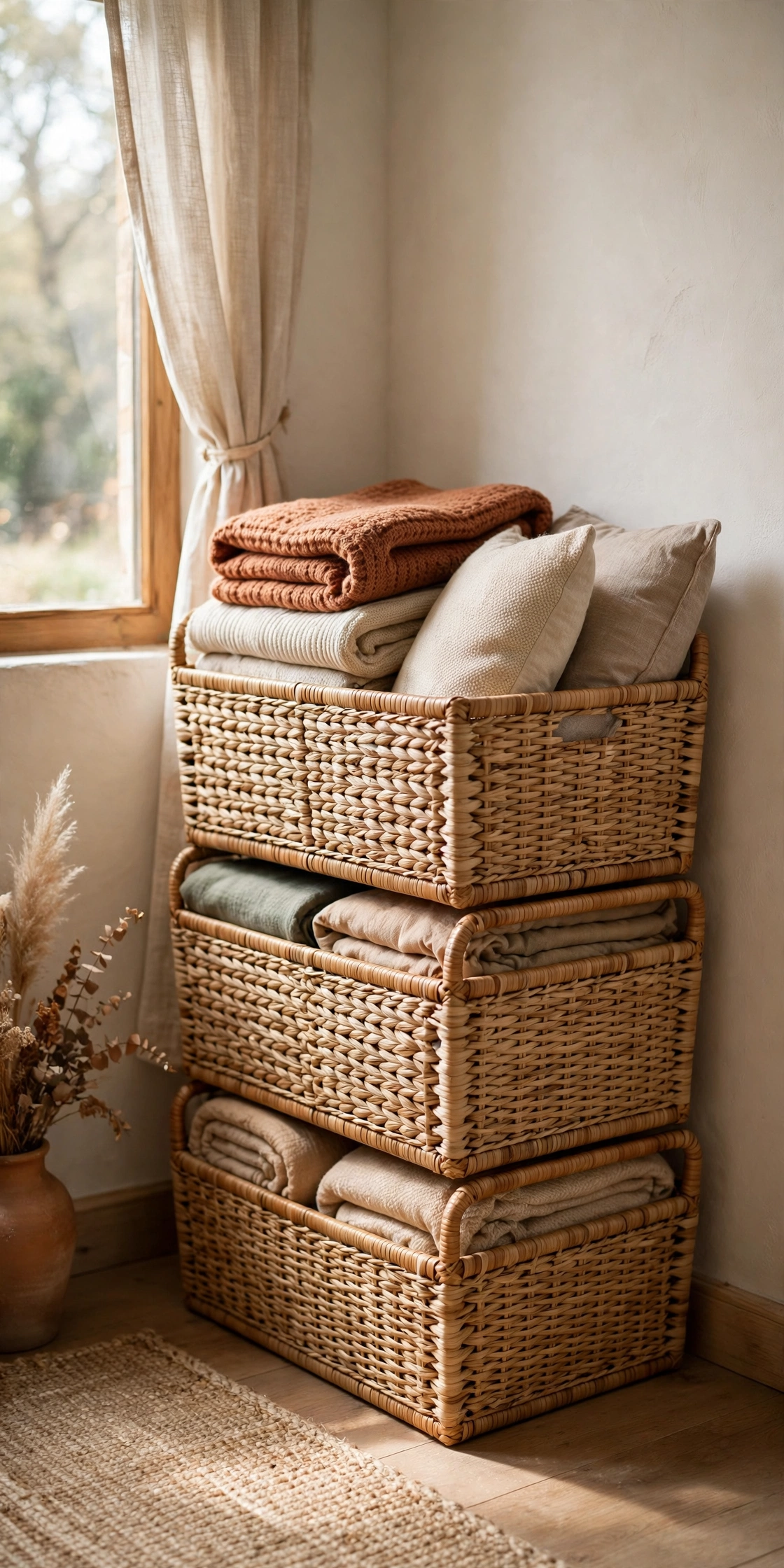
Perfection is the enemy of cleanup. Start with one large woven basket or fabric bin as the collection's home base. Tidy-up becomes a 60-second sweep — everything on the floor goes in. Speed beats sorting in the early weeks, and for general toy strategy in shared rooms, our toy storage ideas for small living rooms pair well with this approach.
2. Clear stackable bins with picture labels
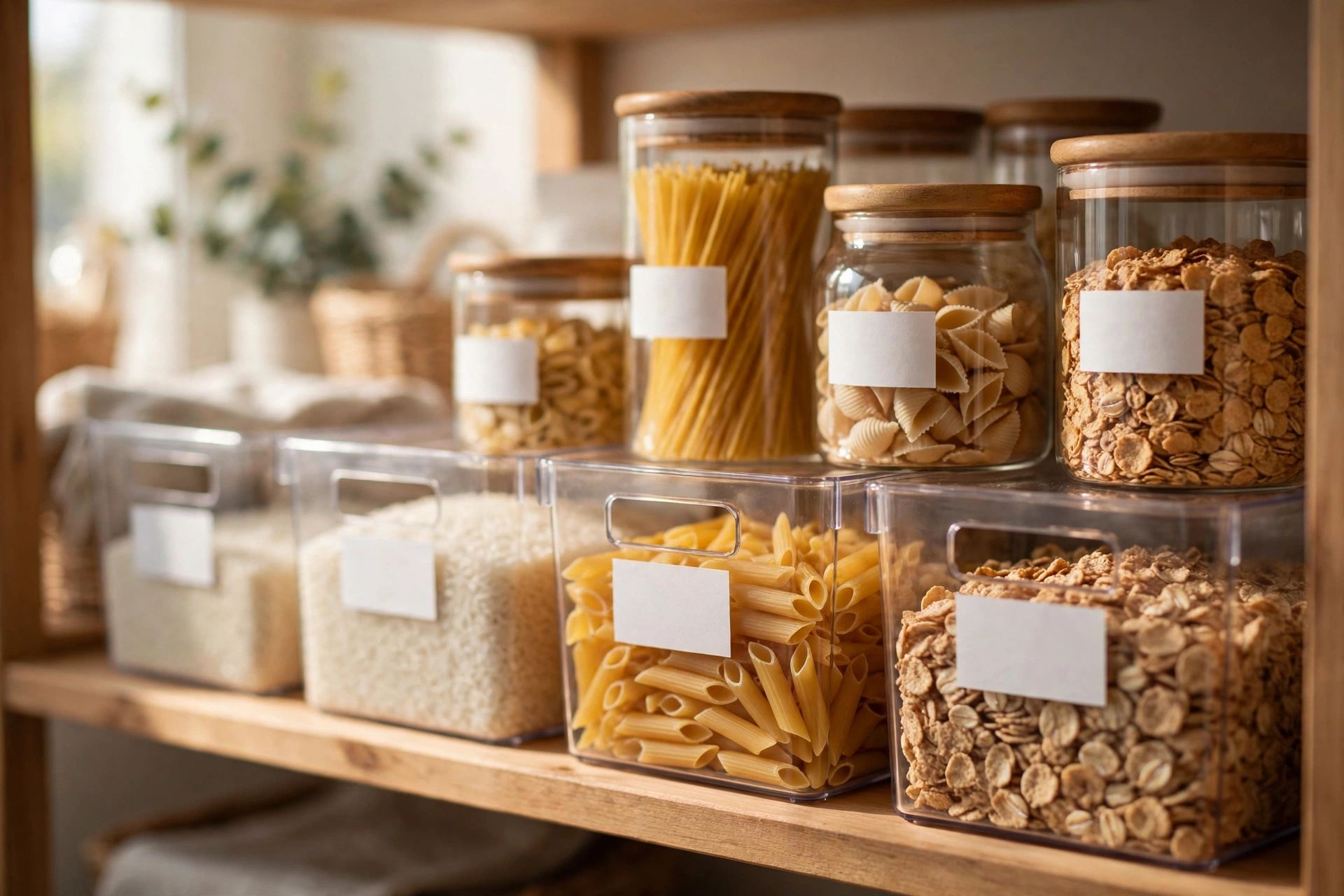
Transparent bins are the workhorse of small-space LEGO storage: kids see what is inside without opening lids, and they stack on a shelf, in a closet, or under a table. Keep categories broad — bricks, people, wheels, instructions — and add a photo label for pre-readers.
3. A drawstring play mat that becomes the bag
The classic parent trick for a reason: a round fabric mat holds the bricks during play, then pulls closed into a bag when the session ends. It works on any floor, travels between rooms, and needs zero furniture. Perfect for apartments where play happens wherever space opens up.

4. Roll it: a slim three-tier cart
LEGO migrates — bedroom to kitchen table to living room floor. A slim rolling cart follows the play and rolls back into a closet or beside the sofa afterward. Keep heavy bricks in the bottom tier for stability, and the flat top doubles as a sorting surface. Apartment Therapy's roundup of 12 LEGO storage ideas to eliminate toy clutter includes similar mobile setups pros recommend.
5. Slide flat bins under the bed
The space under the bed is free real estate in a small bedroom. Low-profile flat bins hold loose bricks, sorted colors, or a whole collection without touching floor space. For more ways to put that gap to work, see our kids bedroom organization ideas for small apartments.
6. One cube shelf as a LEGO wall
A single cube shelf against one wall holds a dozen bins of bricks without eating floor space. Keep bottom cubes at kid height for daily bricks, top cubes for instruction booklets and display builds. Anchor it to the wall (most come with a bracket — check your lease, and use strap anchors that patch easily).
7. Minifigure baseplate wall
Minifigures scatter everywhere because they have no home. A small baseplate stuck to the wall (removable adhesive strips) gives every figure a standing spot — and turns into room decor kids are proud of. Keep a small dish nearby for loose hats, tools, and accessories.
8. Divided tackle-style boxes for tiny pieces
The smallest pieces cause the biggest mess: eyes, flowers, tools, Technic pins. Compartment boxes with adjustable dividers keep special parts findable without a wall of tiny drawers. One box, broad categories, done.

9. The "build tray" system
Give each child one shallow tray (a cafeteria tray, a baking sheet with edges, even a sturdy box lid). All current building happens on the tray — and when dinner time comes, the whole project slides onto a shelf untouched. No more tragic "take it apart" moments.
10. Over-the-door pocket organizer for sets
An over-the-door shoe organizer is renter gold for LEGO: each pocket holds one set's bricks plus its instruction booklet. Sets stay together, kids pick a pocket and play, and everything hangs on a door that was already there. Our over-the-door storage ideas show how far one door can go.
11. A rolling under-table drawer
If a play table lives in the corner, add a shallow rolling drawer beneath it. Loose bricks get swept straight off the tabletop into the drawer at cleanup time — no carrying handfuls across the room, which is where most drops happen.
12. Toy rotation box for LEGO
Halve the visible mess by rotating: keep half the collection out, box the rest in a closet. Every few weeks, swap. Kids play longer with "new" old bricks, and there is simply less to clean each night. Rotation is the cheapest space-maker there is.
13. A lidded "special pieces" jar for display
One clear jar on a shelf holds the most precious pieces — favorite minifigures, rare parts, the one wheel they always lose. It satisfies the urge to keep special things visible while everything else stays in working bins. A detailed roundup of more display-meets-storage options lives at Fizzy Flare's 25 LEGO storage ideas, including several no-drill wall options.
The Small Nest Tip: Match the system's complexity to your child's age. Under 5: one bin + play mat. Ages 5–8: four broad categories with picture labels. Ages 9+: shape or color sorting with their own drawer unit. Upgrade only when your child asks for it — forcing a 10-drawer wall on a 6-year-old just creates a prettier mess.
The 10-Minute Nightly Reset (Printable Routine)
Storage only works with a routine. Set a timer, put on music, and run this every evening — it becomes a game fast:
- 0:00–2:00 — Floor sweep. Every loose brick goes into the dump basket. No sorting yet.
- 2:00–6:00 — Sort sprint. Basket contents into their labeled homes. Whoever sorts fastest picks tomorrow's breakfast.
- 6:00–8:00 — Tray check. Current builds stay on their trays; finished builds go to the display shelf.
- 8:00–10:00 — Vacuum the floor barefoot-test. One pass with a handheld vacuum where play happened. If your feet survive, you are done.
"The storage that works is the one your child can use alone — broad categories, picture labels, and a basket big enough for a 60-second sweep."
Frequently Asked Questions
What is the best way to store LEGO in a small apartment?
Use one large dump basket for fast daily cleanup, clear stackable bins with broad categories (bricks, people, wheels, instructions) for storage, and under-bed flat bins for the overflow. Keep everything at kid height so your child can use the system alone.
Should I sort LEGO by color or by shape?
Watch your child play for one session: if they search by color, sort by color; if they dig for wheels, doors, and windows, sort by shape. Most kids do best with just four broad groups to start — you can always add detail later.
How do I keep LEGO off the floor without a playroom?
Use a drawstring play mat that becomes a bag, a build tray so projects move without falling apart, and a 10-minute nightly reset routine. Under-bed bins and over-the-door pocket organizers add storage without touching floor space.
What is the cheapest LEGO storage setup that actually works?
One large basket (about $5), a set of clear bins from a discount store, and a drawstring play mat cover 90% of most collections. Spend nothing more until the nightly reset routine is working — storage holds the system, not the toys.
LEGO clutter in a small apartment is not a space problem — it is a system problem. Start with the dump basket and the 10-minute reset this week, then add the sorting categories your child actually wants. And for more renter-safe ways to keep tiny spaces tidy, browse our renter-friendly storage ideas next.