
You've heard of the KonMari method and you want to actually do it — but every guide assumes a big house with a spare room for sorting piles. This KonMari method checklist is built for real small apartments and rentals: the five categories in the exact order Marie Kondo prescribes, adapted so they work when your entire sorting surface is one bed and a kitchen table. No new furniture, no spare room, no landlord negotiations. If even starting feels like too much, read how to start decluttering when you're overwhelmed first — then come back here.
The KonMari Method in 60 Seconds
Marie Kondo's method rests on six rules: commit yourself to tidying up, imagine your ideal lifestyle, finish discarding before organizing, tidy by category (not by location), follow the right order, and keep only what sparks joy — holding each item and noticing whether it gives you that little lift. Two ideas matter most for small spaces. First, discarding comes before organizing: never buy storage to fit clutter you haven't sorted yet. Second, categories cross rooms: every book in the apartment gets gathered at once, not shelf by shelf. That second rule is what makes KonMari so powerful — and exactly what needs adapting in 400 square feet.
Before You Start: The Small-Apartment Setup
Three prep moves make or break the process in a small home.
1. Solve the pile problem. Kondo says gather every item in a category into one big pile — but in a studio, "all my clothes" can eat the entire floor. The fix: work in subcategories (tops today, bottoms tomorrow) using your bed or cleared kitchen table as the staging surface. The gather-everything principle still holds; you're just gathering one subcategory at a time.
2. Split "in one go" into scheduled sessions. Kondo's ideal is a tidying festival done in one shot, but a full festival takes most people weeks. Book real sessions on your calendar — two or three 2-hour blocks per week — and keep the category order sacred even across sessions. Apartment Therapy's slow-and-steady KonMari approach makes the same point: honoring the order matters more than the speed.
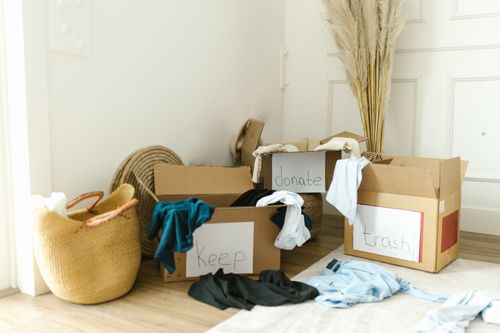
3. Stage your exit bags first. In a small apartment, a discard pile that sits around for a week becomes new clutter. Before you begin, put three bags by the door — donate, recycle/trash, sell — and commit to moving full bags out within 24 hours.
The KonMari Method Checklist: All 5 Categories in Order
Work these in order and never skip ahead to a "fun" category — each one trains your joy-sense for the next, harder one. (KonMari's official category checklist follows the same order if you want to cross-check.)
Category 1 — Clothes
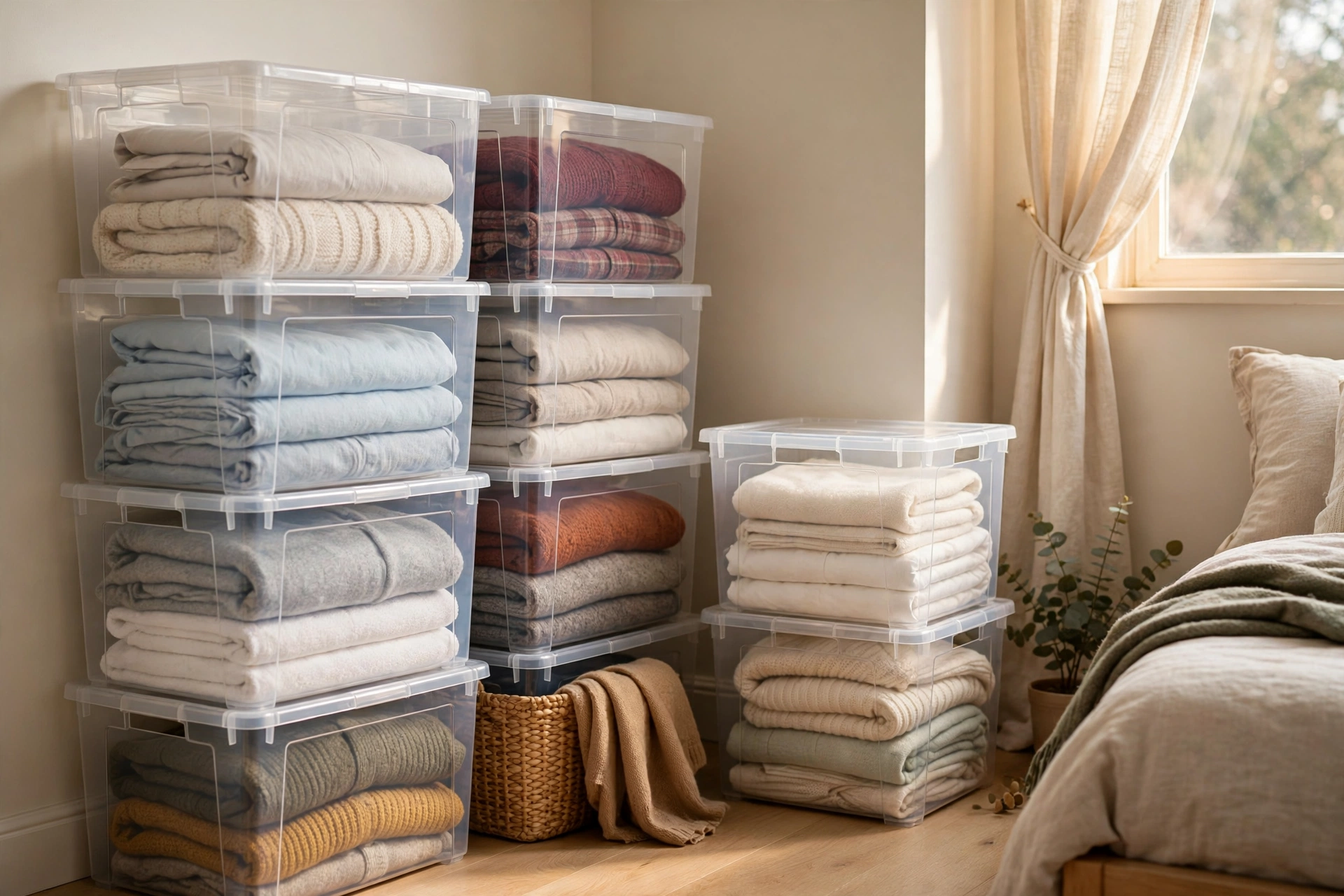
Start here because clothes are the easiest joy-read. Gather every piece — the coat in the hall closet counts too. Work the subcategories: tops, bottoms, dresses and skirts, outerwear, underwear and socks, shoes, bags, and accessories. Hold each item — actually hold it — and ask whether it sparks joy. Thank the discards and bag them immediately. Then fold what stays using the KonMari vertical fold so every item stands upright and visible; our dresser drawer organization guide shows the setup in a tiny dresser, and our small-closet organization guide covers hanging what remains by type and color.
Category 2 — Books
Pull every book off every shelf — nightstand, kitchen cookbook corner, the stack by the bed. Kondo's rule: don't start reading them, just joy-check. Sort into general reading, practical and reference, visual books like cookbooks, and magazines. The small-apartment reality check: books are heavy and shelves are scarce, so be honest about the aspirational pile. Keep what you'd genuinely re-read; photograph the spines of sentimental favorites before donating them.
Category 3 — Papers
Kondo's basic policy is to discard all papers, keeping only three kinds: currently in use, needed for a limited period, and must keep indefinitely. Go drawer by drawer and bag by bag — the junk drawer, the mail pile, the folder of old receipts. Paper is where small apartments drown quietly, so try to finish this category in one session. For the digital half of the problem — scanned bills, email, and files — our digital declutter checklist picks up where this leaves off.

Category 4 — Komono (Miscellany)
The biggest category — work it in this order: electronics and cords, skincare and personal care, accessories, valuables like passports and cards, stationery and hobby supplies, kitchen goods, cleaning supplies, and linens. Have small empty boxes ready (shoeboxes work perfectly) because every drawer gets re-homed after joy-checking. You don't need matching organizers — Kondo herself famously uses empty boxes. Give kitchen komono its own session; it's the most voluminous part of the category.
Category 5 — Sentimental Items
Last, deliberately: by now your joy-sense is trained. Photos, letters, souvenirs, gifts, school memorabilia. Give this category its own unhurried session — and a sane container limit: one keepsake box per person is plenty in a small apartment. Photograph bulky sentimental things like kids' artwork or trophies and keep the photos. Stuck on gifts? Use the gratitude ritual: thank the item for the giver's love, then let the object go.
What to Do With the Discard Pile in a Small Apartment
Donate: bag it and drop it within 24 hours — charity shops, textile recycling bins, or a buy-nothing group pickup at your door. Sell: list only items worth real money, with a 20-minute listing rule so selling doesn't become a second job. Recycle or trash: worn-out textiles go to textile recycling where your city offers it. The one rule that matters: nothing sits. In a small apartment, a "to donate" corner becomes permanent furniture within a week.
"Tidy by category, not by location — in a small apartment, that one rule changes everything."
KonMari Method Checklist FAQs
How long does the full KonMari method take in a small apartment?
Realistically, three to six weeks of scheduled sessions (two to three hours each) for a one-bedroom: clothes in a weekend, books and papers in a week, komono across two weekends, sentimental last. Smaller homes mean less stuff but the same five categories — don't rush the order to save time.
Can renters do the KonMari method without changing anything in the apartment?
Yes — that's its superpower. KonMari changes what you own, not your walls. No drilling, no built-ins, no landlord permission needed. The only space required is a bed or table as a sorting surface, which you already have.
What if nothing sparks joy, or everything does?
Both are normal at first. "Nothing sparks joy" usually means decision fatigue — take a break and come back to the subcategory later. "Everything sparks joy" usually means you're answering with guilt instead of feeling — hold each item silently for three seconds and notice your body's first reaction before your brain argues.
Do I have to do it all in one go like Marie Kondo says?
The ideal is one continuous tidying festival, but Kondo's deeper point is finishing each category completely once you start it. Scheduled sessions that respect the category order get you the same result in a small apartment — and a finished Category 1 beats an abandoned "one go" every time.
Work the list top to bottom, respect the order, and let each category sharpen your sense of what you actually love. A small apartment done the KonMari way doesn't just look bigger — it feels intentional, because everything in it earned its place.