
Every dresser drawer starts organized and ends the same way: one jumbled layer where socks hide under t-shirts. These dresser drawer organization ideas are built for small bedrooms, tight budgets, and rental rules — no new furniture, no drilling, no expensive systems. Just dividers, folding tricks, and one simple drawer map that turn every drawer into a find-everything-fast zone. Plan for about an hour for one dresser, most of it sorting.
Free Moves: Sort and Map Your Dresser Drawers First
Organizers fail in drawers stuffed with the wrong things. Do these four free moves first and the rest of the list works twice as well.
1. Empty every drawer and sort into real piles
Pull everything out, wipe the drawers down, and sort clothes into piles on the bed: daily wear, workout/sleepwear, delicates and accessories, "needs repair," and "haven't worn in a year." Dresser drawers collect the most unworn clothes in the house because the pile hides them. Most people find a whole donation bag right here — and freeing one drawer is worth more than any organizer.
2. Give every drawer one job
A drawer without a purpose becomes a catch-all. Assign each drawer a single category: top drawer for underwear and socks, middle for t-shirts and tops, lower for pants or sleepwear, bottom for seasonal or rarely used items. When a drawer has one job, you always know where a category lives — the same logic that keeps small bedroom storage functional in tiny rooms.
3. Rotate by season, not by nostalgia
Winter sweaters don't need prime drawer space in May. Keep only current-season clothes in the dresser; move off-season pieces to under-bed storage in labeled bags. One dresser, one season — your drawers get roughly half as crowded and every morning search gets twice as fast.
4. Draw a simple drawer map
Sketch your dresser on a sticky note: which drawer holds what. It sounds silly, but it stops category drift — the slow process where the sock drawer becomes the sock-and-belt-and-random-cable drawer. Review the map monthly for thirty seconds. It's the cheapest maintenance system you'll ever use, and it pairs well with the zoning habit in our small closet organization ideas.
Budget Dividers That Double Drawer Space
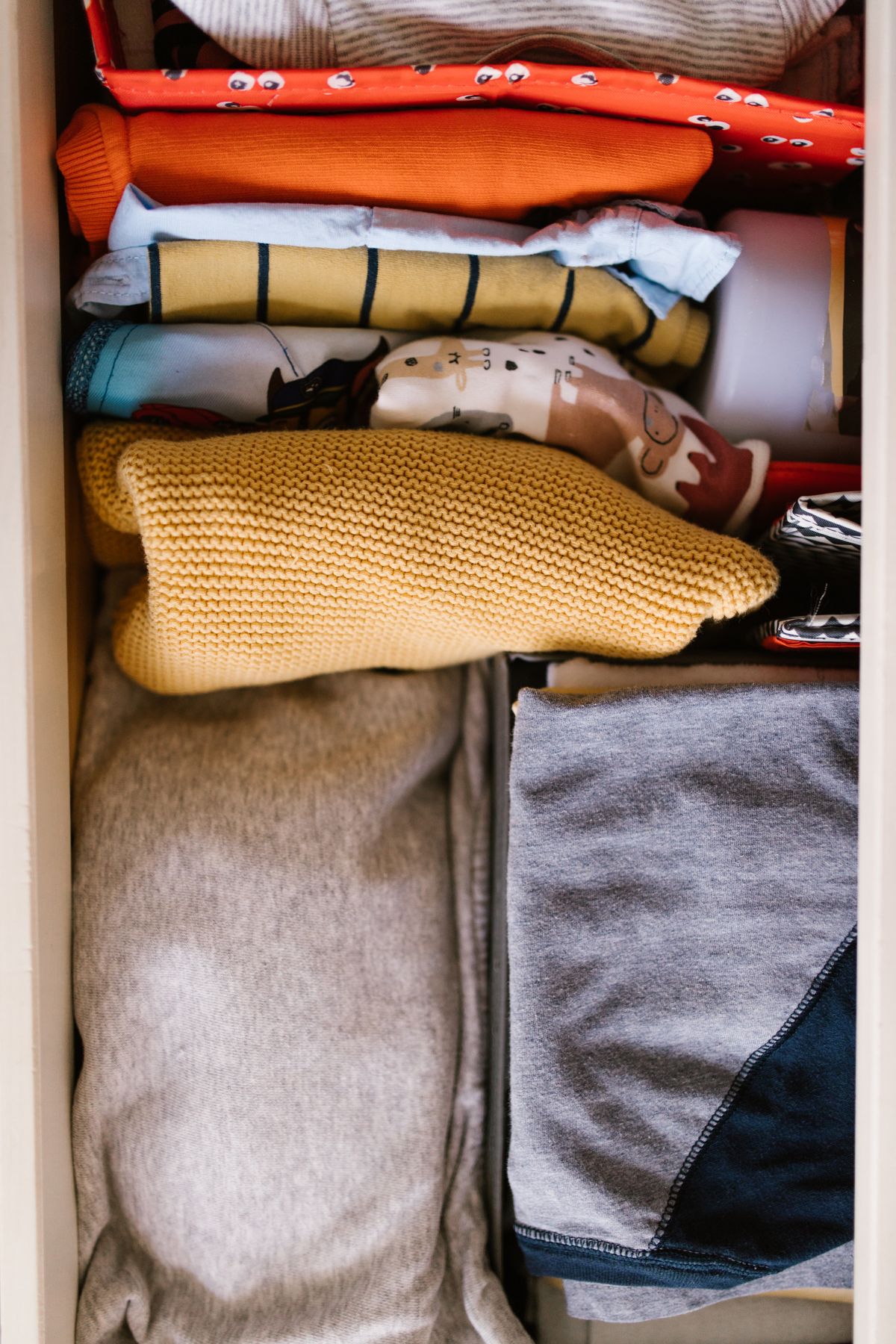
Dividers turn one chaotic box into labeled compartments. You don't need a matching set from a home store — cheap and homemade both work.
5. File-fold clothes so every item is visible
This is the single biggest drawer upgrade you can make, and it costs nothing. Fold t-shirts, pajamas, and leggings into small rectangles and stand them upright in rows, spine-side up, like files in a cabinet. You can see every item at once — no more digging under the stack for the one shirt. It also fits more per drawer because there's no wasted air between wobbly stacks. IKEA's own guide to organizing a dresser recommends the same rolling, folding, and standing approach instead of stacking.
6. Make cardboard grid dividers for free
Cut strips from a sturdy cardboard box (delivery boxes work) to the drawer height, notch them together into a grid, and drop the grid into the drawer. Socks, underwear, and belts get their own cells instantly. Reinforce with packing tape along the edges. It costs literally nothing and takes ten minutes — and it works as well as store-bought inserts for small items.
7. Use spring-loaded dividers for deep drawers
Deep drawers are where folded stacks topple and things get buried. Spring-loaded dividers wedge in place with zero tools and keep rows of folded clothes standing upright. One or two per deep drawer is plenty; they adjust as your folding style changes with the seasons.
8. Corral tiny items in small boxes or fabric bins
Socks, underwear, and accessories sink to the bottom of any divider-free drawer. Open fabric boxes, small trays, or cleaned-up shoe boxes keep them contained and visible. This is especially useful in the top drawer — it's the same containment trick from our nightstand organization ideas, applied at a bigger scale.
The best drawer isn't the prettiest one — it's the one where you can grab the right pair of socks in five seconds without moving nine other things first.
Small-Bedroom Dresser Tricks That Save Floor Space
When the bedroom itself is tiny, the dresser has to pull extra duty. These ideas squeeze more function out of the same footprint.
9. Use the dresser top as a station, not a dumping ground
Limit the top to one tray (watch, wallet, keys) plus a lamp or small plant. A clear top reads as calm; a covered one reads as clutter, and in a small bedroom that feeling fills the whole room. If the top is buried, you have a storage problem, not a decorating problem.
10. Anchor tall dressers and keep heavies low
Tall narrow dressers fit small bedrooms beautifully but can tip when drawers are pulled out and loaded unevenly. Use the anti-tip strap or bracket that came with the dresser — if you lost it, hardware stores sell replacements for a couple of dollars. Store heavier items (jeans, bags) in the bottom drawers and light items up top. Apartment Therapy's piece on dresser alternatives notes that tall, narrow pieces suit compact bedrooms best — just secure them so they stay safe.
11. Turn one drawer into a shared nightstand
No room for a nightstand? The top drawer of a dresser next to the bed works as one. Keep it shallow-filled with the essentials — book, charger, glasses, lip balm — and the dresser top holds your lamp. Two pieces of furniture's worth of function from one footprint.
12. Label the inside edge of each drawer
A strip of masking tape inside each drawer front — "Socks," "Tees," "Pajamas" — keeps categories honest, especially if you share the dresser. It also makes laundry day a sorting task instead of a guessing game.
13. Run a monthly five-minute drawer reset
Drawers drift because new clothes arrive and old ones linger. Set a monthly phone reminder: pull each drawer out, return strays to their mapped homes, pull out anything you haven't worn in a season, and re-fold anything that's flopped. Five minutes a month beats another full-hour overhaul every year.
Frequently Asked Questions
How do I organize dresser drawers without buying organizers?
Empty each drawer completely, donate what you haven't worn in a year, assign every drawer one category, and file-fold clothes so each item stands visible. Free cardboard grid dividers handle socks and small items. Most messy drawers need sorting and folding — not new products — and these free steps fix the majority of the chaos.
What goes in each dresser drawer in a small bedroom?
A common layout: top drawer for underwear, socks, and accessories; second for t-shirts and everyday tops; third for sleepwear and workout clothes; bottom for jeans, sweaters, or seasonal items. Adjust to what you actually wear most — the drawers you open daily should be the easiest to reach.
How do I fit more clothes in shallow dresser drawers?
File-folding is the main trick: standing clothes on edge instead of stacking them fits more per drawer and keeps everything visible. Small dividers or trays prevent overstuffing, and moving off-season clothes to under-bed storage frees the biggest chunk of space without buying anything.
How do I stop sharing a dresser from becoming a mess?
Split each drawer down the middle with a divider — one side per person — and label the inside edges. File-fold everything so both people's clothes stay visible. The drawer map matters most here: when the boundary is visible and labeled, categories stop drifting into each other's territory.
Dresser drawers are the first thing you touch every morning and the last thing you see at night — in a small bedroom, they set the tone for the whole room. Every drawer now has a job and every item is visible, and the whole morning routine runs about five minutes faster.