
Learning how to sort colors on hangers in a closet is one of the cheapest transformations you can make in a small home. No new furniture, no drilling, no budget — just a one-afternoon reset that turns a cramped, chaotic rod of clothes into something that looks (and works) like a boutique. Here is a simple 7-step system built for small closets, renters, and anyone whose wardrobe currently looks like laundry day never ended.
Why sorting by color on hangers works so well in small spaces
In a tiny closet, visual noise makes the space feel even smaller. When clothes hang in random order on mismatched hangers, your brain has to scan every item each morning. Grouping similar colors together creates calm blocks your eyes can read instantly — you go straight to the navy section when you want navy. Professional organizers call this reducing decision fatigue, and in a small apartment where getting dressed happens inches from your bed, that calm matters even more.
How to sort colors on hangers in your closet: the 7-step method
Step 1: Take everything off the rod
Yes, everything. A color system only works if you see the full picture. Pile clothes on your bed, and toss bent wire hangers and broken hooks — cluttered hardware ruins the effect before you start. If getting started feels emotionally hard, our gentle 10-minute decluttering method was written for exactly that feeling.
Step 2: Group by clothing type FIRST
This is the step most people skip — and why most color-sorted closets fall apart within a week. Before colors, group by type: tanks, short-sleeve tops, long-sleeve tops, sweaters, dresses, pants, skirts, jackets. Color-sorting only works within categories. A rainbow of mixed types looks tidy but makes dressing harder.
Step 3: Pick one color order and commit
Choose one of these two orders and use it for every category:
- Light to dark: whites → creams → pastels → brights → darks → black. Easiest for beginners and very forgiving in dim closet lighting.
- Rainbow (ROYGBIV) with neutrals at the ends: white → red → orange → yellow → green → blue → purple → brown → gray → black. Prettier, and popular in organizer photos.
Neither is "correct." Pick the one you can keep up. Apartment Therapy's pro-organizer guide to color-coding a closet recommends the same three moves: sort by type, decide your color order, and handle patterns deliberately.
Step 4: Apply the pattern rule
Striped, floral, and checked items break every color system — until you give them a rule. Use the dominant-color rule: file a patterned piece under whichever color covers the most of it. For pieces with no clear dominant color, keep patterns in their own small section at the end of each category. One consistent rule is all it takes.
Step 5: Match your hangers and face one direction
You do not need expensive hangers: slim velvet or plastic hangers in a single color are cheap in multipacks and take up less rod space, which is gold in a small closet. Hang every item facing the same direction (hooks all opening the same way). Organizer Amanda Titchenal recommends matching hangers as one of the highest-impact closet upgrades (her full closet method here).

Step 6: Rehang left to right, heaviest to lightest
Now load the rod back up, one category at a time, in your color order from left to right. A pro trick for small closets: put the heaviest, longest items (coats, dresses) on the left and shorter tops toward the right — it keeps the right side open and airy. Leave a couple of inches of empty rod at the right end as your weekly "landing zone" (see Step 7).
Step 7: Give new clothes a "sorting checkpoint"
The system dies when clean laundry goes back on the rod randomly. Fix it with one rule: newly washed clothes hang at the right end of their category; once a month, spend 10 minutes sliding them into color order. That's it. Ten minutes monthly beats a two-hour re-sort every season.
Adapting this system to small closets, renters, and shared rods
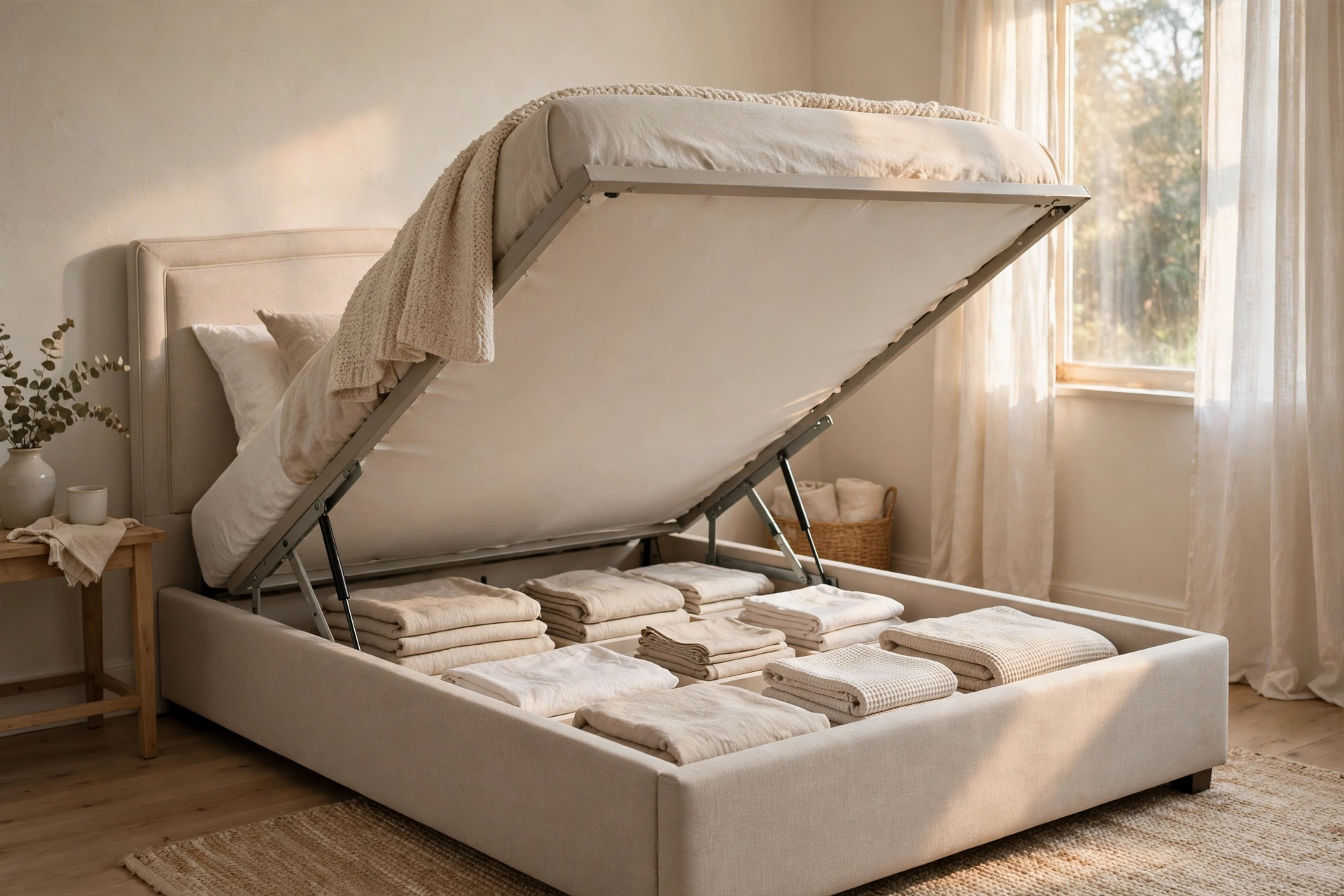
- Reach-in closets: Do steps 1–5 as written, but be ruthless in step 1 — a small closet can't hold a "maybe" pile. Off-season clothes go into under-bed or top-shelf storage (our small closet organization guide has the full overflow plan).
- Shared rods: Split the rod into two zones — yours left, theirs right — and each person runs their own color order. Stick-on rod dividers (under $10, no drilling) keep zones from drifting.
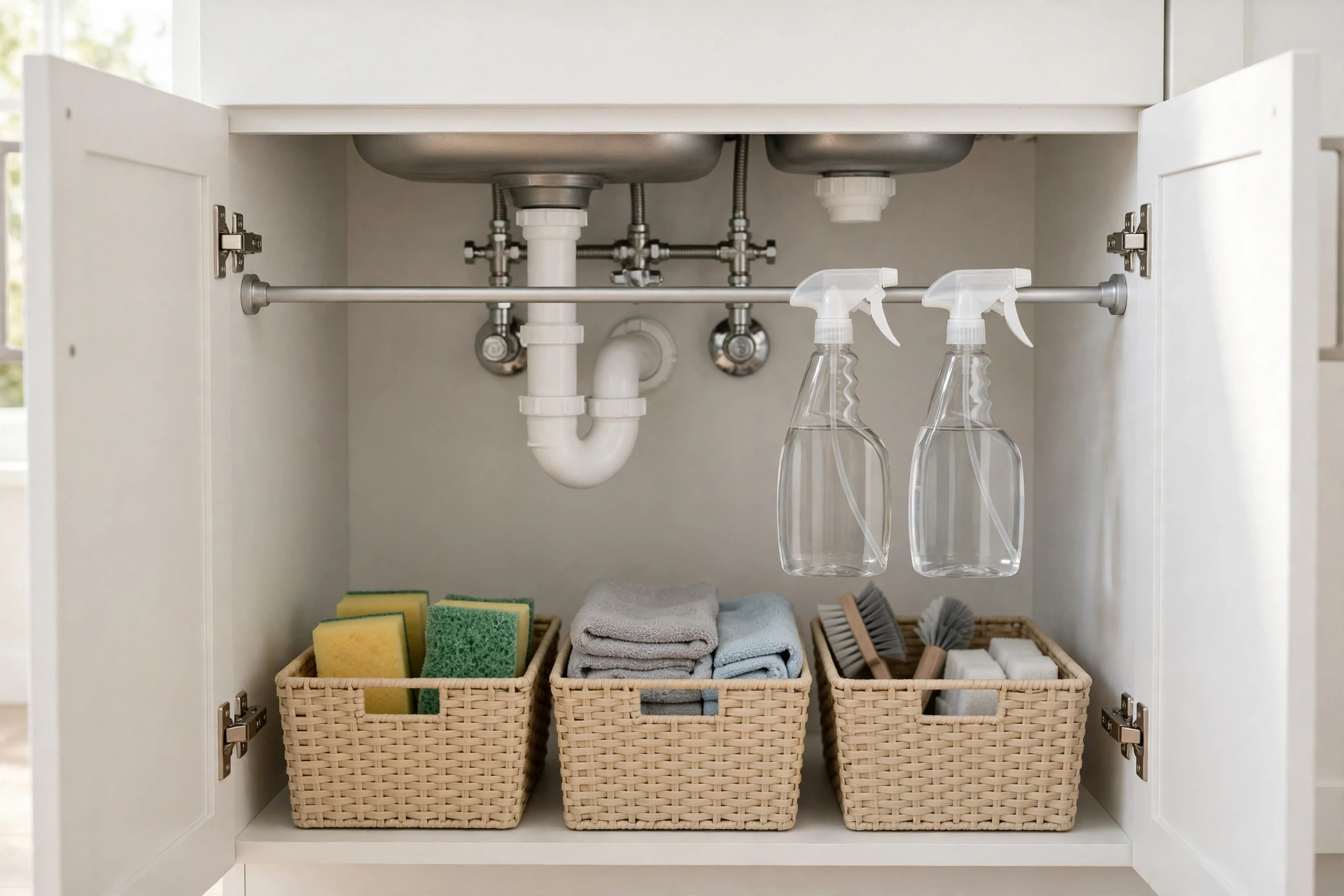
- Renter-safe upgrades: Add a tension rod under the main one for short items to double hanging space, and stick adhesive hooks inside the closet walls for tomorrow's outfit, belts, and scarves. If your entryway doubles as overflow storage, our coat closet guide covers that too.
- Tiny wardrobes and clothing racks: The system works even better on an open rack — color blocks look intentional instead of exposed. Use a slim hanger set so every inch counts.

The 2-minute daily rule that keeps it sorted
When you take something out, put it back in roughly the right color neighborhood — not perfectly, roughly. When you hang laundry, use the checkpoint zone from Step 7. Two minutes of "roughly right" daily means the monthly 10-minute fix stays a 10-minute fix. Roughly right, every day, beats perfect once a year.
5 mistakes that break a color-sorted closet
- Sorting by color before sorting by type — pretty but unusable. Type first, always.
- Mixing hanger types — mismatched hangers add visual noise that drowns out the color blocks.
- No rule for patterns — one dominant-color rule solves it; no rule means drift.
- Filling the rod 100% — a packed rod makes re-hanging a chore. Keep 10% breathing room.
- Seasonal clothes staying on the rod year-round — heavy winter coats steal prime space in July. Rotate them out.
A color-sorted closet isn't about being a "neat person." It's about giving your future, half-awake self a map — so you can find the blue shirt without a search party.
FAQs
Should I organize clothes by color or by type first?
By type first, always. Group tanks, tees, long sleeves, dresses, and pants separately, then sort each group by color. Color-only sorting looks tidy but makes outfits harder to find, because you still have to scan every garment type for the piece you need.
What color order should I use for hanging clothes?
Pick either light-to-dark (white → black) or rainbow ROYGBIV with neutrals at the ends. Light-to-dark is more forgiving in dim closets; rainbow order photographs beautifully. Consistency matters far more than the specific sequence.
How do I color-sort patterned or multicolored clothes?
Use the dominant-color rule: file the item under whichever color covers the largest area. For pieces with no dominant color, keep a small "patterns" section at the end of each clothing category. One consistent rule prevents drift.
How do I keep a color-sorted closet organized long-term?
Use a sorting checkpoint: hang fresh laundry at the right end of its category, then spend 10 minutes once a month sliding items into full color order. Put items back in roughly the right color zone daily, and keep 10% of the rod empty.
A color-sorted closet costs nothing and takes one afternoon. Pull everything off the rod this weekend, group by type, pick your order, and enjoy the calmest corner of your small home.