Learning how to organize and declutter your house feels impossible when every room needs attention at once. The trick is to stop treating it as one giant project. Work one small zone at a time and build a simple system that keeps the house tidy after the clear-out. This guide is a 7-day, room-by-room plan for small apartments and rented homes — no spare room, no garage, no big budget needed.
Before You Touch Anything: 3 Prep Steps That Save Hours
Most whole-house declutters fail before they start: no bags, no plan, no finish line. Spend 20 minutes on prep and the rest of the week goes twice as fast.
1. Gather four bags and a box
You need four bags and one box: trash, recycling, donate, and sell — plus a box labelled "elsewhere" for things that belong in another room. Keep a marker and timer with them.
2. Decide what "done" looks like
Write one sentence for your finished home — "Clear floors, clear counters, everything has a home" — and tape it to the fridge. When you are three days in and tired, that sentence is what stops you from quitting halfway through a room. If it feels overwhelming, start with our guide on how to start decluttering when you're overwhelmed first.
3. Learn the 10-second decision test
Pick up each item once and ask three questions: Have I used it in the last year? Would I buy it again today? Does it have a specific home in this house? Two "no" answers and it leaves. Sentimental items get one small "memory box" per person, with a hard limit. Apartment Therapy's guide to getting rid of stuff makes the same point: use one decision rule for every item.
How to Organize and Declutter Your House in 7 Days
One zone a day, 30 to 60 minutes each. Do the days in order — early wins are quick, and harder zones get easier with practice. Renters: everything here is damage-free, no drill or landlord permission needed.
Day 1: The entryway (30 minutes)
Start where you walk in every day, because the result is visible the moment you get home. Shoes to a rack, coats to hooks, bags to one hook each. The drop zone — keys, mail, receipts — gets one small tray or bowl and nothing else. Anything that is not daily inflow leaves: out-of-season coats to the closet, spare reusable bags to recycling. No entryway at all? Adhesive hooks and a small basket do the job.
Day 2: The kitchen (45–60 minutes)
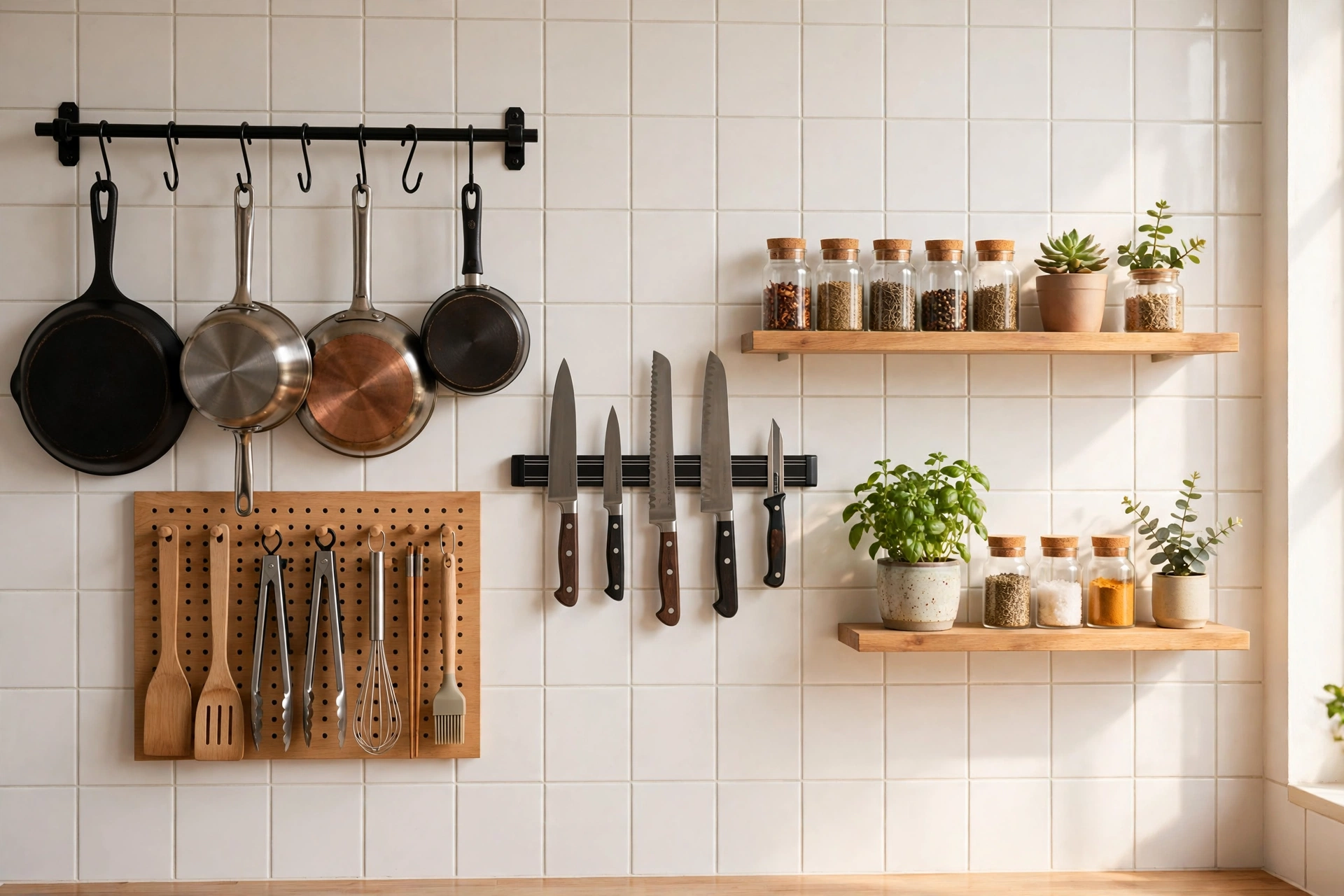
Start with the counters — a clear counter changes how the kitchen feels. Everything on the counter must earn its spot: used daily, or it goes in a cabinet. Then one drawer, the pantry, and the fridge. Toss expired food and duplicates. Group what stays by use.
Day 3: The living room (45 minutes)
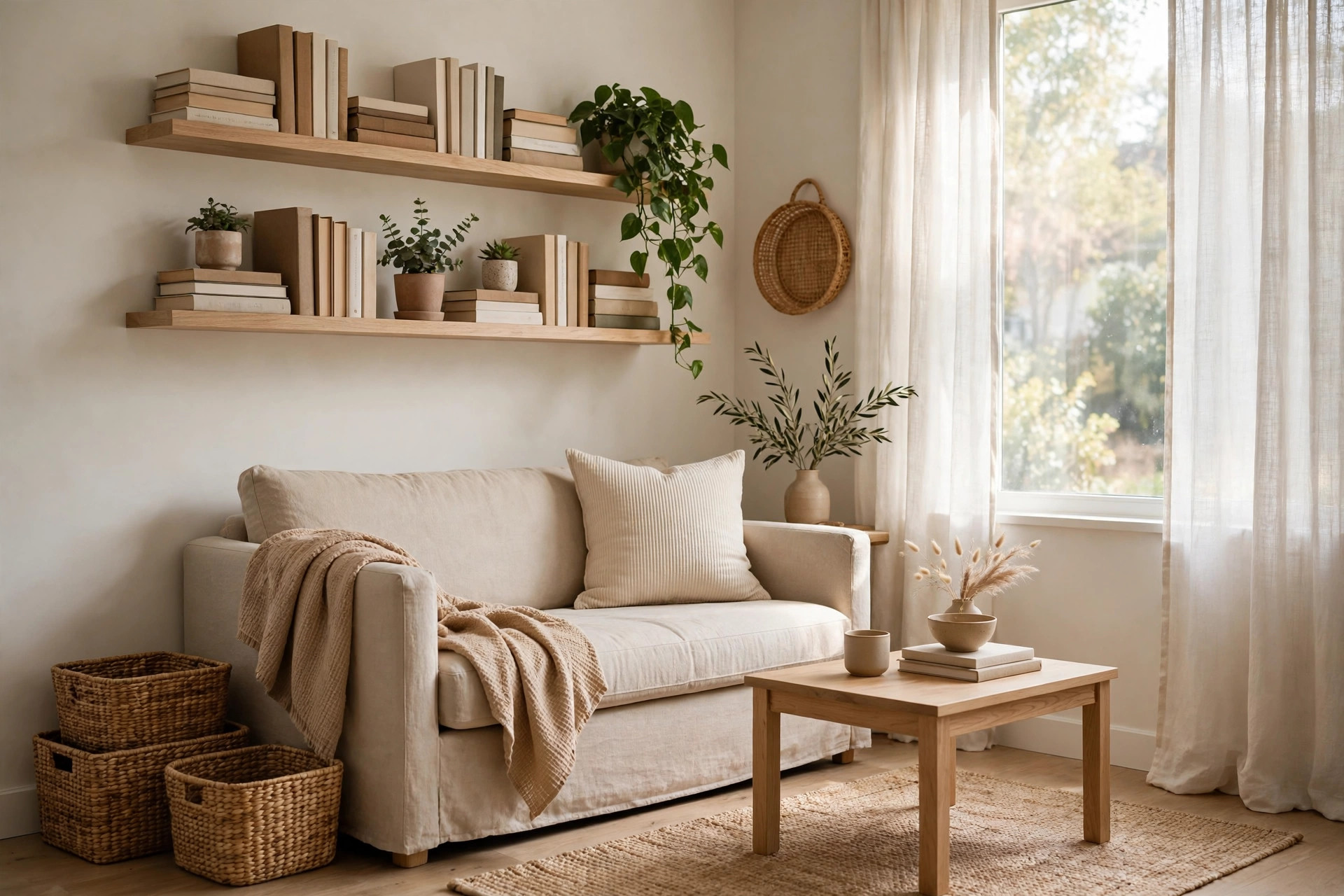
Clear every flat surface first, then deal with what was on them. Remote controls, chargers, and game controllers get one small basket or tray. Old magazines go to recycling; books you will never re-read go to donate. Bundle cords with a Velcro tie and run them behind the furniture. For the full system, see our guide to organize your living space from scratch.
Day 4: The bedroom and closet (45–60 minutes)
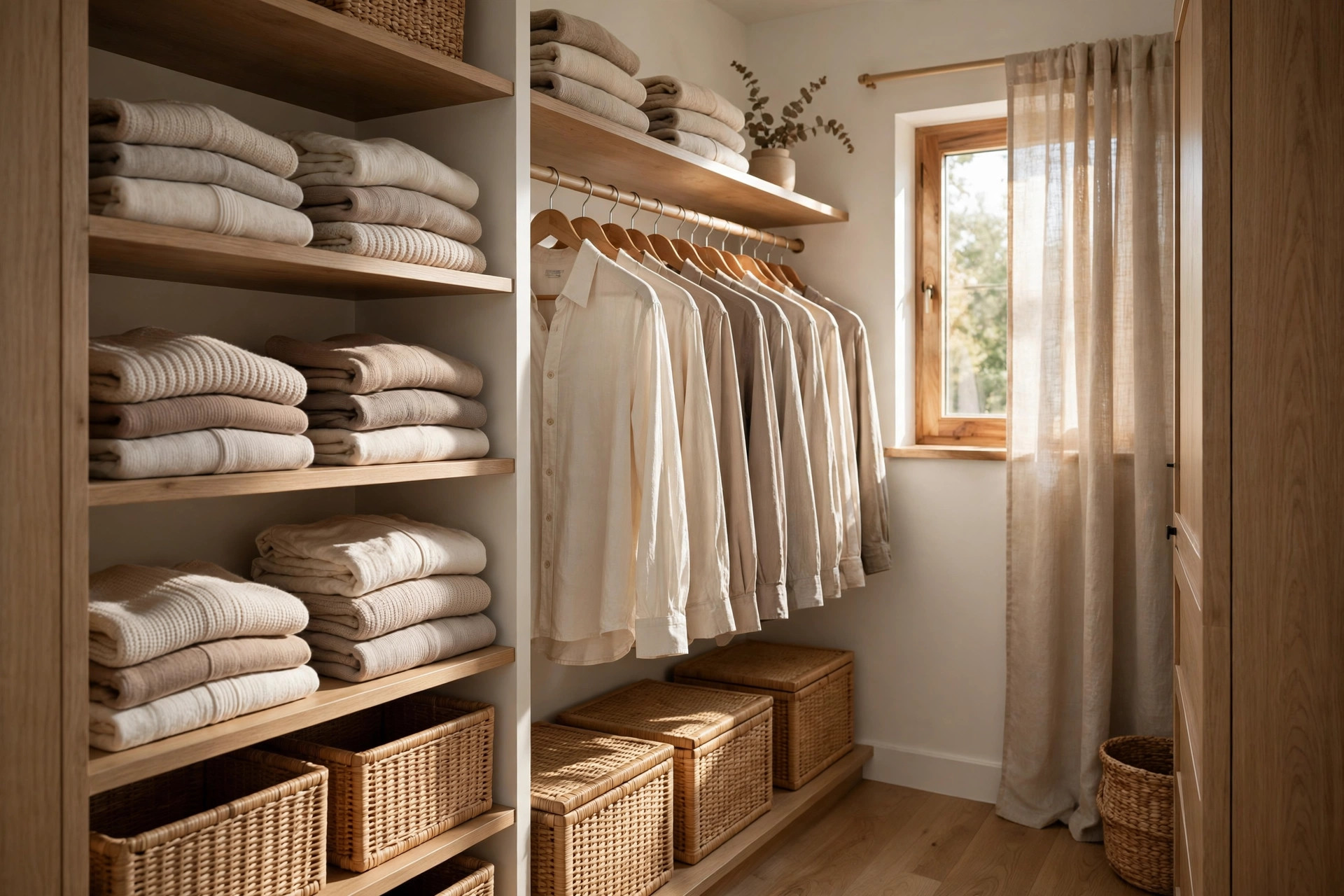
Clear the nightstand, dresser top, then the closet. Try the reverse-hanger test: turn every hanger backwards, and after six months anything still backwards goes. File clothes vertically in drawers so you can see everything. Under the bed is storage, not a hiding place — one flat bin for off-season clothes, nothing loose.
Day 5: The bathroom (30 minutes)
The smallest room is the fastest win. Empty the cabinet and counter, toss expired medicines and dried-out products, and keep only what you use weekly. One tray holds the daily items; the rest goes behind the door. Backstock lives in one labelled basket on a high shelf or under the sink.
Day 6: Paper and digital (45 minutes)
Paper is the clutter most people never finish, so give it its own day. Sort the pile into four stacks: act, file, shred, recycle. Sort new mail the day it arrives. Then the digital half: delete duplicate photos, clear the desktop, and unsubscribe from ten email lists.
Day 7: Out the door (60 minutes)
Load every donate bag by the door, drop sell items at a charity shop the same day, and take the trash and recycling out. Bags that sit by the door for a week creep back into cupboards. For what to do with everything you removed, our guide on how to get rid of stuff you don't need covers donate, sell, and recycle options room by room.
Organize What Stays: Give Everything One Home
Decluttering removes things; organizing decides where the survivors live. Store each item where you use it: daily items at eye level, weekly items higher or lower, rarely-used items hardest to reach. Group like with like so you never buy a duplicate because you could not find the first one. In a small home, use what you already own before buying organizers: a mug holds pens, a shoebox becomes a drawer divider. Label the containers you do use — labels stop a tidy drawer drifting back into a junk drawer. Apartment Therapy's room-by-room decluttering checklist follows the same empty, categorize, and place rhythm.
A decluttered house is not a house with less stuff. It is a house where everything left has a reason to be there — and a place to live.
The 10-Minute Daily Reset (Your Printable Checklist)
Ten minutes every evening keeps the house at the level you reached on Day 7:
- Dishes and trash out (2 minutes). Every cup, plate, and wrapper leaves the room it is in.
- Flat surfaces clear (3 minutes). Counters, tables, nightstand — back to their "done" state.
- Things back home (3 minutes). Shoes to the rack, bag to its hook, laundry to the hamper.
- Tomorrow ready (2 minutes). Keys in the tray, bag by the door, mail tray empty.
Miss a night? Do not double up — just run the same ten minutes tomorrow. Two missed nights in a row is the warning sign: run a 30-minute reset on the worst room before it spreads. Our room-by-room decluttering checklist pairs with this plan.

💡 Tip: Declutter in the order you live, not the order that looks worst. Start with the rooms you use every day — entryway, kitchen, living room — because the payoff shows up immediately. Quick visible wins keep you going through a whole-house project.
Frequently Asked Questions
How long does it take to organize and declutter a whole house?
For a small apartment or house, about 5 to 7 hours over a week — 30 to 60 minutes a day, one zone at a time. Larger homes take two weekends. Short sessions you finish beat one marathon you abandon halfway.
Where should I start decluttering my house?
Start with the entryway, then the kitchen. Both are used daily, so results show right away and quick wins carry you into harder zones. Never start with the most sentimental room — start where decisions are easy.
What do I do with everything I declutter?
Donate usable items the same week, list sellable items within 48 hours or donate them too, and recycle paper and broken electronics properly. Nothing outgoing stays in the house past Day 7, or it creeps back into cupboards.
How do I keep my house decluttered after finishing?
Run the 10-minute daily reset every evening and follow one-in, one-out: when something new comes in, something old leaves. Do a 30-minute zone reset on one room each week. Small daily habits keep a decluttered house decluttered — the big clear-out is only the beginning.