
Learning how to get rid of stuff you don't need is not about bags and boxes. It is one small decision, repeated until your home feels lighter: does this earn its space? In a small apartment, every unused item pays rent in square footage. This guide gives you a room-by-room method that works in a weekend and costs nothing.
You do not have to do your whole home today. Pick one room, finish it, and let the win carry you to the next one. If the idea feels heavy, start with our guide on how to start decluttering when you're overwhelmed.
The 3-Question Test: Decide in Ten Seconds
End the debate with three questions, in this order:
- Have I used it in the last 12 months? If not (and it is not seasonal gear), it goes.
- Would I buy it again today, at full price? If you would walk past it in a shop, you do not need it.
- Is it holding a memory, or just holding space? Memories live in photos, not in a broken appliance.
Two "no" answers means the item leaves — no "maybe" pile. Can't decide in ten seconds? Put it in a dated box out of sight; unopened after 30 days, donate it.
The 4-Box Sorting Method
Grab four boxes and label them: Keep, Donate, Sell, Trash. Add a fifth bag for recycling. Work one surface, shelf, or drawer at a time — never empty a whole room onto the floor at once.
Touch every item once and decide on the spot. Keeps go back where they belong; donate and sell items go by the front door; trash goes out now. Every pile needs an exit date: donations leave within 48 hours, sell items get listed within a week or move to donate.

How to Get Rid of Stuff You Don't Need, Room by Room
Bedroom and Closet
Clothes are the biggest category in most small homes, so start at the closet. Clothes that no longer fit, are stained, or have not been worn in a year go in the donate or sell box. The empty hangers are your progress meter. For what stays, our guide to storing clothes without a dresser covers renter-friendly options that cost almost nothing.
Kitchen
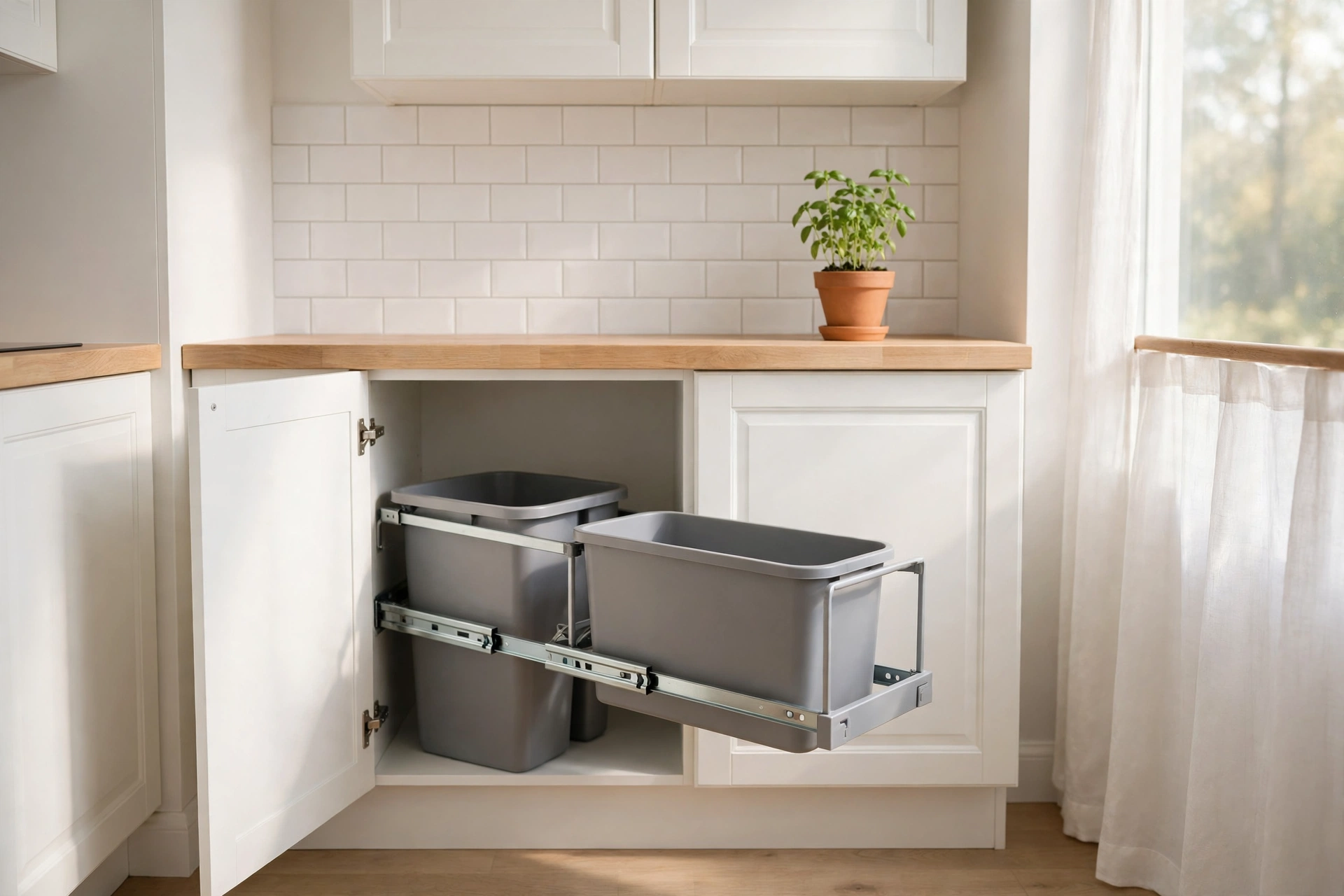
Kitchens collect duplicates: three spatulas, two blenders, a drawer of takeout cutlery. Keep the one you reach for; release the rest. Check cupboard backs for expired food, chipped mugs, and one-recipe gadgets. Appliances you have not used in a year — the bread maker, the juicer — are prime donation candidates. If counters are still crowded, see storage ideas for awkward spaces.
Bathroom
The bathroom is the fastest win in the house: one drawer, ten minutes. Toss expired medicines (use a pharmacy take-back program, never the toilet), dried-out makeup, and hotel toiletries you will never use. Keep only weekly products, in one small basket. If you must move something to use the sink, it does not live there.
Living Room and Entryway
Living rooms hide clutter in plain sight: old magazines, dead remotes, cables for devices you no longer own. A cable with no device goes in recycling; a book unread for two years goes to the donate box. At the entryway: if it does not help you leave the house — keys, shoes, bag, coat — it does not live by the door.
Paper and Digital Clutter
Paper is the sneakiest category because it arrives daily and feels important. Sort it in one sitting: shred what is sensitive, file what is legally needed, recycle the rest. Give new paper one landing spot — a single inbox tray; see our small apartment mail organization ideas for the full system. Then go digital: delete duplicate photos, unsubscribe from ten newsletters, clear downloads. Phone clutter costs the same energy as counter clutter.

Where Each Pile Actually Goes
- Sell: List items worth your time on Facebook Marketplace or eBay. If it is worth less than the hour to photograph, list, and meet a buyer, donate it instead.
- Donate: Goodwill, Salvation Army, Habitat ReStores, and local shelters accept clothes, furniture, and household goods in good condition. Goodwill's own guide to getting rid of stuff walks through sorting and donating.
- Recycle: Electronics, batteries, and old paint need special handling — never in the regular trash. Consumer Reports' guide to getting rid of practically anything lists disposal options for appliances and electronics.
- Trash: Broken, stained, or unusable items go out with the next collection. Too big for the bin? Book a bulk pickup.
What to Do With Sentimental Items
Sentimental things are where most clear-outs stall. You are allowed to keep some — the goal is a home that works, not an empty one. Pick one memory box (a shoebox is a good limit) and keep only what fits inside. Photograph bulky keepsakes — a child's art, a grandparent's letters — and keep the photos instead of the pile. Would the person who gave it to you want it making you feel guilty in a cupboard? Usually not.
"You don't have to get rid of everything. You just have to get rid of the things that are getting in the way of the life you actually want to live in this space."
Stop the Stuff Coming Back
A clear-out that lasts needs a gate at the front door: the one-in-one-out rule — every new item in means one old item out. Add a 10-minute weekly reset and a waiting list for non-essential purchases (still want it in 30 days? buy it; usually you will not). Run our room-by-room decluttering checklist once a season.
Quick tip: Book the donation drop-off before you start sorting. A car booked for Saturday morning is a deadline — and deadlines stop donate bags from living by the front door for a month. Text a friend your plan: telling someone makes follow-through far more likely.
Your Weekend Checklist
- Pick one room and set a 2-hour timer
- Label four boxes: Keep, Donate, Sell, Trash (plus one bag for recycling)
- Run every item through the 3-question test
- Bag donations — drop off within 48 hours
- List sell items within a week, or move them to donate
- Photograph sentimental keepsakes; keep only what fits one memory box
- Do a 10-minute reset and enjoy the empty surfaces
Frequently Asked Questions
How do I get rid of stuff I don't need fast?
Use the 4-box method in one room at a time with a 2-hour timer, and book your donation drop-off before you start. Speed comes from deciding once. The slowest part is never the sorting; it is the piles sitting by the door afterward, so give every pile an exit date.
What should I do with stuff I don't need but might use someday?
Put it in a dated box out of sight with a 30-day reminder. Never opened it? Donate it unopened. Unused for a year with no date you will use it? It is costing you space for a future that is not coming.
Where is the best place to donate household items?
Goodwill, Salvation Army, and Habitat ReStores accept most household goods in good condition, and shelters often need towels, bedding, and kitchen items. Call ahead for large furniture — many charities offer free pickup.
How do I stop clutter from coming back after decluttering?
Use the one-in-one-out rule, a 10-minute weekly reset, and a 30-day waiting list for purchases. Clutter returns when things have no home and no gate at the door — give every item a place.
That is the whole method: one room, four boxes, three questions, and an exit plan for every pile. Start tonight — by the weekend your home will feel lighter.