If your wardrobe is bursting at the seams, here is the good news: learning how to maximise wardrobe space rarely means buying a bigger wardrobe. Most wardrobes waste a third or more of their space — empty air above the rail, a dead zone at the bottom, and shelves stacked too high to reach. The ten tricks below work in almost any wardrobe, cost little, and need no drilling, so they are safe for renters too.
Step 0: Measure First (5 Minutes That Save You Money)
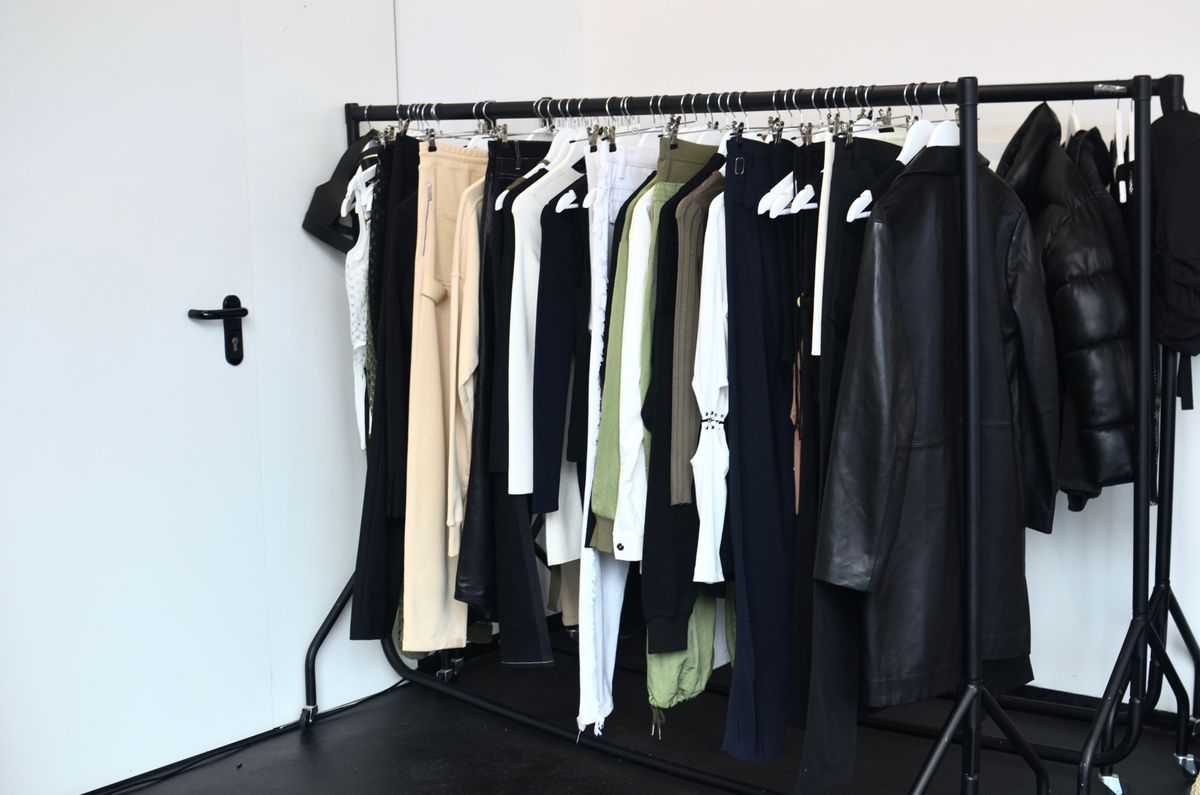
Before you buy a single hanger or basket, measure three things: the width of your wardrobe, the height from the rail to the floor, and the depth of each shelf. Write the numbers on your phone. Almost every wardrobe product — a second rail, a shelf divider, an under-shelf basket — comes in standard sizes, and guessing is how people end up with organisers that do not fit.
How to Maximise Wardrobe Space: 10 Tricks That Actually Work
1. Declutter Before You Organise
No trick creates space that is not there. Pull everything out, and try the reverse-hanger test: turn every hanger backwards, and after a month, anything still facing backwards is something you do not wear. Be honest about the "one day" pile — clothes that need repairs, do not fit, or you have not reached for in a year. Donate or sell them first; every item you remove is free space you do not have to buy.
2. Switch to Slim, Matching Hangers
This is the single fastest win. Bulky plastic and wooden hangers eat 3–4 cm each; slim velvet hangers take about 1 cm. Across a 90 cm rail, that difference can free up room for 10–15 extra garments. Velvet also stops silk and camisoles sliding off onto the floor. Swap one section at a time if a full set feels pricey — start with the bulkiest hangers first.
3. Double Your Hanging Space With a Second Rail
Most wardrobes have one rail with a metre of dead air underneath it. A second, lower rail — a tension rod or a hanging extender that clips onto the existing rail — instantly doubles hanging space for shirts, blouses, skirts and folded trousers. No drilling needed, which makes it ideal for rentals. Keep long items (dresses, coats) on one side of the original rail and short items on the doubled side.
4. File-Fold and Add Shelf Dividers
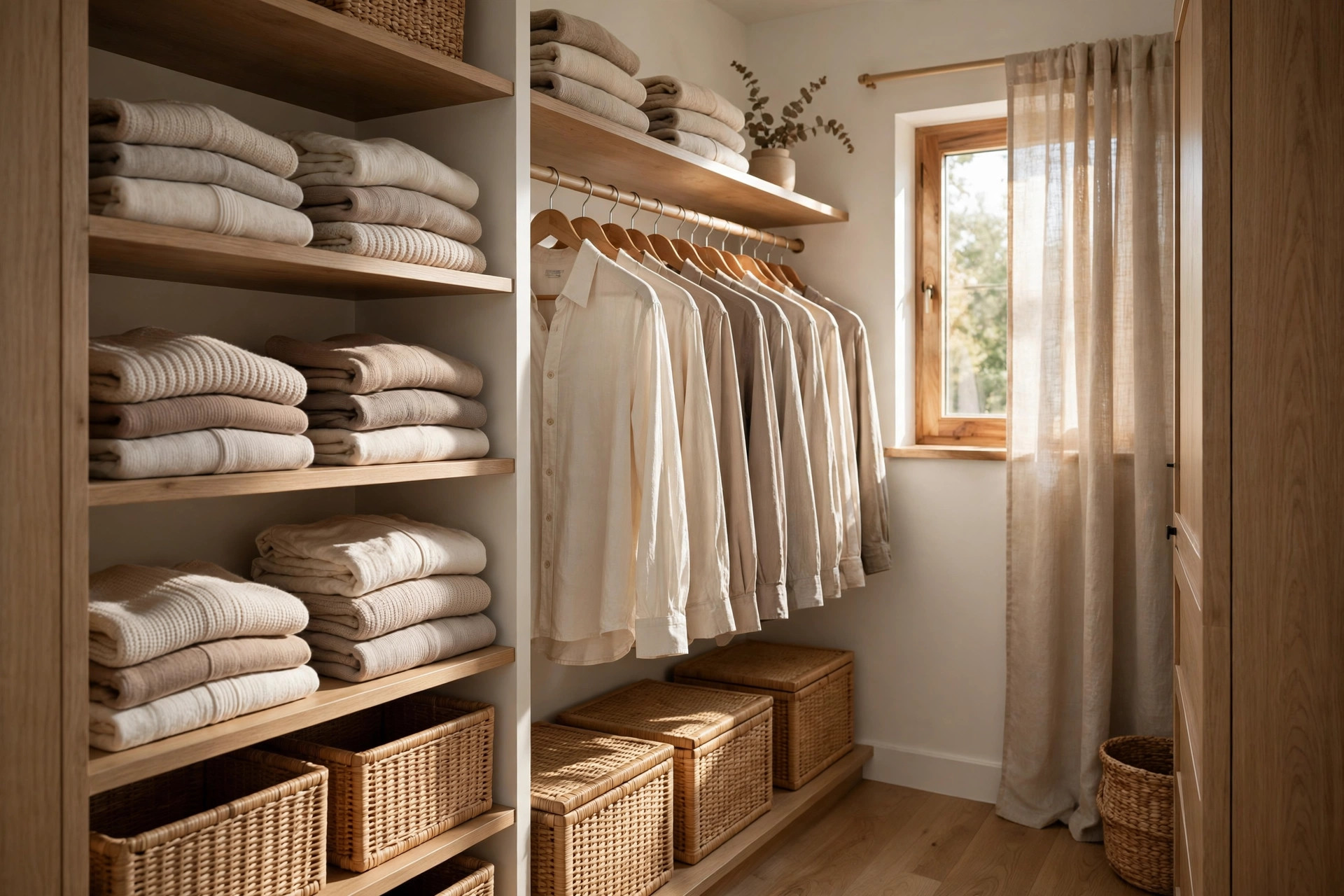
Stacks of folded jumpers topple because nothing holds them upright. Fold clothes into rectangles and stand them upright like files in a drawer or on a shelf — you can see every item at a glance, and pulling one out does not collapse the pile. Add shelf dividers (or even sturdy bookends) to split wide shelves into narrow bays, one per category: t-shirts, jumpers, jeans.
5. Use the Inside of the Door
The back of a wardrobe door is free real estate. An over-the-door organiser with clear pockets holds scarves, belts, jewellery, sunglasses and small accessories — all the bits that usually end up in a tangled drawer. Adhesive hooks on the door work for tomorrow's outfit or a dressing gown. If your door is a sliding door, use the side wall of the wardrobe instead with removable hooks. Our reach-in closet ideas show more door and wall tricks for shallow wardrobes.
6. Hang Baskets Under Shelves
Under-shelf baskets clip onto an existing shelf and create a second layer underneath it — perfect for underwear, socks, or rolled t-shirts. Hanging fabric organisers with cubbies do the same job vertically: six cubbies in the space of two folded jumpers. Both are cheap, need no tools, and come out in seconds when you move house.
7. Vacuum-Pack the Off-Season
Bulky winter coats and heavy jumpers can take up half a wardrobe for six months of the year. Vacuum compression bags shrink them to a third of their size — slide the flat bags onto the top shelf or under the bed until the season turns. Two warnings: do not vacuum-pack leather, silk or feather-filled items, and always wash items before sealing them away.
8. Give the Floor a Job
The wardrobe floor is usually a graveyard of shoes and bags. A two-tier shoe rack turns one layer of shoes into two, and a low, lidded box keeps handbags upright instead of slumped in a heap. If shoes live elsewhere, use the floor for a small set of drawers or a laundry basket. The rule is simple: nothing sits directly on the floor without a container.

9. Claim the Top Shelf
The top shelf is the most wasted space in most wardrobes because it is hard to reach and easy to ignore. Put labelled, clear-lidded boxes up there for the things you need rarely: out-of-season clothes, special-occasion outfits, spare bedding. Label the front of every box so you never have to drag three down to find one thing.
10. Keep It That Way: One In, One Out
A maximised wardrobe only stays maximised if the same amount keeps leaving as comes in. Every time a new item comes home, one old item goes — to donation, resale, or recycling. It takes ten seconds, it stops the slow creep back to chaos, and it makes you think twice before buying something you do not need. For a full system that keeps a small closet working long-term, see our closet organization ideas for small closets.
"A small wardrobe is not a storage problem. It is a layout problem — and layout is free to fix."
Your 30-Minute Weekend Plan
Do it in this order and you will see the difference before lunch:
- Minutes 0–5: Measure width, rail height and shelf depth. Write the numbers down.
- Minutes 5–15: Empty one section completely. Declutter with the reverse-hanger test and the "have I worn it this year?" question.
- Minutes 15–25: Swap in slim hangers, add the second rail, and file-fold one shelf.
- Minutes 25–30: Vacuum-pack off-season items, label the top-shelf boxes, and hang tomorrow's outfit on the door hook.
Repeat for the next section next weekend. Most wardrobes are transformed in two or three short sessions — no renovation, no new furniture, no landlord permission needed. And if your clothes overflow beyond the wardrobe itself, our clothes storage ideas for small apartments cover the no-closet overflow spots too.
Frequently Asked Questions
How can I maximise wardrobe space without buying anything?
Declutter first, then file-fold everything on the shelves and switch the order of your hanging clothes so short items sit together. Those three free changes alone usually free up 20–30% of a wardrobe.
What is the best way to double hanging space in a small wardrobe?
Add a second rail below the first one. A tension rod or clip-on extender rail costs little, needs no drilling, and works for all short garments like shirts, blouses and folded trousers.
Do slim hangers really save that much space?
Yes. Slim velvet hangers are roughly a third the width of chunky plastic or wooden ones, so a full rail can hold 10–15 more garments. They also stop slippery fabrics sliding off.
How do I keep a small wardrobe organised long-term?
Follow one-in-one-out: every new item in means one old item out. Do a five-minute reset each Sunday — rehang anything that slipped, refold one shelf — and the system holds.
For more professional ideas on making a tiny closet work harder, see Apartment Therapy's pro organiser-approved tips for maximising closet space and their 20 small closet storage ideas.