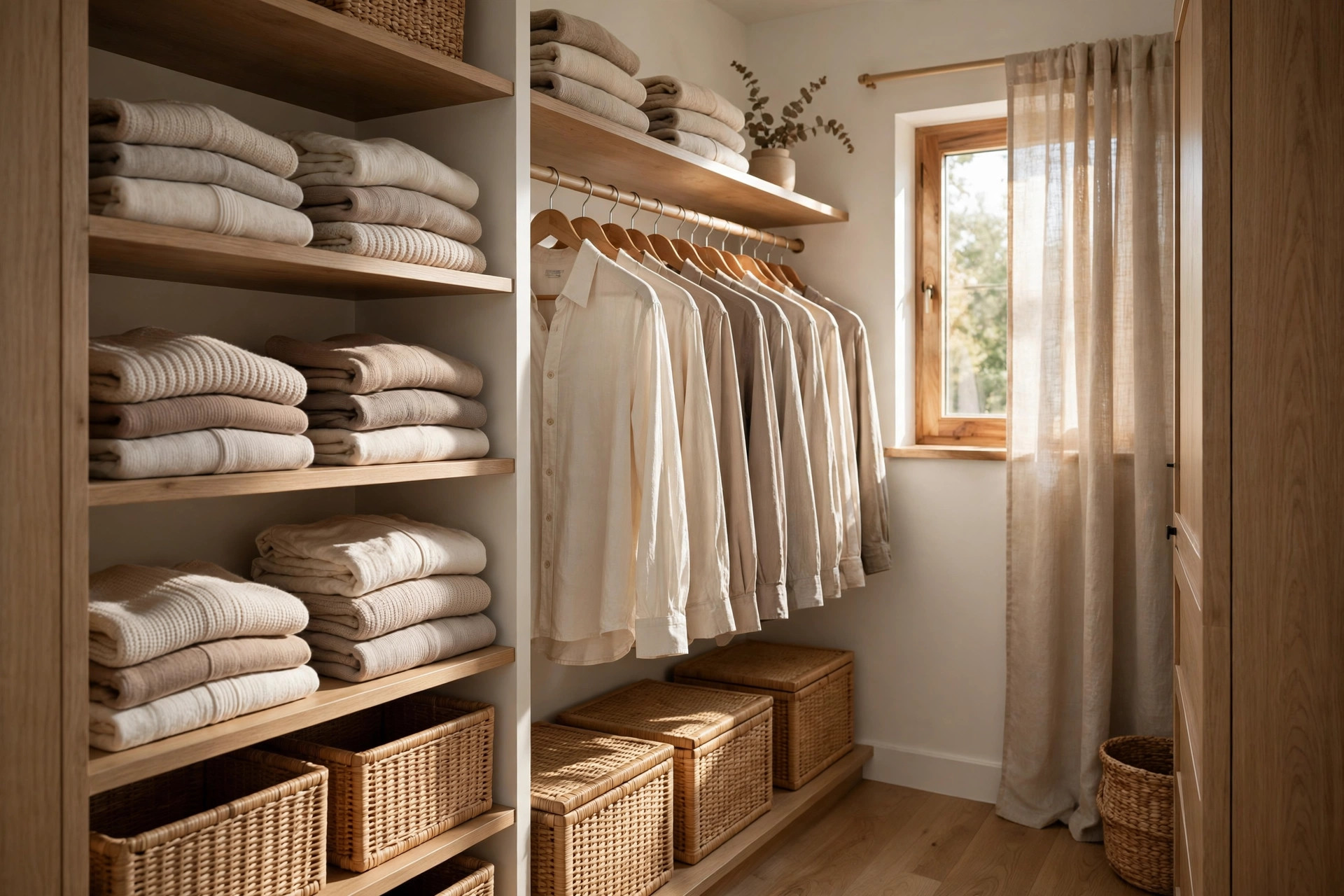
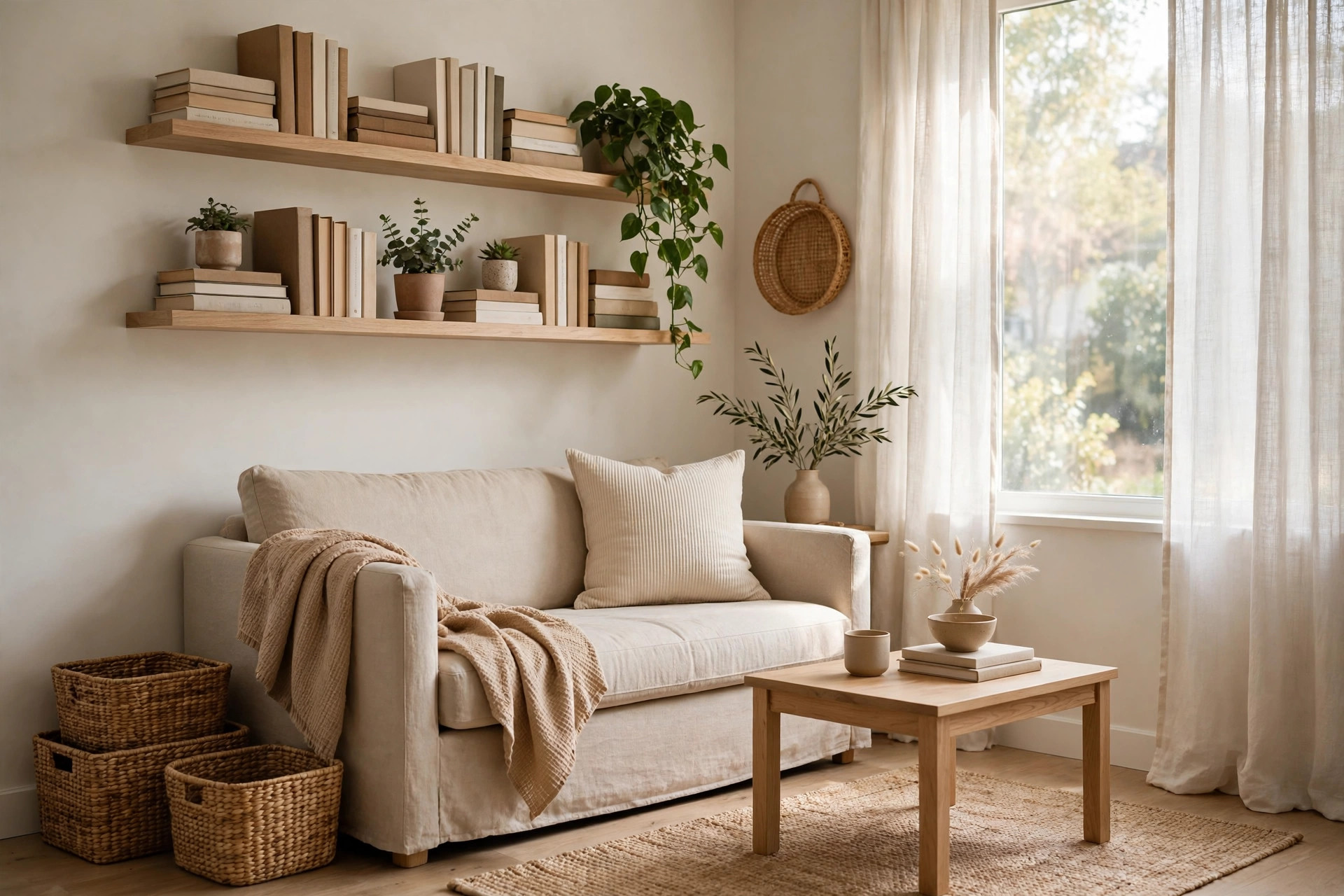
If your clothes live in a chair pile, a laundry basket, and half a closet at the same time, you are not bad at organizing — your apartment just never gave your wardrobe a real plan. These clothes storage ideas for small apartments work with the space you already have: no remodel, no new furniture required, and every idea below is renter-safe and budget-friendly. The trick is not buying more bins. It is giving every item a zone, then using the vertical and hidden space your apartment is already hiding from you.
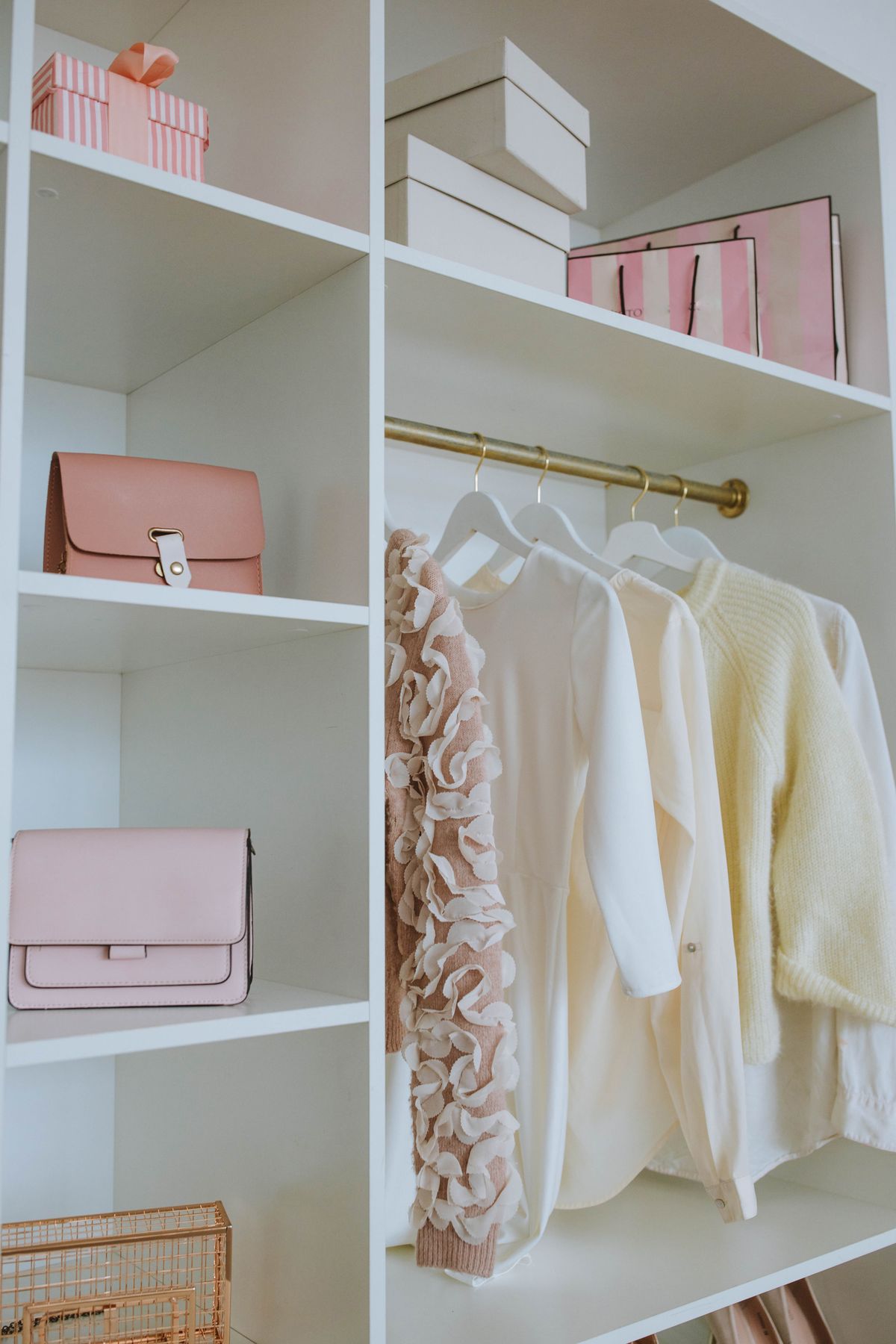
Start With a 20-Minute Closet Audit
Before you buy a single hanger, empty the closet completely and sort everything into four piles: daily wear, seasonal, special occasion, and donate or remove. Daily wear is what you actually reached for in the last two weeks — that pile earns the easiest, eye-level space. Seasonal and special-occasion clothes move to the harder-to-reach zones. The donate pile leaves the apartment this week, not "someday." Most small apartments feel short on storage because off-season and rarely-worn clothes are sitting in the prime spot. This one audit usually frees up a third of your closet before you spend anything.
Clothes Storage Ideas for Small Apartments: Double Your Hanging Space
Hanging space is the fastest win in a small closet, because most closets waste the bottom half of the rod.
1. Add a second hanging rod. A tension rod or a clip-on extender rod hung below your main rod instantly doubles hanging space for shirts, skirts, and folded-over pants. It costs very little, installs in minutes, and leaves no holes — perfect for renters. Keep longer items like dresses and coats on the main rod and shorter pieces on the lower one.
2. Switch to slim velvet hangers. Bulky plastic and wooden hangers eat surprising amounts of rod space. Slim velvet hangers are a fraction of the thickness, grip fabric so clothes stop sliding off, and matching hangers make the whole closet look calmer. Swap one section at a time if replacing them all at once feels wasteful.
3. Use cascading hanger hooks. A small hook that links one hanger below another lets you hang several tops vertically in the footprint of one. It works best for lightweight shirts and blouses — skip it for heavy coats, which will stretch the fabric and strain the hook.
Fold Smarter, Store More
How you fold matters as much as where you store. Stacks that topple are the reason drawers turn into a mess by Wednesday.
4. File-fold your drawers. Fold shirts, pants, and underwear into rectangles and stand them upright in rows, like files in a drawer, instead of stacking them flat. You can see everything at a glance, nothing gets buried at the bottom, and a drawer holds noticeably more. Our guide to storing clothes without a dresser shows the same folding method working in bins and baskets when drawers are scarce.
5. Add shelf dividers to stop the topple. A pair of simple shelf dividers turns one tall shelf into tidy sections for sweaters, jeans, and folded tees. Without them, stacks lean and collapse the moment you pull one item out. Dividers are cheap, need no tools, and work in closets, on bookshelves, and in cubbies.
6. Roll soft items for tight spaces. Rolling T-shirts, leggings, and knitwear works well for travel cubes, under-bed bins, and deep drawers where folded stacks would be hard to reach. Roll loosely rather than tightly — tight rolls crease knits and make items hard to identify.
Use the Zones Everyone Forgets
Every small apartment has storage zones that go unused: the space under the bed, the back of the door, and the top shelf you can barely reach.
7. Claim the under-bed zone. Low, flat bins under the bed are ideal for off-season clothes, extra bedding, and anything you need only a few times a year. Label each bin by season or category so you are not pulling out three boxes to find one sweater. See our under-bed storage ideas for bin types that slide easily on carpet and hard floors.
8. Turn the closet door into storage. An over-the-door organizer with clear pockets holds folded clothes, accessories, scarves, and small items without taking a single inch of floor or shelf space. Hang it on the inside of the closet door so it stays out of sight when the door is closed.
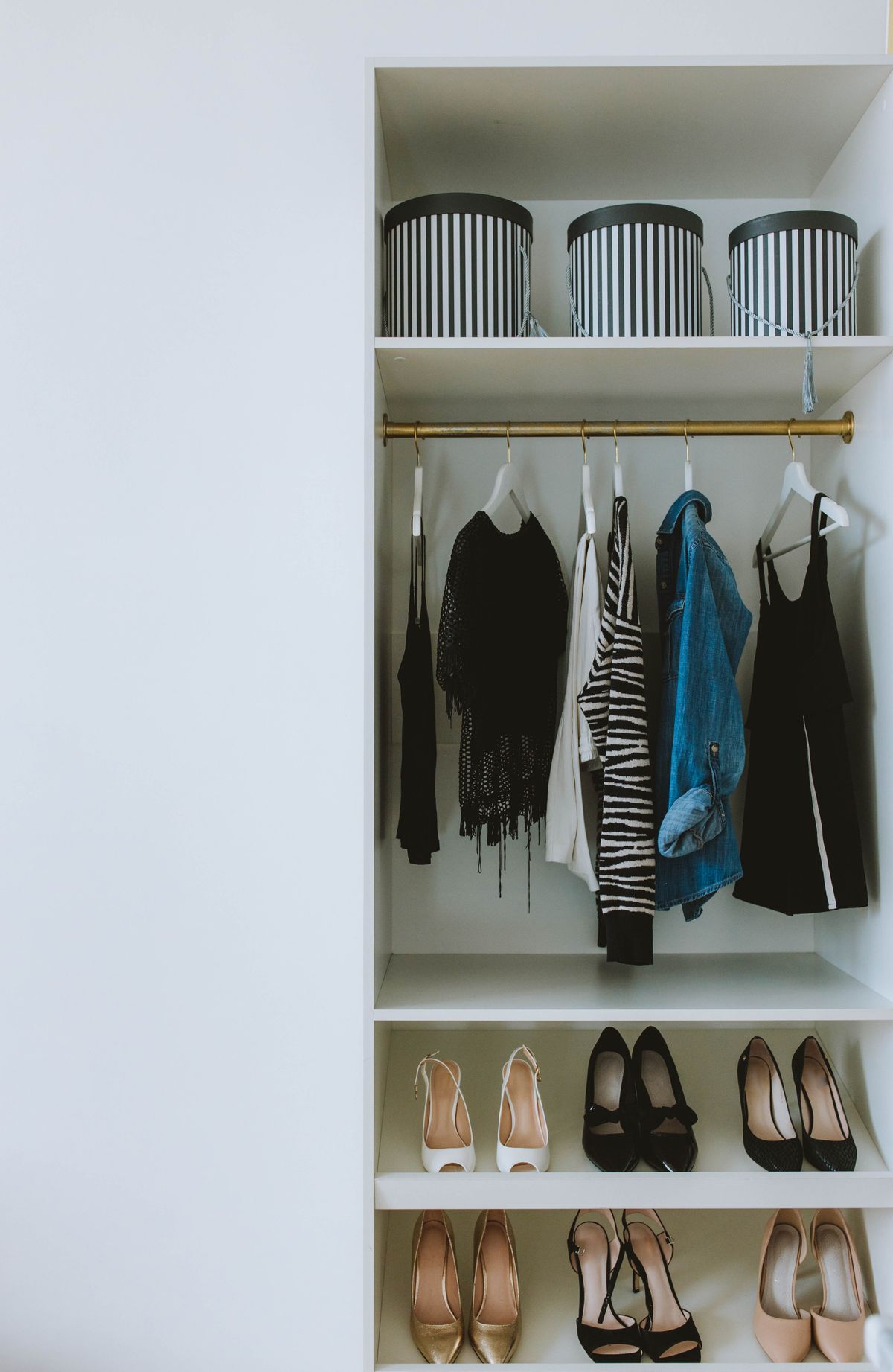
9. Use the top shelf for the slow stuff. The highest shelf is the worst place for daily clothes and the best place for the things you touch twice a year: formal wear, holiday outfits, and out-of-season coats in labeled bins. Matching bins up there look intentional and keep dust off everything.
10. Steal the wall, not the floor. A row of sturdy adhesive hooks on a bedroom wall or the side of a wardrobe holds tomorrow's outfit, jackets, and bags. It frees hanger space inside the closet and stops the chair pile from forming. Check the weight rating on the pack and keep heavy coats on a proper hook or rail.
No Closet at All? Build One Without Drilling
Some rentals come with a wardrobe the size of a suitcase, or no closet at all. That is a solvable problem, not a lost cause.
11. Set up a freestanding garment rack. A simple clothing rail gives you instant hanging space anywhere — beside the bed, in a hallway nook, or in a room corner. Pair it with a couple of labeled bins underneath for folded clothes and shoes, and it becomes a complete mini-closet that moves with you.
12. Turn a bookshelf into a wardrobe. An open bookshelf holds folded sweaters, jeans, and storage boxes beautifully, and it doubles as visible decor when you keep the stacks neat. Add a small tension rod across the top section and you have hanging space too.
13. Give every category a basket. When clothes live outside a closet, categories keep them from becoming one big pile. One basket for workout clothes, one for sleepwear, one for accessories — each labeled, each in the same spot every day. If a basket overflows, that category needs a declutter, not a bigger basket.
14. Use furniture that stores clothes twice. A storage ottoman at the foot of the bed, a bed with drawers underneath, or a bench with a lift-up lid all hold off-season clothes in space you were already using. In a shared or reach-in closet, the same thinking applies — our reach-in closet organization ideas show how to double capacity in the closet you already have.

"A small apartment doesn't mean a small wardrobe — it means every item needs a job and a home."
Your Weekend Checklist
Work through this in order and your clothes will have a real system by Sunday evening:
- Empty the closet and sort into daily, seasonal, special occasion, and donate piles.
- Move seasonal and special-occasion clothes to the hardest-to-reach zone.
- Install a second rod and switch to slim hangers in the daily-wear section.
- File-fold one drawer and add shelf dividers where stacks topple.
- Label under-bed bins and the top-shelf boxes by season or category.
- Hang an over-the-door organizer and a row of wall hooks for daily items.
- Pick one no-closet solution — a garment rack or a bookshelf wardrobe — if hanging space is still short.
- Set a 10-minute weekly reset: return stray clothes to their zone every Sunday.
Frequently Asked Questions
How do I store clothes in a small apartment with no closet?
Use a freestanding garment rack for hanging clothes, labeled bins under the bed for folded items, and wall hooks for jackets and bags. A bookshelf can hold folded clothes and storage boxes, giving you a full wardrobe without any drilling.
What is the best way to fold clothes to save space?
File folding — folding items into rectangles and standing them upright in rows — saves the most space in drawers and bins because you can see everything and nothing gets buried. Rolling works well for soft items in tight spaces like travel cubes and under-bed bins.
How can I double my closet space without renovating?
Add a second tension rod below the main rod, switch to slim velvet hangers, and use the door back and top shelf for categories you rarely touch. These three changes alone can roughly double usable hanging and shelf space in a standard reach-in closet.
How do I keep a small closet organized long-term?
Give every category a fixed home, keep daily wear at eye level, and run a 10-minute weekly reset to return stray items. When a basket or shelf overflows, declutter that category instead of buying a bigger container.
Clothes storage in a small apartment is a system problem, not a space problem. Start with the audit, double the hanging space, then claim the forgotten zones one at a time. For more small-space systems, read our guide to sorting clothes by color on hangers and Apartment Therapy's 20 small closet storage ideas for extra inspiration — and if you want a professional organizer's take, their tiny-closet tips from pro organizers are worth a look too.