
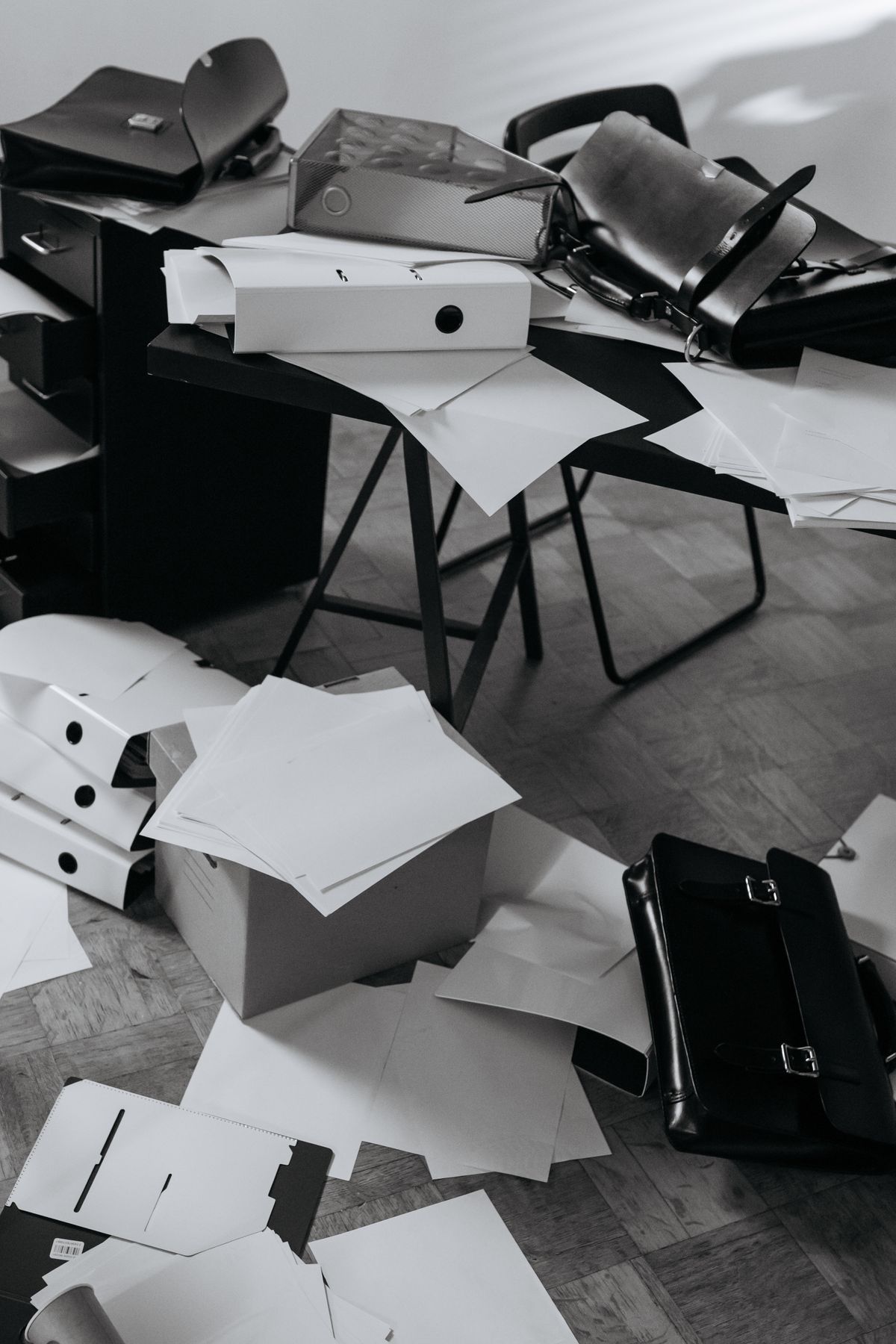
Paper clutter is the quietest kind of mess. A bill on the counter, a school notice on the fridge, old magazines "to read later" — and suddenly every flat surface has a pile on it. To get rid of paper clutter for good, you don't need a prettier filing cabinet. You need a clear decision system: what to toss, shred, scan, and keep — plus one small habit.
This 7-step method takes one weekend, works in a tiny apartment, and needs no special supplies — just a timer, three bags, and your phone camera.

Why Paper Clutter Keeps Coming Back
Paper piles up because every sheet arrives without a decision attached — you set it down "for now," and "for now" becomes permanent. We also keep papers "just in case," unsure what is safe to throw away. The answer is a short list of what to keep and a clear rule for the rest.
Before You Start: Gather Your Supplies
Set a timer for two hours and gather every paper in one place first — drawers, fridge top, bags by the door, that one kitchen drawer everyone avoids. Spread it all on a table or the bed. You need three bags labelled Toss, Shred, and Scan, a recycling bag, your phone, and one folder labelled Keep — Originals. Work in 25-minute bursts with a 5-minute break.
If the pile feels overwhelming, start smaller: one drawer or one bag of mail. Our guide on how to start decluttering when you feel overwhelmed pairs well with this method.
The 7-Step Method to Get Rid of Paper Clutter
Step 1: Gather every paper in the house
Walk room by room with a bag and collect every loose paper: counters, fridge door, nightstand, drawers, coat pockets, the car, kids' backpacks. Piling it all in one spot is the hardest part — and the most useful.
Step 2: Sort fast into four piles
Decide fast — no re-reading old letters. Toss: expired coupons, old menus, duplicate statements, flyers, catalogues, week-old newspapers. Shred: anything with your name plus an account number, address, or medical detail. Scan: papers you need to keep but not as paper — tax returns, insurance policies, warranties, school records. Keep: originals you truly need on paper (table below). Hesitate over ten seconds and it goes in Scan — you can delete a photo later, but you cannot un-shred a document.
Step 3: Scan the "keep it, not the paper" pile
Photograph each document with your phone and save it in simple folders: Home, Money, Health, Kids, Car. Name files so you can find them — "2026-tax-return.pdf" beats "IMG_4821.jpg". A whole filing cabinet becomes a folder on your phone. Professional organizers recommend the same approach, as Homes & Gardens' guide to getting rid of paper clutter also advises.
Step 4: Shred anything personal
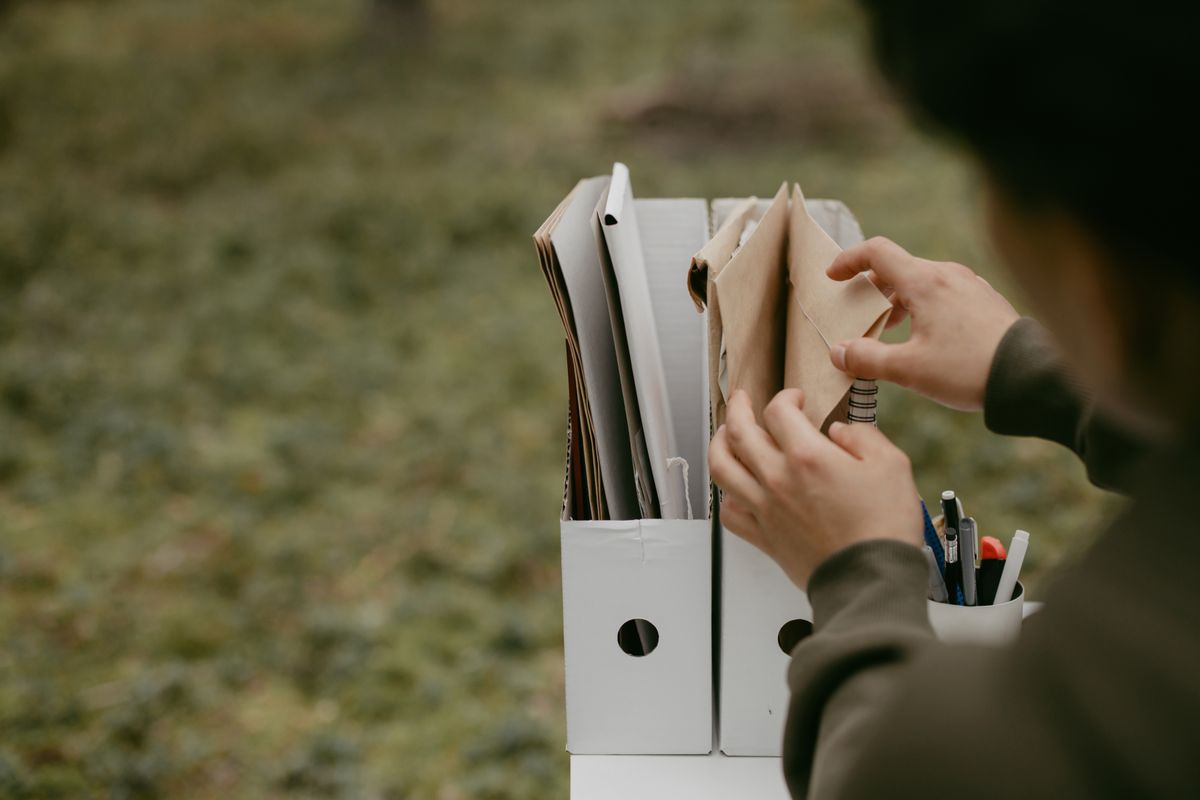
Shred — don't just bin — anything with personal details: bank statements, pay slips, medical letters, old tax documents. No shredder? Tear sheets into small pieces across the personal details, or check for a free community shredding day at your local library or bank.
Step 5: Recycle and remove the bags today
Take the Toss and Shred bags out the same day. Paper you have already decided to remove creeps back onto the counter if the bag sits by the door for a week.
Step 6: File the few originals you kept
What is left should be a thin stack: birth certificates, passports, property deeds, wills, car titles, and current insurance policies. Put them in one folder in a single, known place — a drawer, a shelf, or a small fireproof box. For ideas on storing what remains neatly, see our paper clutter organization ideas for small homes.
Step 7: Set up one inbox for incoming paper
Paper clutter returns because new paper has nowhere to go. Give it one landing place: a tray, a basket, or a hook by the door. Then pick one day a week — Sunday evening works for most people — and spend ten minutes processing it: act, scan, file, or toss. Our small apartment mail organization ideas show tray and wall-pocket setups that fit even the tiniest entryway.
What to Keep, Shred, or Toss: A Quick Reference
When in doubt, scan it and toss the paper — a digital copy is enough for almost everything except the Keep column.
Keep the originalScan, then shred or tossToss or recycle right away Birth certificates, passports, willsTax returns and supporting receiptsExpired coupons and flyers Property deeds and car titlesBank and credit card statementsOld magazines and catalogues Marriage and divorce certificatesPay slips (once checked against your bank)Duplicate bills and statements Current insurance policiesMedical bills and explanation-of-benefits lettersOld takeaway menus and newspapers Loan and mortgage agreementsWarranties and manuals (most are online)School papers from past years (scan the keepers)Tax rules differ by country, so check your local tax authority for how long to keep returns. Never guess on a document you cannot replace — scan it first.
How to Stop Paper Clutter Coming Back
Clearing paper once is a weekend project. Keeping it gone is a ten-minute weekly habit. Three changes do most of the work: go paperless by switching statements and bills to email; opt out of junk mail by unsubscribing from catalogues you never order from; and process the inbox weekly — ten minutes, once a week. Realtor.com's decluttering experts agree — deal with paper as it arrives instead of letting it pile up "to get to later".
For renters: never let paper live on the kitchen counter. Counters are the scarcest surface in a small apartment — a mail tray on a shelf or a wall pocket by the door keeps the habit visible without eating your workspace.
Paper clutter is not a storage problem — it is a decision problem. Decide once what to keep, and the piles stop growing.
Your Printable Paper Clutter Checklist
- ☐ Gather every loose paper into one pile
- ☐ Sort into Toss, Shred, Scan, and Keep
- ☐ Scan the Scan pile and name the files clearly
- ☐ Shred anything with personal details
- ☐ Take Toss and Shred bags out today
- ☐ File the originals in one known place
- ☐ Set up one inbox tray for incoming mail
- ☐ Switch at least one bill to paperless
- ☐ Book a 10-minute weekly paper session
Finished the paper? The same system works for the rest of the house — our room-by-room decluttering checklist takes you through every room with the same logic.
Frequently Asked Questions
How long should I keep paper documents?
Keep originals of birth certificates, passports, property deeds, wills, and car titles permanently, and tax returns for several years (check your local tax authority for the exact period). Most other paper only needs keeping until you have checked it; a scanned copy is enough after that.
Is it safe to throw away old bank statements?
Yes, once checked and copied digitally if needed — but shred them, never bin them, because they carry your name, address, and account details.
What is the fastest way to declutter paper?
Gather everything into one pile, sort fast into Toss, Shred, Scan, and Keep, and scan anything you are unsure about instead of debating it. Most households can clear a typical backlog in one two-hour session.
How do I stop paper clutter in a small apartment?
Give incoming paper one landing place — a tray or wall pocket by the door — and process it ten minutes a week. Switch bills to paperless and opt out of catalogues.