
Paper clutter organization is one of the most stubborn challenges in a small home. Mail, bills, receipts, school forms, and random envelopes arrive daily — and when you don't have room for a bulky filing cabinet, they stack up on the kitchen counter, the coffee table, and every flat surface in sight. The good news: you don't need a filing cabinet, an expensive organizer, or a spare room to get paper under control. These 13 budget-friendly ideas are built for small homes and tight budgets, and most cost nothing at all.
Why Paper Clutter Builds Up in Small Homes
Paper multiplies because it has no obvious "home." Most sheets sit in a vague limbo between "deal with later" and "might need someday" — and in a small home, that limbo quickly becomes the kitchen counter. The fix isn't better storage furniture; it's a decision system. Once every paper has a clear next step, the piles stop growing.
13 Paper Clutter Organization Ideas for Small Homes
1. Sort mail at the door — never let it travel
The single biggest paper-clutter win: open mail standing over the recycling bin. Toss junk mail, circulars, and used envelopes immediately, before they ever touch a table. What remains (bills, forms, anything needing action) goes straight into one small "inbox" tray or basket by the door. This costs nothing and stops roughly 70% of incoming paper in its tracks.
2. Use one small "inbox" tray for action papers
Buy one slim tray — or reuse a shoebox lid or a cereal box cut in half — and label it "Action." Every bill to pay, form to sign, or letter to answer lives here and nowhere else. When the tray fills, it's your cue to sit down and process it. One home for action papers means no more frantic searching for that one bill.
3. Try the one-touch rule
Handle each paper once: trash it, recycle it, file it, or act on it right now. Papers you "touch" five times — pick up, move, restack, forget, re-find — are papers that stay cluttered. The one-touch rule is free, takes no space, and pairs perfectly with the door-side sort above.
4. Create a slim "keep" folder for important documents
You don't need a filing cabinet — one slim accordion folder or a couple of manila envelopes hold the truly important stuff: lease, insurance, medical records, tax documents. Label it clearly and keep it somewhere consistent, like a closet shelf or under the bed. Apartment Therapy's guide to sorting paper clutter into clear categories is a great reference for deciding what actually belongs in the keep pile.
5. Go paperless wherever you can
Every bill you switch to email-only is one less piece of mail forever. Set aside 30 minutes to enroll in paperless billing for utilities, bank statements, and credit cards. Fewer incoming papers means less to organize later.
6. Snap a photo of receipts instead of keeping them
Most receipts can be tossed once you've reviewed them — a quick phone photo is enough for returns and warranties. Create one phone album called "Receipts" and delete old ones monthly. This single habit frees surprising amounts of drawer and wallet space.
7. Use magazine holders as vertical paper files
Cardboard magazine holders (a few dollars at any discount store, or free from a flattened cereal box) turn a small shelf into vertical paper storage. Label each one: "Bills," "School," "Medical," "Keep." Vertical filing takes far less space than horizontal piles and makes each category visible at a glance. If you love cheap DIY solutions, you'll also enjoy our dollar store organization hacks.
8. Designate one drawer as your paper station
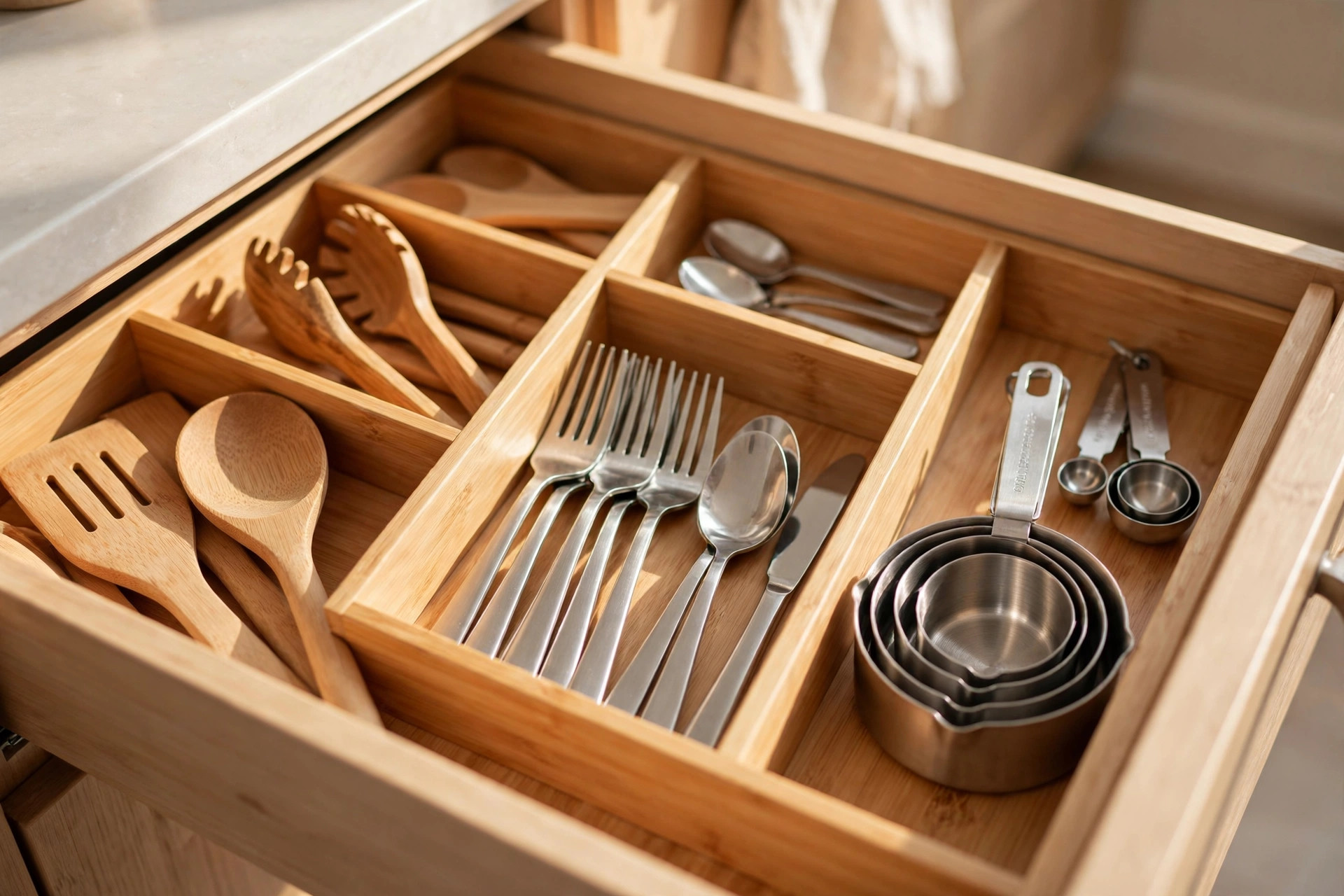
A single desk or dresser drawer becomes your paper command center: the keep-folder, envelopes, stamps, and the current month's bills. Dollar-store drawer dividers (or cut-down boxes) keep it tidy. When paper is contained to one drawer, it can't colonize the whole apartment.
9. Shred or tear sensitive mail right away
Pre-approved credit offers and anything with account numbers should never sit around. Tear them up as you sort, or keep a small pair of scissors by the inbox.
10. Create a weekly "paper date" with yourself
Ten minutes, once a week: empty the action tray, file the keepers, toss the rest. Regular micro-sessions prevent the overwhelming mega-pile. Apartment Therapy's home decluttering habits guide makes the same point — small, consistent routines beat occasional purges every time.
11. Corral kids' school papers in one folder per child
Give each child one folder for papers that need a parent signature and one small box for art you want to keep. Review both monthly and photograph the art before recycling it — keep the memories without the mountain.
12. Set up a "to scan" pile — then actually scan it
Keep one thin folder labeled "To Scan." When it's full, spend 15 minutes with your phone's scanner app digitizing warranties and manuals, then recycle the originals. Digital copies take zero physical space. (Keep signed contracts and originals on paper.)
13. Cancel the catalogs and junk you never asked for
Stop clutter at the source. Take five minutes to opt out of catalogs you never read. Combined with paperless billing, this can cut your incoming paper in half.
"The secret to a paperless-feeling home isn't a filing cabinet — it's deciding what each paper is for the moment it arrives."
How to Keep Paper Clutter Away for Good
Once you've cleared the backlog, maintenance is almost effortless: sort mail at the door every day, keep your weekly ten-minute paper date, and audit your keep folder twice a year. The real danger is backsliding into "I'll deal with it later" — so make the inbox tray impossible to ignore by placing it where you'll see it daily. If you're working through the whole house, our room-by-room decluttering checklist and 30-day declutter challenge are perfect next steps. And if your workspace needs attention too, try these small home office organization ideas that fit tiny spaces.
Frequently Asked Questions
How do I organize papers without a filing cabinet?
Use one slim accordion folder or a set of labeled envelopes for important documents, plus magazine holders for category files (bills, medical, school). A single drawer or small shelf is plenty — most households need far less paper storage than they think once they go paperless and digitize receipts.
What should I do with paper clutter I already have?
Gather it into one pile, then sort into three groups: trash/recycle, action (needs a response), and keep (file away). Shred anything sensitive. Sorting first makes the keep pile much smaller than organizing on the fly.
How long should I keep bills and receipts?
Utility bills and bank statements can usually be tossed or deleted after a year once reviewed, especially if they're available online. Keep tax-related documents for several years, and keep warranties for the life of the product. A phone photo of receipts is enough for most returns.
How can renters store important documents safely?
An inexpensive fireproof document bag protects passports, leases, and deeds without needing furniture. Keep the rest in one labeled folder on a closet shelf. Nothing is wall-mounted or installed, so everything moves easily when you relocate.