
Finding good apartment storage tips feels harder than it should. Most guides assume you own the place, have a spare room, or can spend hundreds on built-ins. If you rent a tiny apartment, none of that applies — you need storage that works with a landlord, a small budget, and a lease that says "no drilling." The good news: a small apartment does not need more square footage. It needs better decisions about what stays, where it lives, and what holds it. These 20 apartment storage tips are all renter-safe and budget-first, and most cost under $15 and take less than 15 minutes each.
Before You Buy Anything: 3 Rules That Make the Tips Work
1. Declutter first. Every item you remove is storage you never have to buy. Work one drawer or shelf at a time and sort into keep, donate, sell, and trash — our guide to getting rid of stuff you don't need walks through the whole method.
2. Measure before you buy. The number-one reason organizers get returned is a bin that is half an inch too wide. Measure the shelf's width, depth, and height first, then shop — never the other way around.
3. Daily things at eye level. The space between waist and shoulder height is your prime real estate. It belongs to things you use every day. Seasonal and rarely used items go high, low, or out of the way.
Kitchen: 5 Apartment Storage Tips
Tip 1: Stack a shelf inside your cabinets. A stackable shelf insert costs around $10 and doubles the usable height of a cabinet, so mugs live above plates instead of in front of them.
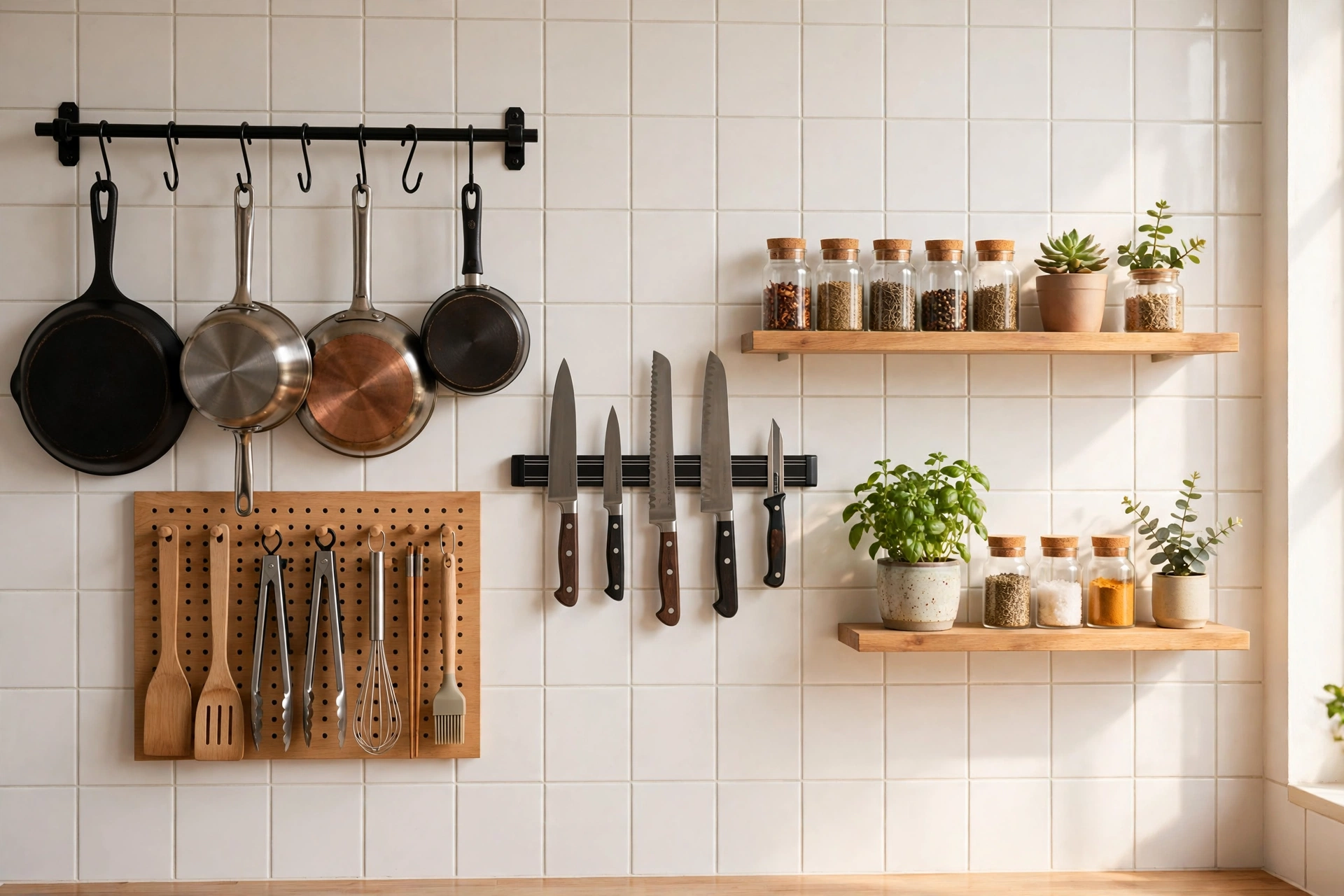
Tip 2: Use the inside of cabinet doors. Stick adhesive hooks or a narrow rack on the inside of a door for measuring cups, lids, or spices. It uses dead space and leaves no marks when you move out.
Tip 3: File baking sheets vertically. Stand baking sheets, cutting boards, and lids upright with a cheap file organizer or a tension rod. You can pull one out without the whole stack avalanching onto you.
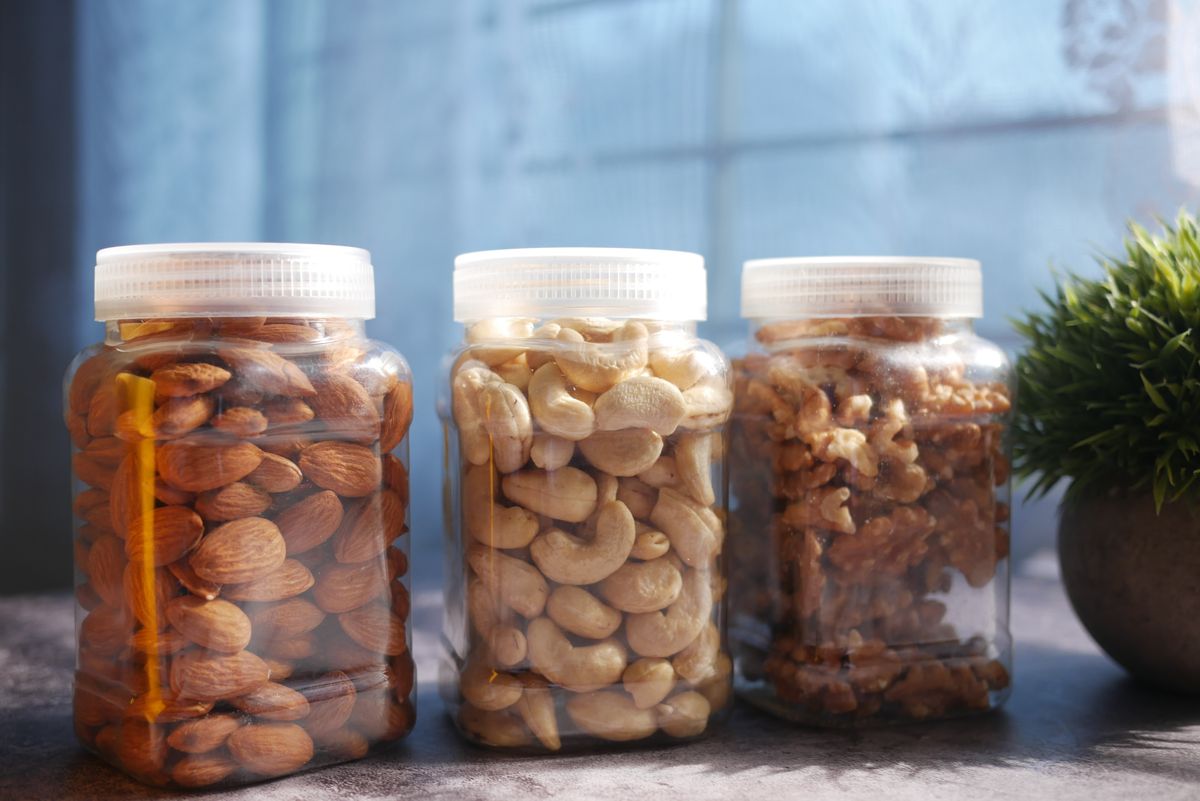
Tip 4: Put dry goods in clear jars on one shelf. Decant rice, pasta, and lentils into matching clear jars and keep them on a single shelf. You can see what you have at a glance, which stops you buying duplicates.
Tip 5: Park a slim rolling cart in the gap. The narrow gap between the fridge and the counter fits a slim rolling cart for oils, spices, or cleaning supplies. It rolls out when you need it and disappears when you don't.
Bedroom & Closet: 5 Tips
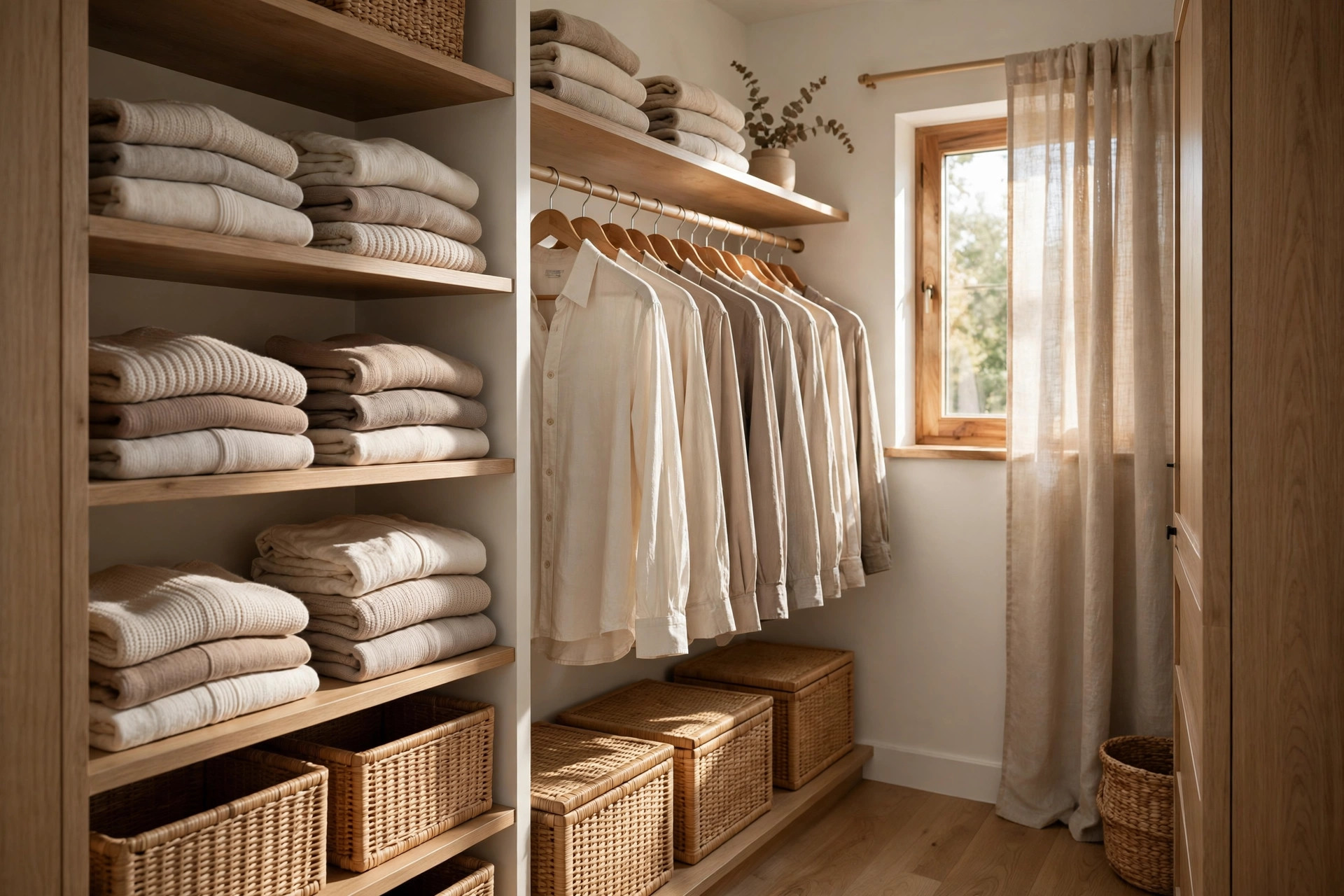
Tip 6: Switch to slim, matching hangers. Swapping bulky plastic hangers for slim velvet ones frees several inches across a crowded rail, and clothes stop sliding off onto the floor.
Tip 7: Add a second hanging rod. A hanging closet organizer with a lower rod doubles your hanging space for shirts and blouses. It hooks over the existing rail — no tools, no holes.

Tip 8: Use low boxes under the bed. Under-bed boxes with lids are the largest hidden storage spot in most bedrooms — perfect for out-of-season clothes and spare bedding. Label the ends so you can find things without pulling every box out. See our under-bed storage ideas for the full setup.
Tip 9: Keep the top shelf for seasonal only. Off-season clothes belong in labeled boxes on the top shelf. Daily clothes stay at eye level, where you can reach them without a step stool.
Tip 10: Hang a hook for tomorrow's outfit. One sturdy adhesive hook inside the closet door holds tomorrow's clothes, a bag, or a belt. It ends the nightly "chair pile" and costs less than a coffee.
Bathroom: 3 Tips
Tip 11: Hang an over-the-door organizer. A clear-pocket organizer on the bathroom door holds toiletries, cleaning supplies, and hair tools without a single screw. Our over-the-door storage ideas cover the best spots in every room.
Tip 12: Keep only five things on the counter. The five things you use every morning live on a small tray on the counter. Everything else goes in a labeled box under the sink, where it is still easy to grab.
Tip 13: Stack above the toilet. A narrow freestanding shelf or a tension-rod caddy over the toilet holds towels and backstock in space that is otherwise completely wasted.
Living Room & Entryway: 4 Tips
Tip 14: Build one drop zone by the door. A small tray for keys, one hook for your bag, and a narrow shoe rack by the front door stop clutter before it spreads into the apartment.
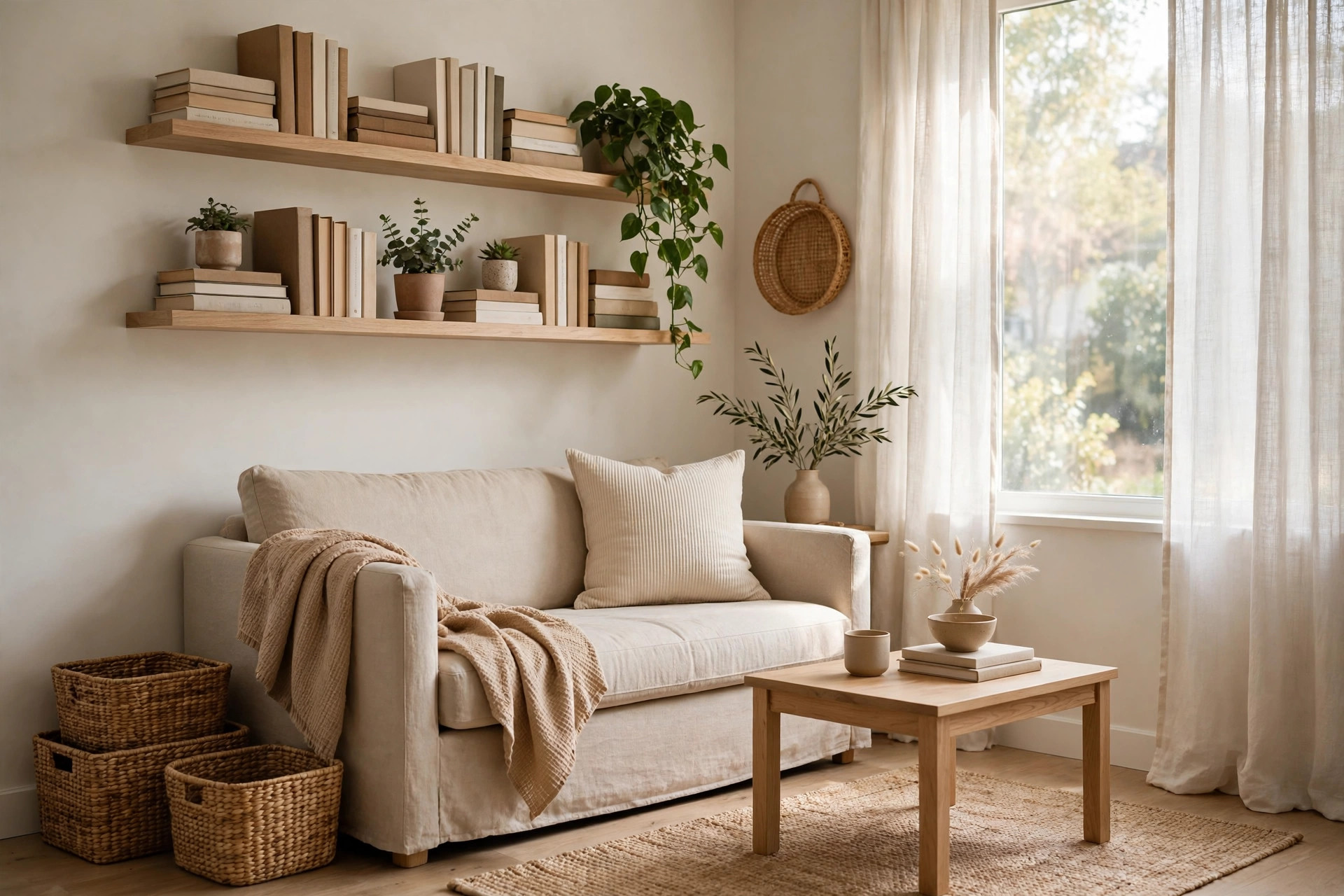
Tip 15: Choose furniture that hides things. A storage ottoman swallows blankets and remotes, and a coffee table with a shelf beats a bare one every time. In a tiny rental, every piece of furniture should earn its footprint twice.
Tip 16: Give every basket a labeled job. Open shelving only works when every basket has one category — chargers, dog gear, kids' toys. Label the basket, and the whole family can put things back correctly.
Tip 17: Go up, not out. A tall, narrow shelf uses dead wall space and draws the eye upward, which makes a small room feel taller. Keep daily items at eye level and rarely used things at the top.
Whole-Apartment Habits: 3 Tips
Tip 18: One in, one out. Every new item that enters the apartment means one old item leaves. It is the simplest rule in this list, and it is the one that stops clutter creeping back.
Tip 19: Do a 10-minute evening reset. Set a timer every evening and return everything to its home. Ten minutes a day beats a miserable weekend deep-clean every single time.
Tip 20: Leave 20% of every bin empty. A bin packed to the brim is a bin you will stop using, because putting anything away becomes a chore. Empty space is part of the system, not wasted space.
Renter check: before you stick, screw, or hang anything, read your lease's alteration clause and photograph the wall first. Adhesive hooks and tension rods are the safest bets — they hold well and come off cleanly when you move out.
In a tiny rental, every item needs a home — or it quietly becomes clutter.
What NOT to Buy (Yet)
Do not buy a matching set of bins before you declutter — you will end up organizing clutter instead of removing it. Do not buy organizers before measuring, and skip single-use gadgets when a $5 hook does the same job. Buy after the sort, not before. If you want more inspiration, Apartment Therapy's 10 best storage ideas for small spaces and StorageCafe's room-by-room apartment storage guide are both worth a read.
Your 15-Minute Apartment Storage Checklist
- Pick your worst zone — one drawer, shelf, or corner
- Empty it completely and sort into keep, donate, trash, and relocate
- Measure the empty space: width, depth, and height
- Put daily items at eye level and seasonal items up high
- Give every item one labeled home
- Set a 10-minute timer and reset each evening
Frequently Asked Questions
How can I add storage to a rental without drilling? Use adhesive hooks, tension rods, over-the-door organizers, freestanding shelves, and rolling carts. They all come off cleanly, but check your lease first — some landlords restrict even adhesive products.
What is the cheapest way to organize a small apartment? Declutter first, which costs nothing, then spend on a few stackable shelves, slim hangers, and adhesive hooks. Most renters can transform one zone for under $20.
Where should I start organizing my apartment? Start with the zone that annoys you most — usually the kitchen counter or the closet. One drawer or shelf per session beats a whole-apartment marathon you never finish.
How do I keep a small apartment organized long-term? Use one-in, one-out plus a 10-minute evening reset. Systems fail when items have no home, so label every basket and bin and keep 20% of each container empty.
Small apartments reward small systems, repeated daily. Pick three tips from this list, do them this weekend, and you will feel the difference by Monday. For a deeper dive, see our guide to organizing a small apartment with no storage and our under-bed storage ideas.