Board games are the best kind of clutter — until the stack on top of the bookshelf starts leaning like the Tower of Pisa. If you love game night but live in a small apartment, you already know the problem: board game storage ideas for small apartments have to work without a spare room, without drilling into walls you don't own, and without spending a fortune. The good news? A few cheap, renter-friendly systems can fit a whole collection into one shelf, one basket, or one closet shelf. Here are 13 board game storage ideas that actually work in tiny apartments — most cost under $20, and none of them need a single screw.

1. File Games Vertically Like Books
Stop stacking games in a tall pile. When games lie flat, the one at the bottom gets crushed, and pulling out a middle game topples the whole tower. Instead, stand boxes upright on a shelf like books on a bookshelf. You can read every spine at a glance and slide any game out without disturbing the rest. Most standard game boxes are about 10–12 inches square, so a regular bookshelf shelf fits them perfectly. Use a bookend or a small basket at the end of the row to keep thin boxes from flopping over.
2. Ditch the Bulky Boxes
Game boxes are mostly air. Apartment Therapy's organizing experts recommend swapping bulky boxes for slim craft storage cases — the same trick works brilliantly in a rental. Transfer the board, pieces, and rules into a flat, labeled case or a gallon-size zip bag, and a shelf that held six games can suddenly hold twelve. Keep the rulebook with the pieces so nothing gets separated. Only skip this for collector games you might resell — for everyday family games, the box is just packaging.
3. Use a Cube Shelf
A cube storage unit — the kind with square cubbies — is the small-apartment game shelf. Each cubby holds two to four standard games filed vertically, and the unit doubles as a TV stand, room divider, or entryway bench. Look for one secondhand; cube shelves are among the most-listed furniture items on local buy-and-sell groups. Add fabric bins in a few cubbies for card games and dice.
4. Slide Games Under the Bed
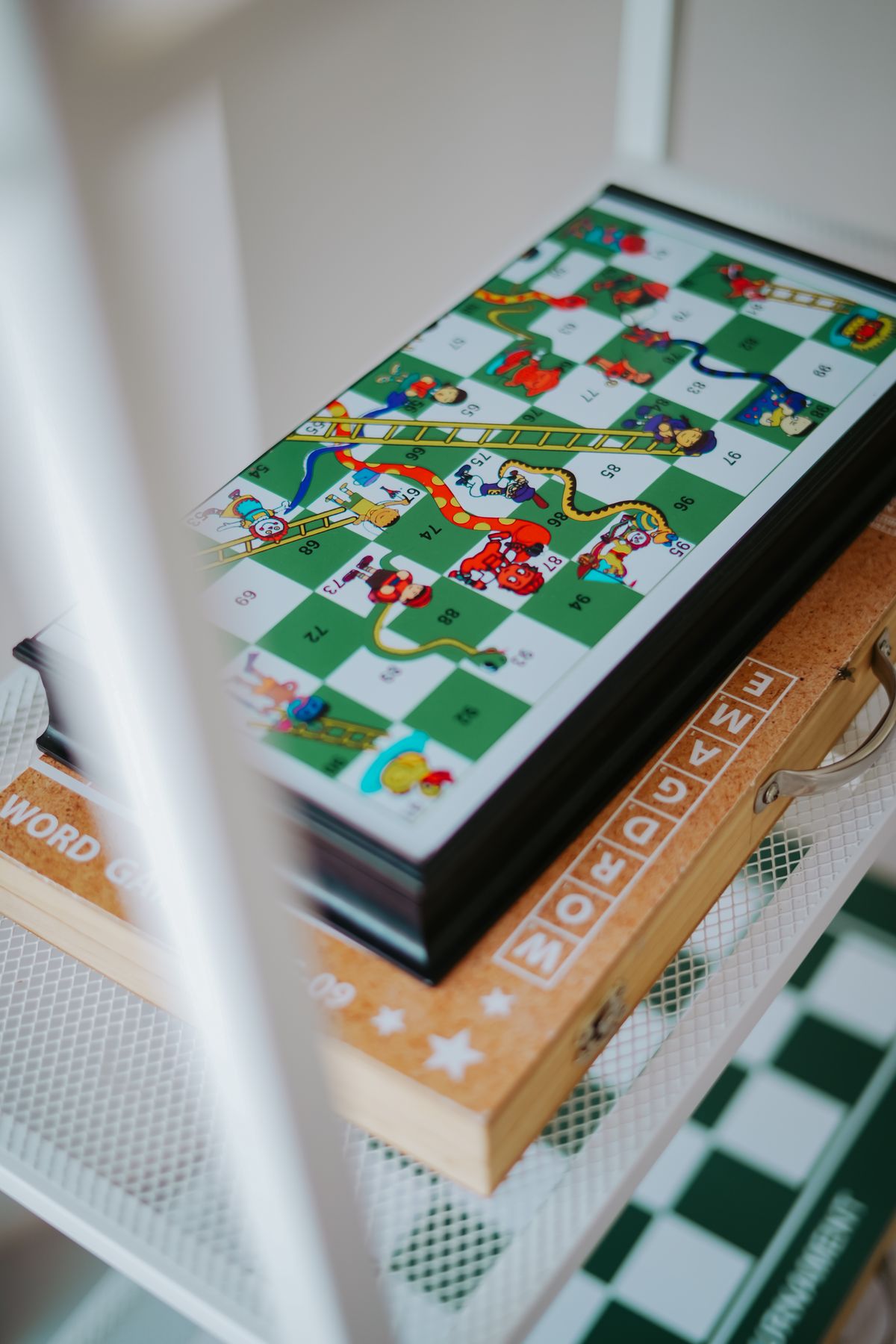
That empty strip under the bed is prime real estate. A low, flat rolling bin holds a surprising number of games — especially the long, thin ones. Label the bin's end so you can find it without pulling it all the way out. If your bed sits too low, inexpensive bed risers add a few inches of clearance. Professional organizers agree that the space under furniture is some of the most overlooked storage in a rental. For more ideas, see our under-bed storage ideas for small bedrooms.
5. Use the Closet Door
Over-the-door organizers aren't just for shoes. A clear-pocket shoe organizer hung on the inside of a closet door holds card games, small party games, dice sets, and timers in plain sight. Bigger games can go on a narrow over-the-door shelf or a hanging fabric shelf in the same closet. Nothing is drilled, nothing is damaged — perfect for renters. See more no-tools ideas in our over-the-door storage ideas for small apartments.
6. Hide Games in an Ottoman
A storage ottoman is the oldest trick in the small-space book: it holds games, gives you a footrest, and looks like ordinary furniture. Keep the games you play most in the ottoman by the couch, so game night starts with lifting a lid, not digging through a closet.
7. Corral Card Games in Photo Boxes
Card games come in flimsy tuck boxes that split at the corners. Decant decks into small 4×6 photo storage cases — the kind sold in craft stores as a set of 16 in one carry box. Each case holds a deck or two plus a score pad, the whole set stacks neatly on a shelf, and you can label each case with painter's tape.
8. Keep a "Play Now" Basket by the Couch
Not every game deserves shelf space. Pick the five or six your household actually plays, and keep them in one basket by the couch or on the coffee table shelf. Everything else lives in deeper storage. When a game hasn't been touched in six months, it rotates out of the basket — this one habit keeps the collection from creeping back onto every surface. If kids' games share the shelf too, our toy storage ideas for small living rooms keep both tidy.
9. Hang a Display Shelf for Your Favorites
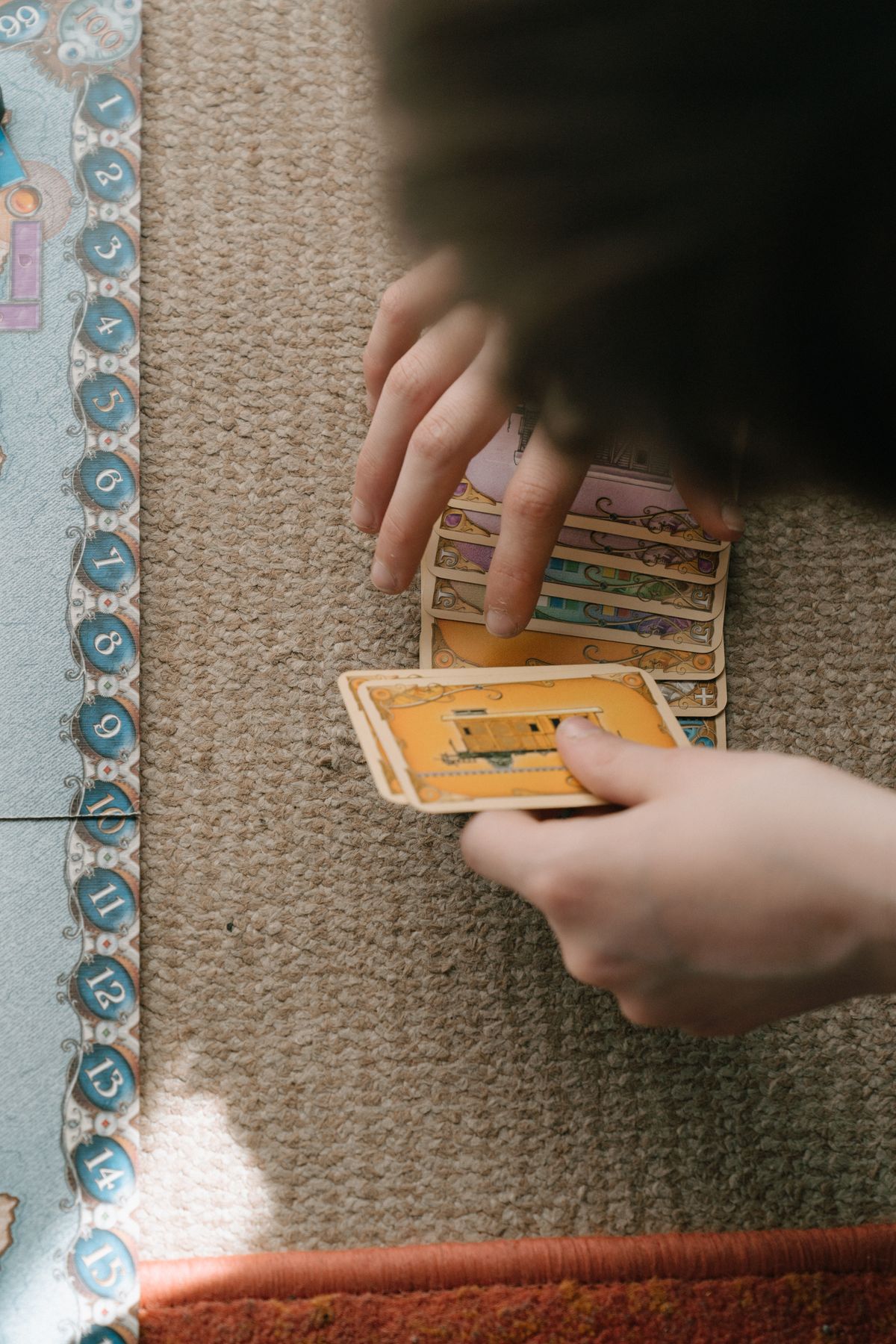
If you own a few beautiful games, let them be decor. A single floating shelf — or a renter-friendly picture ledge held with command strips — displays two or three favorite boxes face-out, like art. Keep the rest in closed storage so the display stays intentional, not chaotic. Our vertical wall storage ideas for small apartments have more renter-safe ways to use wall space.
10. Roll in a Cart
A three-tier rolling cart (the kind sold for kitchens and bathrooms) makes a brilliant game station. Top tier: the game you're playing tonight. Middle: card games and dice. Bottom: score pads and snacks. Wheel it to the table for game night, then park it in a corner when you're done.
11. Repurpose What You Already Own
Before buying anything, look around. A bar cart, a TV stand with cabinets, a deep dresser drawer, or a linen closet shelf can all become game storage. The best container is often the one you already own — measure the shelf first, then assign games to fit, rather than buying organizers and hoping they fit.
12. Bag the Pieces
Loose pieces are the reason game night starts with a 20-minute search. Put each game's small parts in a labeled zip bag inside its box — meeples in one bag, cards in another, dice in a third. A 100-pack of small zip bags costs a couple of dollars and saves every game from the missing-piece graveyard.
13. Rotate Your Collection Seasonally
If your collection outgrew your apartment, rotate it like a wardrobe. Keep the current favorites accessible and box the rest in a labeled bin in the closet or on top of the wardrobe. Swap a few games every season or two. A collection you rotate actually gets played — a collection you cram onto one shelf just gets ignored.
"The best board game storage is the one that lets game night start in thirty seconds — not after thirty minutes of digging."
What to Do With Games You Never Play
Storage only works if the collection fits the space. Once a year, pull every game out and ask three questions: Have we played it in the last year? Is it missing pieces we can't replace? Would someone else enjoy it more? Donate the no's to a library, school, or thrift shop, and sell the valuable ones. Most households can happily cut a third of their games — and the ones that stay finally have room to breathe.
Frequently Asked Questions
How do you store board games in a small apartment without a game room?
File games vertically on one bookshelf or in a cube unit, keep a small "play now" basket by the couch, and use under-bed bins or a closet shelf for the overflow. One shelf plus one basket holds most collections.
Is it okay to throw away board game boxes?
For everyday family games, yes — keep the board, rules, and pieces together in a labeled case or zip bag. Keep the original box for collector games or games you might resell.
Should board games be stored vertically or stacked flat?
Vertically, like books. Stacking crushes bottom boxes and makes it hard to reach a middle game. Vertical filing lets you read every spine and pull any game out without disturbing the rest.
How do I keep small game pieces from getting lost?
Bag each game's pieces separately in small labeled zip bags inside the box, and keep a "lost pieces" jar for strays you find around the house. Check the jar before game night.