
Open your bathroom cabinet and tell me what you see: a pile of half-empty bottles, a hair dryer tangled in its own cord, and three of the same thing you bought because you couldn't find the first two. These bathroom cabinet organization ideas are built for that exact reality — tiny bathrooms, tight budgets, and rental leases that forbid drilling. No remodel, no expensive organizers: just zones, cheap bins, and a few renter-safe tricks that turn one cramped cabinet into the calmest corner of your bathroom. Plan for about an hour, most of it sorting.
Bathroom Cabinet Organization Ideas That Cost Nothing
Organizers are useless in a cabinet stuffed with the wrong things. Do these four free moves first and everything else gets dramatically easier.
1. Pull everything out and sort it into piles
Empty the cabinet completely, wipe the shelves, and sort items into piles on the floor: daily essentials, weekly items, backup stock, expired or dried-out products, and "why do I still own this." You'll almost certainly find duplicates — two open shampoos, three half-used lotions — bought because the cabinet was too chaotic to search. Finish the duplicates before opening new ones. Most people clear a third of their cabinet right here without spending a cent.
2. Relocate what doesn't belong in the bathroom
Bathrooms are the worst storage room in the house for some things: heat and humidity degrade medicines, perfumes, and extra batteries faster. Move medications and first-aid supplies to your medicine cabinet or a cool bedroom drawer, and shift backup bottles (the second shampoo, the spare soap) to wherever your bulk stock lives. The cabinet should hold what you actually use in this room — everything else is a guest taking up a resident's space.
3. Zone by routine, not by product type
Grouping all the shampoo together feels logical, but you don't live by product type — you live by routine. Give each shelf or section a job instead: a morning zone (toothbrush, deodorant, daily skincare), an evening zone (cleanser, night cream), and a hair/tools zone. When your hand reaches for "morning," everything for that routine is in one place. It's the same zoning logic that keeps small bathroom shelves functional, applied inside closed doors.
4. Evict the backstock to another room
Backup supplies are the silent killers of cabinet space. Keep one spare of each essential, not four. Move the rest to a closet shelf, a labeled box under the bed, or the top of a wardrobe — anywhere dry and out of the way. When the in-use bottle runs out, the backup takes one trip to refill it. If you've already sorted your bathroom's plumbing zone, our under-sink organization ideas pair well with this: under-sink for cleaning and bulk, cabinet for daily routines.
Cheap Organizers That Make Small Cabinets Work Harder
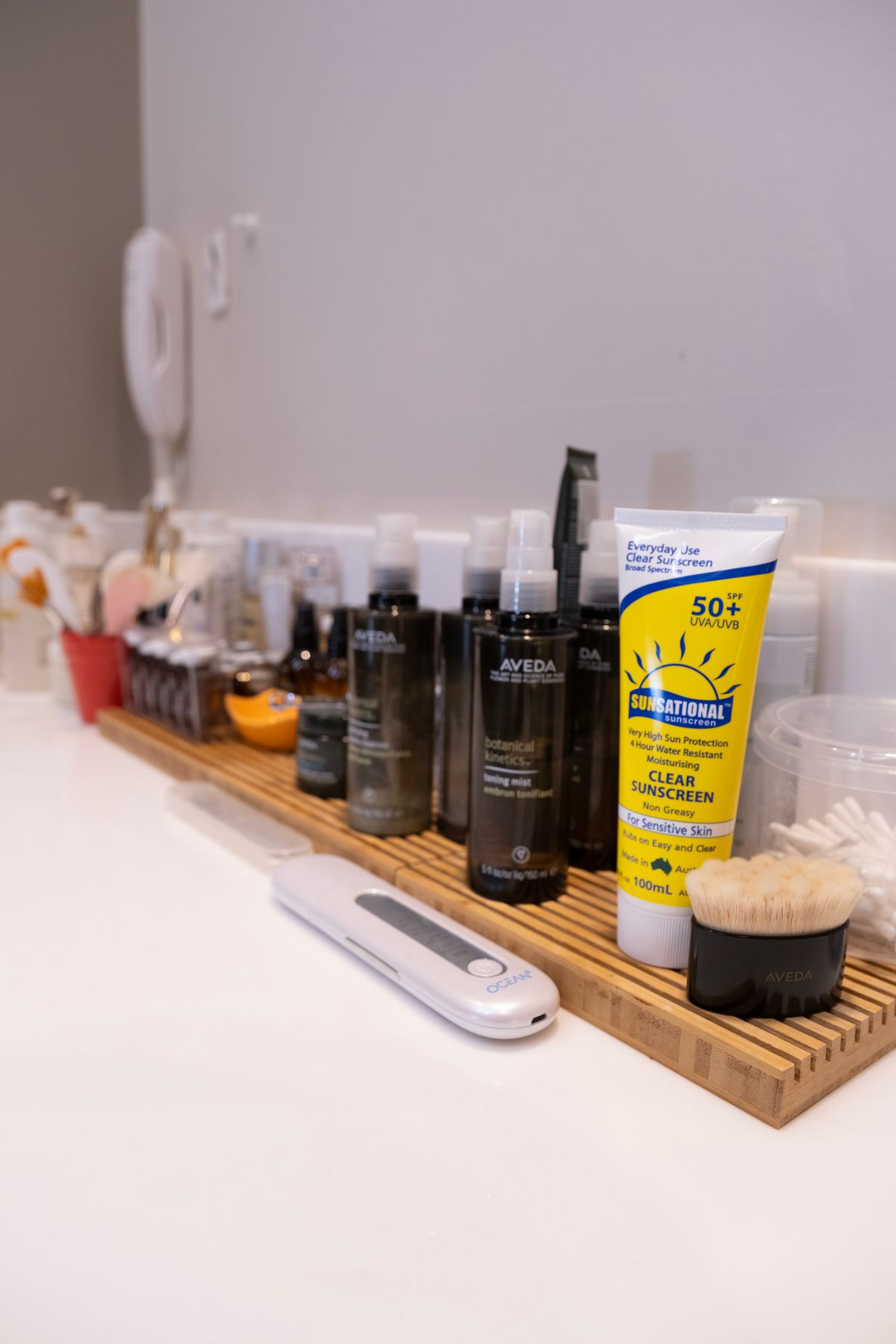
With the sorting done, a few dollar-store organizers turn each shelf into tidy, findable sections. Everything here is renter-safe — nothing screwed into anything.
5. Bin each zone with clear containers
One clear bin per zone: morning, evening, hair tools, first aid. Clear beats opaque because you can see what's inside without opening and rifling through it — the exact habit that recreates clutter. Dollar-store bins, small acrylic trays, or cleaned food containers all work; measure your shelf height first so bins slide in without jamming.
6. Add a shelf riser to double tall shelves
Vanity cabinet shelves are usually spaced for the tallest bottle, wasting the air above everything shorter. A small metal or bamboo shelf riser creates a second level: short jars underneath, tall bottles behind. For less than the price of a coffee, one shelf holds nearly twice as much — and everything stays visible instead of hiding behind the tall bottles.
7. Spin a turntable into the deep corners
The back corners of a deep cabinet are where products go to expire unseen. A small lazy susan turntable fixes that: spin it and the back row comes to you. Keep daily vitamins, small bottles, or nail supplies on it — anything small that used to vanish. One turntable per deep shelf is usually enough; more than that and you're back to clutter.
8. Stack pull-out drawers like a mini dresser
Stackable plastic drawers are the closest thing to adding real drawers to a rental bathroom. Two or three stacked units turn a tall cabinet cavity into pull-out sections: top drawer for daily items, lower drawers for weekly and occasional ones. Unlike bins, you don't have to lift anything out to see the back — you just pull. They also work beautifully for rolled hand towels and washcloths if your cabinet doubles as linen storage.
The best cabinet isn't the prettiest one — it's the one where you can find the tweezers in five seconds without moving eleven other things first.
Renter-Friendly Door and Deep-Cabinet Tricks
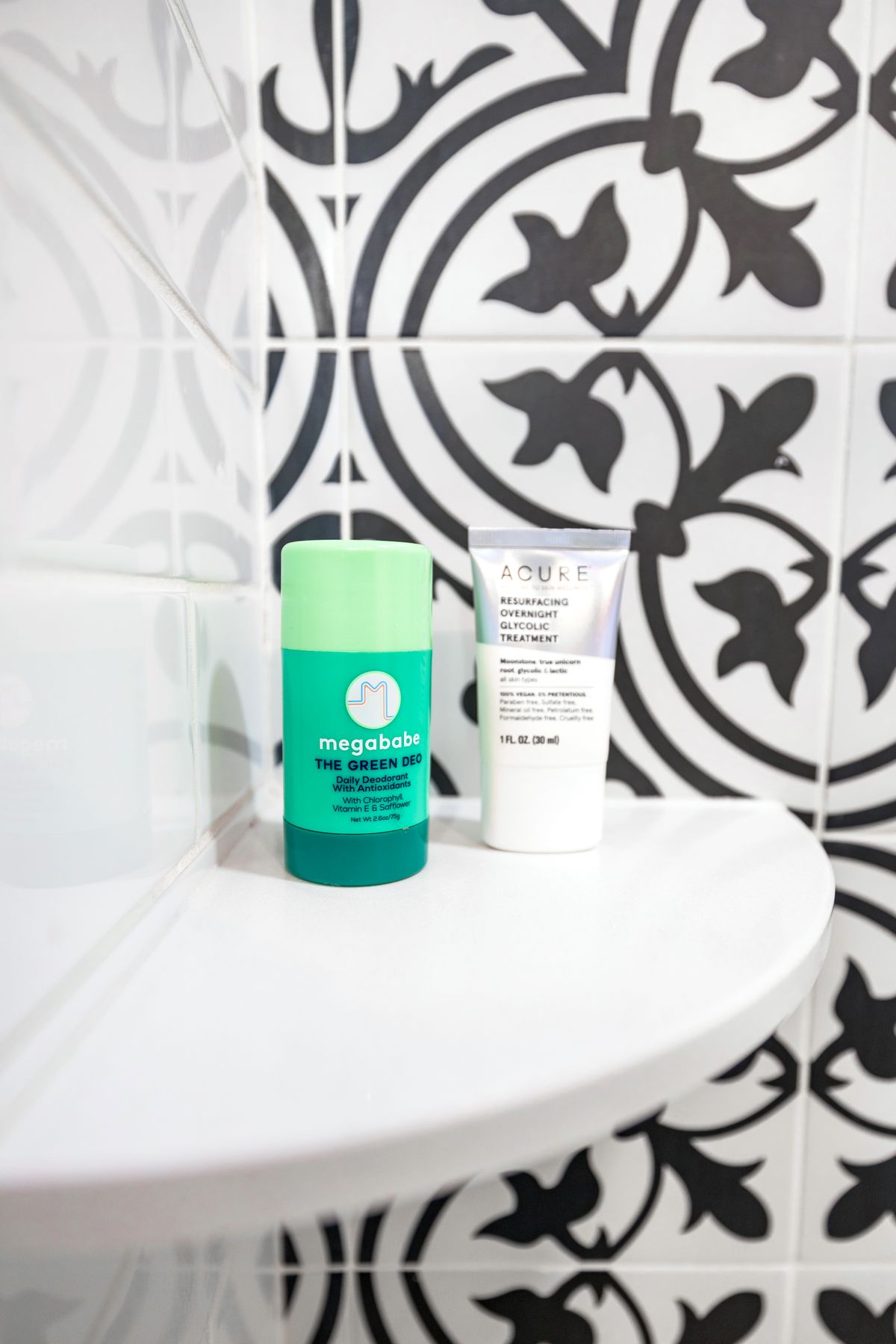
The inside of the cabinet door and the vertical space above your bins are free real estate. Claim them without a drill.
9. Claim the inside of the cabinet door
Adhesive hooks, slim adhesive pockets, or a magnetic strip on the inside of the door hold flat, lightweight items: tweezers, nail files, a small mirror, spare razor cartridges. Keep it light so the door still closes and nothing presses against the bottles when it shuts. This trick alone can free an entire shelf — it's the same idea that makes tiny-bathroom cabinet makeovers work, where every square inch has to earn its keep.
10. Hang a tension rod for spray bottles
A short spring tension rod across the cabinet gives cleaning sprays and tall bottles a place to hang by their triggers — no shelf space used at all. It wedges in place with zero holes, which is exactly why it's a favorite in guides to hidden bathroom cabinet storage. Just don't overload it: three or four light bottles is the practical limit before it starts slipping.
11. Line up tall bottles with a drawer divider
Tall bottles fall like dominoes when you pull one out. A spring-loaded drawer divider or even a narrow tension rod laid horizontally across the shelf front keeps them upright in a neat row. It takes ten seconds to install and ends the daily game of catch-the-falling-shampoo forever.
12. Label every bin, even for one person
A strip of masking tape and a marker: "Morning," "Hair," "First aid," "Backups." Labels do two jobs — they tell you where things go back, and they make the one-in-one-out habit (next) automatic. In a shared bathroom they're non-negotiable: one labeled bin per person ends the great roommate bottle migration.
13. Run the one-in-one-out rule with a monthly reset
Cabinets refill faster than they empty because new products arrive and old ones linger. When a new item enters, an old or unused one leaves — donated, relocated, or tossed if expired. Then set a phone reminder for a five-minute monthly reset: pull the bins out, wipe the shelves, check for anything expired or duplicated. Five minutes a month beats another full-hour overhaul next year.
Frequently Asked Questions
How do I organize a bathroom cabinet without buying anything?
Empty it completely, toss expired and duplicate products, relocate medicines and backstock to other rooms, then reorganize what's left by daily routine — morning items most reachable, occasional items least. Most cluttered cabinets need sorting, not storage products; the free steps in this guide fix the majority of the mess.
What's the difference between organizing a vanity cabinet and the under-sink area?
They're often the same cabinet, but think of them as two zones: the under-sink area (around the pipes) suits cleaning supplies and bulky items, while the vanity cabinet shelves suit daily routines in bins. If your sink has its own separate cabinet, see our under-sink organization ideas for plumbing-zone-specific tricks.
How do I stop my bathroom cabinet from getting musty?
Ventilation is the main fix: run the bathroom fan during and after showers, leave the cabinet door ajar when you can, and prefer waterproof bins over cardboard or fabric. Keep anything that must stay dry — cotton pads, bandages — in lidded containers, and wipe shelves dry every couple of weeks so moisture never sits.
Can renters organize a bathroom cabinet without drilling?
Yes — everything in this guide is renter-friendly. Free-standing bins, shelf risers, stackable drawers, tension rods, adhesive hooks, and magnetic strips all work with zero holes in the wall. When you move out, everything lifts out cleanly and the cabinet looks untouched.
Small bathrooms punish disorganization more than small anything else, because you use the space half-asleep every single morning. With these bathroom cabinet organization ideas in place, the cabinet stops being a mystery pile and becomes the fastest part of your routine — open, grab, close, done.