

Every winter, the same thing happens in small apartments: bulky parkas, wool coats, scarves, and snow boots multiply until the front door looks like a lost-and-found bin. If you're hunting for winter coat storage ideas for small apartments, you're not alone — one heavy coat takes up as much closet space as five summer shirts. The good news: you don't need a bigger home. You need a system.
This guide gives you 13 practical, budget-first, renter-friendly ideas — most need zero drilling — that work in real apartments where every inch counts.
First, Do a 10-Minute Coat Audit
Before buying a single organizer, gather every coat, jacket, and piece of winter gear you own into one pile — the guest room, the car trunk, that corner chair. Now sort:
- Daily rotation (keep at the door): the 1–2 coats each person wears most days.
- Store elsewhere: the fancy wool coat, the spare parka, last season's snowboard jacket.
- Donate or repair: anything unworn for two full winters, anything with a broken zipper you'll never fix.
Most households can cut their "at the door" pile in half with this one exercise.
13 Winter Coat Storage Ideas for Small Apartments That Renters Can Actually Do
1. Run a Double Row of Sturdy Wall Hooks by the Door
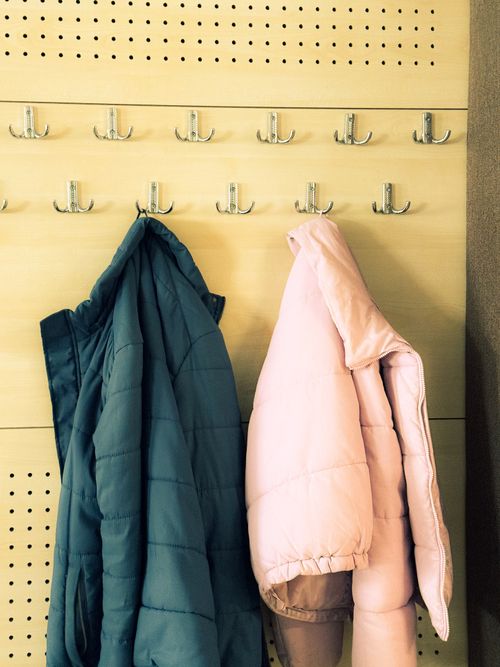
Hooks beat hangers in an entryway because people actually use them. Mount two staggered rows on the wall nearest the front door — adults up top, kids at their reach below. Renters can use heavy-duty adhesive hooks (10 lb or more); screw into studs if your lease allows, since wet wool coats are heavier than they look. For more wall ideas, see our vertical wall storage ideas for small apartments.
2. Hang an Over-the-Door Hook Rack on a Spare Door
The back of the bedroom door, the bathroom door, even the laundry door — all free hanging space you already own. A metal over-the-door hook rack holds coats, scarves, and bags with zero holes in the wall. Measure the door top first: thick trim can stop the door from closing. See our over-the-door storage ideas for more renter-safe options.
3. Add a Slim Garment Rack With a Fabric Cover
No coat closet at all? A narrow garment rack in a bedroom corner plus a zippered fabric cover becomes a self-contained "closet" — dust-free and visually calm. Choose a heavy-duty metal rack so it doesn't wobble under winter-weight coats.

4. Slide Off-Season Coats Into Under-Bed Bins
The heaviest coats don't need to be reachable for months. Wash and fully dry them first (never store a dirty or damp coat), then roll them into shallow bins under the bed. Use breathable canvas bins for down and wool; vacuum bags can crush insulation. More on this in our under-bed storage ideas guide.
5. Claim the Top Closet Shelf With Labeled Bins
The highest shelf in your closet is prime winter-gear real estate because you only need it seasonally. Add two or three matching bins — hats and beanies, gloves and scarves, snow pants — and label them with masking tape and a marker.
6. Add a Tension Rod Inside a Deep Closet for a Second Row
A tension rod costs a few dollars, needs no tools, and instantly doubles hanging space for kids' coats and short puffer jackets. Long adult coats stay on the main rod; short ones go below. Fully renter-safe, removable in seconds.
7. Keep One "Launch Basket" for Hats, Gloves & Scarves
Small accessories cause the most drift — one glove on the radiator, a scarf on the couch. Give them a single open basket near the door (open bins get used; closed ones get skipped). Assign one small pouch per family member inside, and the morning "where are my gloves?" panic drops fast.
"The problem was never how many coats we owned. It was that the good coats lived in the closet while the daily coats had nowhere to land — so everything landed on the chair."
8. Park Boots on a Tray, Not in a Pile
Wet boots are what ruin a small entryway. A boot tray with raised edges right inside the door catches snowmelt and salt before it hits your floors. Wipe it out once a week — dried salt left all season stains the tray and anything nearby.
9. File-Fold Bulky Sweaters Instead of Stacking Them
Stacks topple when you pull the bottom sweater. Fold knitwear into uniform rectangles and stand them upright in a drawer or bin, like files in a cabinet. Everything stays visible and uncrushed, and you fit more in the same space.
10. Use Vacuum Bags Only for Synthetic Puffers — Never Down or Wool
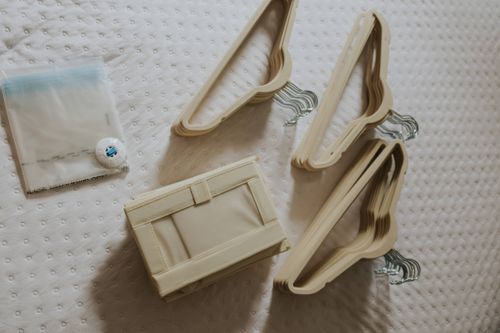
Vacuum bags are tempting, but compression flattens down insulation and stretches wool fibers. Limit them to synthetic shells and raincoats, short-term only. After storage, hang coats immediately and allow 24–48 hours for fibers to recover. Toss a cedar block in with stored wool to deter moths — skip the scented mothballs.
11. Build a Seasonal Swap Spot on Top of a Wardrobe
The dusty top of a tall wardrobe or armoire is perfect for off-season gear: two lidded bins up there hold the coats you won't touch until the next cold snap. Swap them down when temperatures drop. If you already rotate holiday decorations the same way, it fits right in — our seasonal storage ideas cover the rotation system in detail.
12. Hang Kids' Winter Gear at Their Height
Children's coats end up on the floor because adult-height hooks are unreachable. A second low row of hooks — or a small hanging organizer on the back of their bedroom door — gives each child a spot for their own coat, hat, and mittens.
13. Do a Five-Minute Sunday Reset
No system survives real life without maintenance. Once a week, pull everything off the hooks, return unworn items to the closet, wipe the boot tray, and toss the lonely glove back in the launch basket. Five minutes keeps the entryway from silently becoming a second closet.
Budget tip: The cheapest upgrade here is free — the coat audit. The second-cheapest is a $3 tension rod. Before buying any organizer, live with your new "hook zones" for a week; you'll discover exactly which spot needs a basket, which needs a tray, and which needs nothing.
What About the Entryway Itself?
If your front door opens straight into the living room — the reality for most apartments — treat the nearest three to four feet of wall as your entryway zone. A wall rack, a slim boot tray, and one basket create a complete drop zone in that footprint. Apartment Therapy's collection of small entryway ideas shows how real tiny homes pull this off.
FAQs
How do I store winter coats in a small apartment without a closet?
Use the walls instead of a closet: a double row of sturdy hooks by the door for daily coats, an over-the-door rack on a bedroom or bathroom door, and a slim freestanding garment rack with a zippered fabric cover for the rest. Under-bed bins handle anything off-season.
Can I use vacuum-seal bags for winter coats?
Only for synthetic puffers and rain shells, and only short-term. Never vacuum-seal down, wool, or shearling — compression damages insulation and stretches fibers. Use breathable canvas bins for natural materials instead.
How many coats should each person keep at the door?
A practical rule: one daily coat plus one backup per person at the door, everything else stored away. In a household of three, that's three to six coats on the hooks — manageable without overloading.
How do I stop winter coats from smelling musty in storage?
Always wash and fully dry coats before storing, never pack damp garments, and choose breathable containers over sealed plastic for down and wool. Cedar blocks help deter moths and odor; air out stored coats once mid-season.