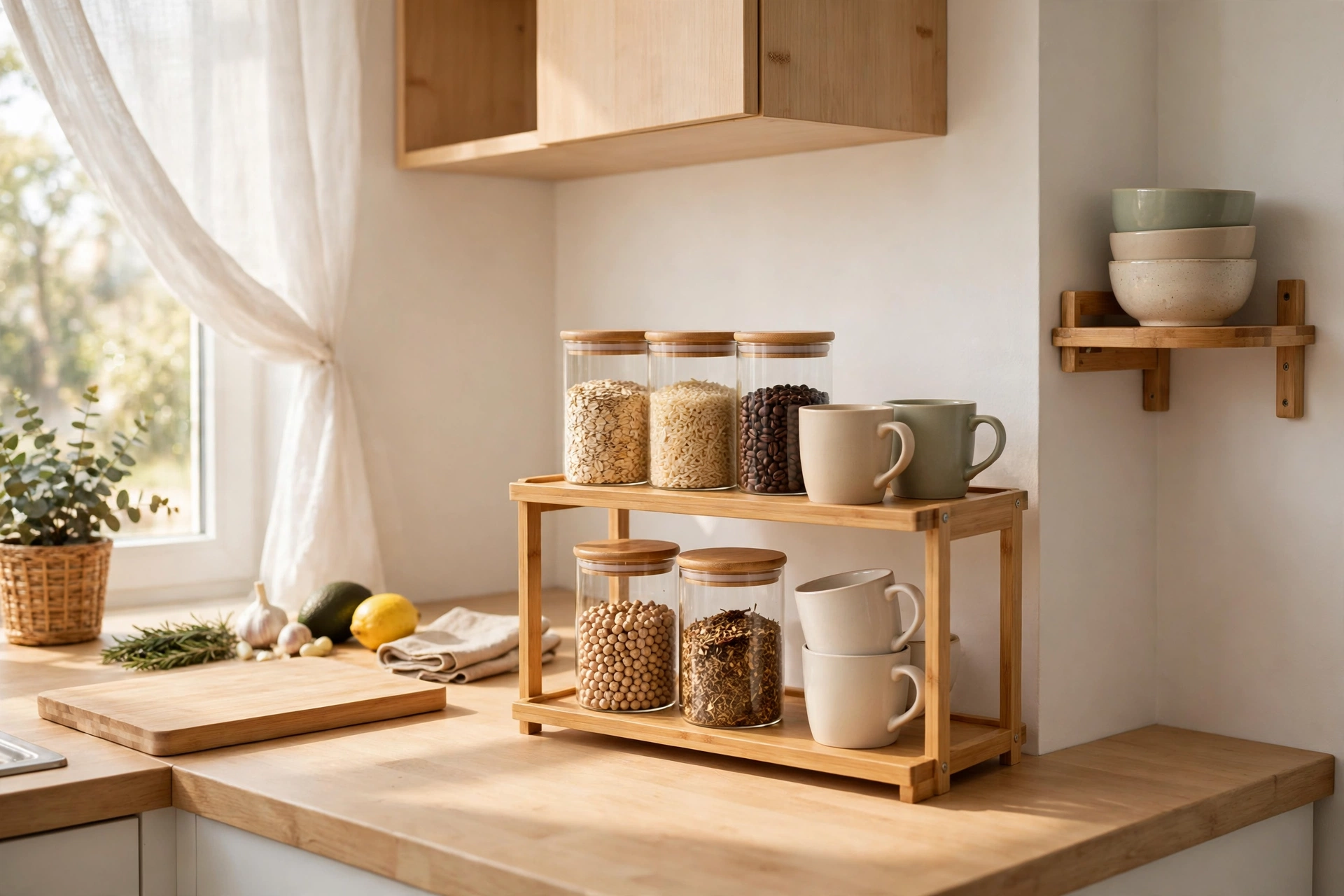
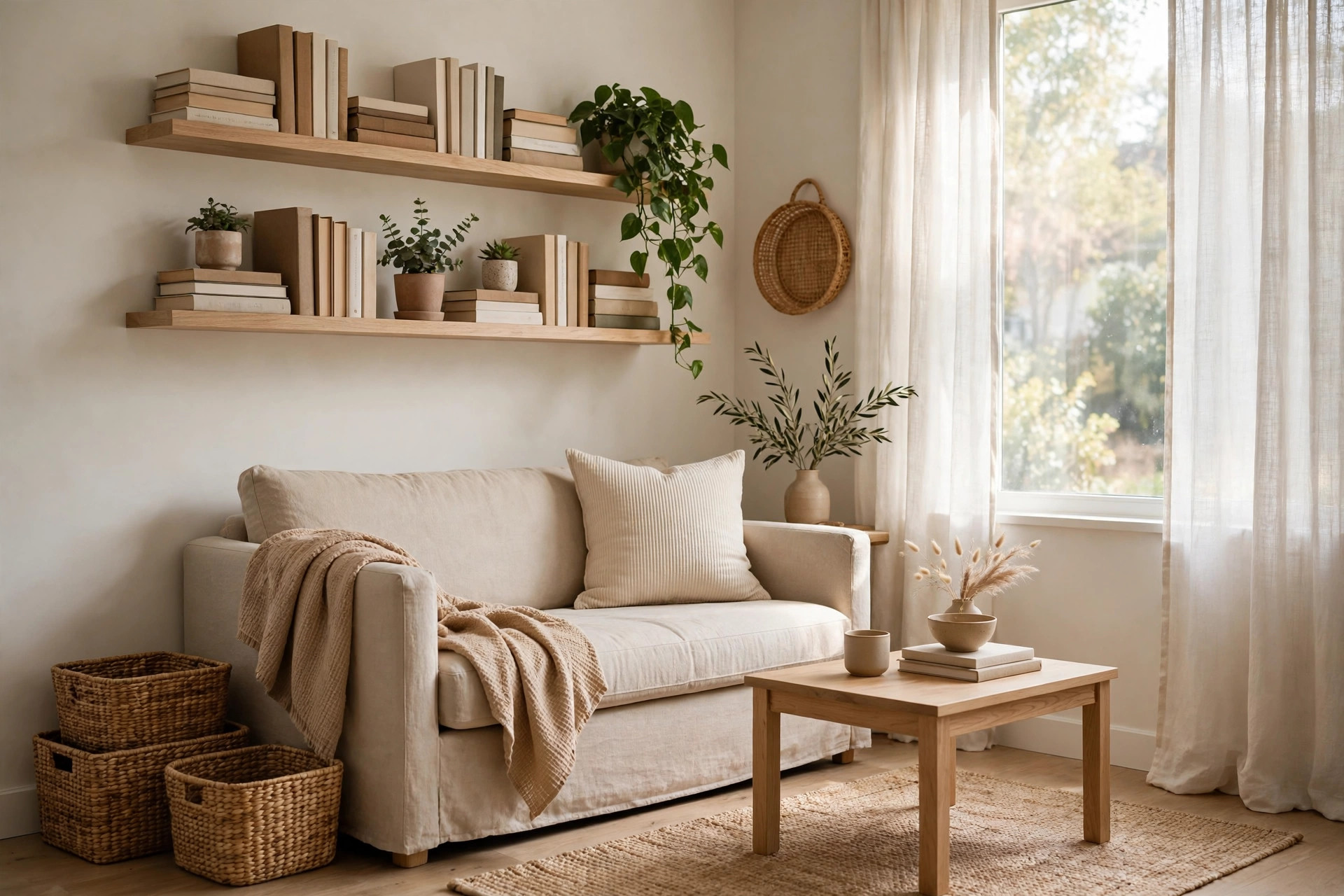
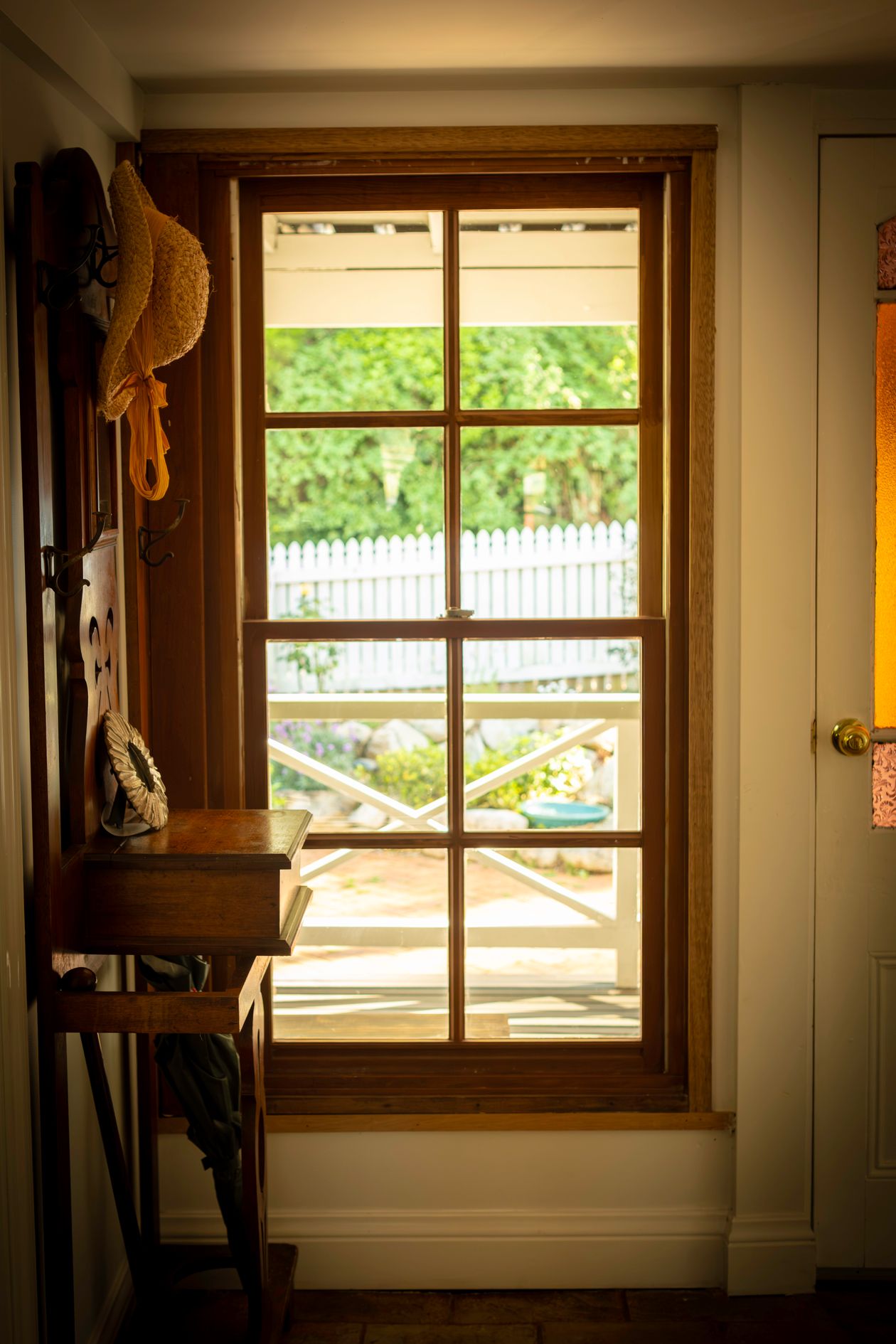
Here's the truth most apartment tours skip: very few rentals actually have a mudroom. If you're in an apartment, your "mudroom" is probably a heap of shoes by the front door, a coat draped over a chair, and keys that vanish daily. The good news is you don't need a separate room — or a single nail in the wall — to get the calm, everything-has-a-place feeling a mudroom gives you. These small mudroom ideas are designed for apartments: budget-first, renter-safe, and sized for the 2–3 square feet most of us actually have by the door.
Claim a Corner: Small Mudroom Ideas for Apartments With No Entryway
Before you buy anything, decide where your mudroom lives. In apartments, it's rarely a room — it's a zone. Pick the 2–3 feet of floor and wall nearest the door you use most, and treat that patch like precious real estate. Everything else follows from that one decision.
1. Define the zone with a washable rug. A low, washable runner does double duty: it catches dirt and visually marks "mudroom territory" so shoes and bags don't migrate into the living room. Machine-washable runners are easy to find at discount stores for under $25.
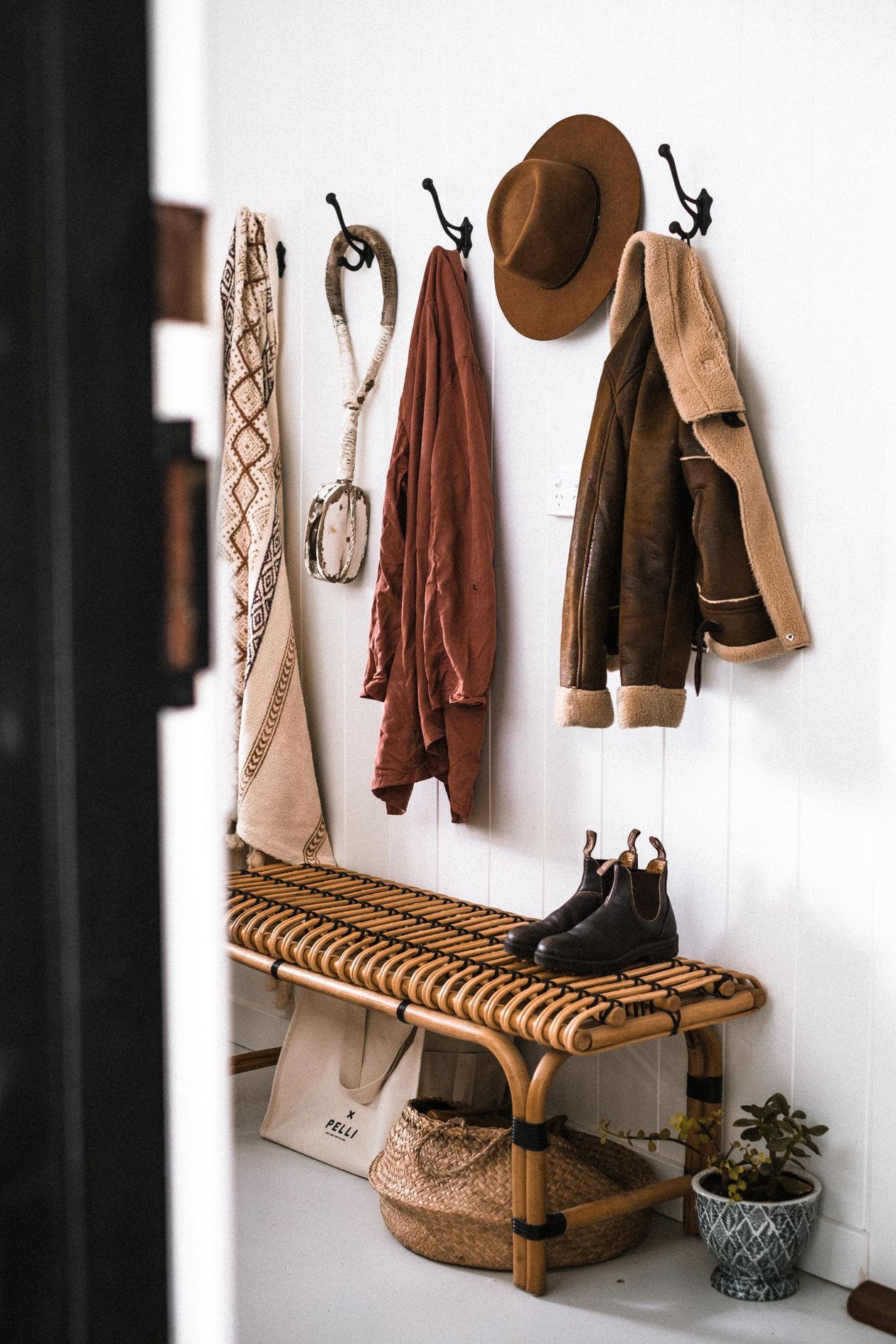
2. Anchor it with a narrow bench — or a sturdy stool. You don't need a built-in. A slim storage bench (around 12 inches deep) gives you a place to sit while changing shoes and hides footwear inside. No budget for a bench? A solid wooden stool plus a basket underneath does the same job for far less.
3. Borrow a closet. If your front closet is stuffed with junk, you've already got a mudroom — it's just mislabeled. Clear it out, add a few hooks inside the door, and suddenly coats have a real home. For more ways to make that space work harder, see our entryway organization ideas.
Hook It Up: Vertical Mudroom Storage Renters Can Actually Use
Walls are free square footage — and in a tiny apartment mudroom, they're the whole game. The one rule: nothing you hang should need your landlord's approval.
4. Try an over-the-door hook rack. The inside of your front door (or a nearby closet door) is prime mudroom real estate. Over-the-door racks need zero tools, cost under $15, and hold coats, bags, and dog leashes. Our over-the-door storage ideas show just how far that one surface can go.
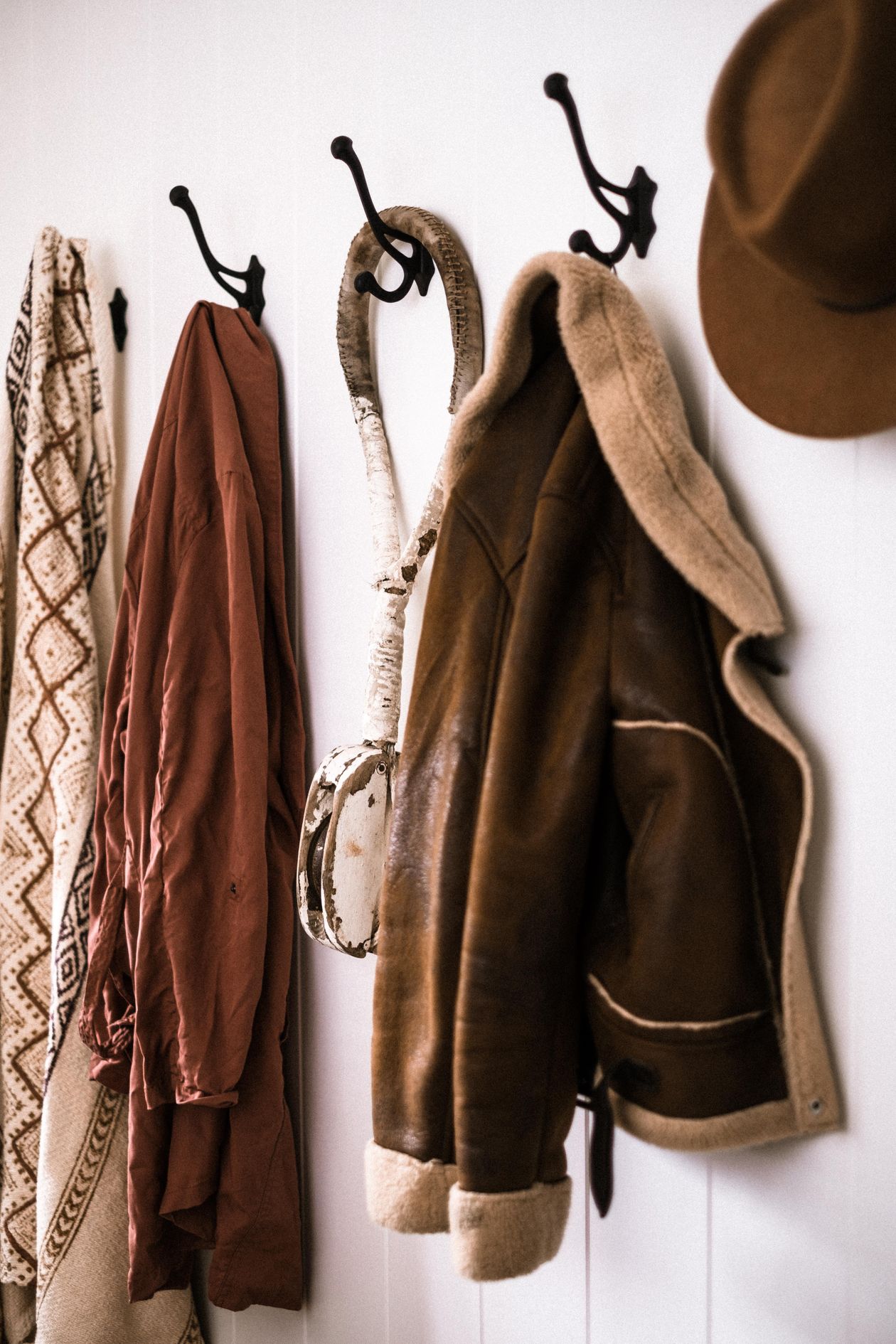
5. Use a wall-mounted rail with removable hooks. Adhesive or tension-mounted hook rails can hold several pounds each — plenty for daily jackets and tote bags — and peel off cleanly when you move. Hang adult hooks around 60 inches high so coats clear the bench below.
6. Add one narrow shelf for the small stuff. Keys, sunglasses, mail, and sunscreen all need a landing pad. A single slim shelf above your bench — even a $10 adhesive ledge — ends the "where are my keys" hunt for good.
7. Stash a folding step stool if your hooks are high. If you've maxed out vertical space with a tall hook rail, a small folding stool tucked under the bench makes the top hooks usable instead of decorative.
"A mudroom isn't a room at all — it's a landing system for everything that enters your home with you."
Contain Shoes, Bags, and Seasonal Gear on a Budget
Shoes are the number-one mudroom mess-maker in apartments. Contain them, and the whole zone feels calmer overnight.
8. Give every person one shoe spot — and only one. A two-tier shoe rack per person, a labeled basket under the bench, or a boot tray: the container matters less than the limit. When shoes overflow their one spot, it's a signal to rotate, not to buy a bigger rack. More approaches in our shoe storage ideas for small spaces.
9. Add a boot tray by the door. A shallow tray — even a rimmed baking sheet or an inexpensive plastic boot tray — catches winter slush, summer sand, and everything in between, protecting rental floors. If you're dreaming bigger, The Spruce's mudroom bench ideas show benches with serious built-in shoe space.
10. Rotate seasonally. Your tiny apartment mudroom only needs to hold what's current. Twice a year, move off-season coats and boots to under-bed bins or the top of a closet, and bring in the current season's gear. The whole reset takes under an hour.
Keep Your Apartment Mudroom Working for Good
11. Assign every family member a hook and a bin. Mudrooms fail when they're communal. Give each person — kids included — one hook and one bin with their name on it. Ownership ends the "whose shoes are these?" pile.
12. Build a 60-second reset into your evening. Before bed, walk to the door: shoes on the tray, coats on hooks, mail on the shelf. A tiny nightly reset beats a monthly avalanche every time.
13. Use the door you actually come through. If your main entrance is truly zero square feet, set up a mini drop zone where you really enter — a hallway corner, a bedroom door, even a sliver of wall near the back. The best mudroom is the one on your real path, not the pretty one by the front door. HGTV's mudroom design ideas show how designers squeeze function out of hallways and corners too.
Frequently Asked Questions
What is a mudroom in an apartment?
In an apartment, a mudroom is simply a designated drop zone by your entrance — a few square feet with hooks, shoe storage, and a surface for keys and mail. No separate room required.
How do I create a mudroom in a rental without drilling?
Use over-the-door hook racks, adhesive wall hooks, freestanding benches, and tension-mounted rails. Everything peels off or lifts out when you move, so your security deposit stays safe.
How much space do I need for a small mudroom?
As little as 2–3 square feet of floor space by the door, plus the wall above it. A narrow bench, a boot tray, and one hook rail are enough to transform it.
How do I keep a small mudroom from getting cluttered?
One hook and one shoe spot per person, a seasonal rotation, and a 60-second nightly reset. Limits are what keep small mudrooms working long term.
Final Thoughts
You don't need a house, a remodel, or a big budget to have a mudroom — you need a zone, a few hooks, and honest limits on what lives by the door. Start with one idea from this list today, and tomorrow's arrival home will already feel calmer. Small spaces reward systems, and this one pays off every single day.